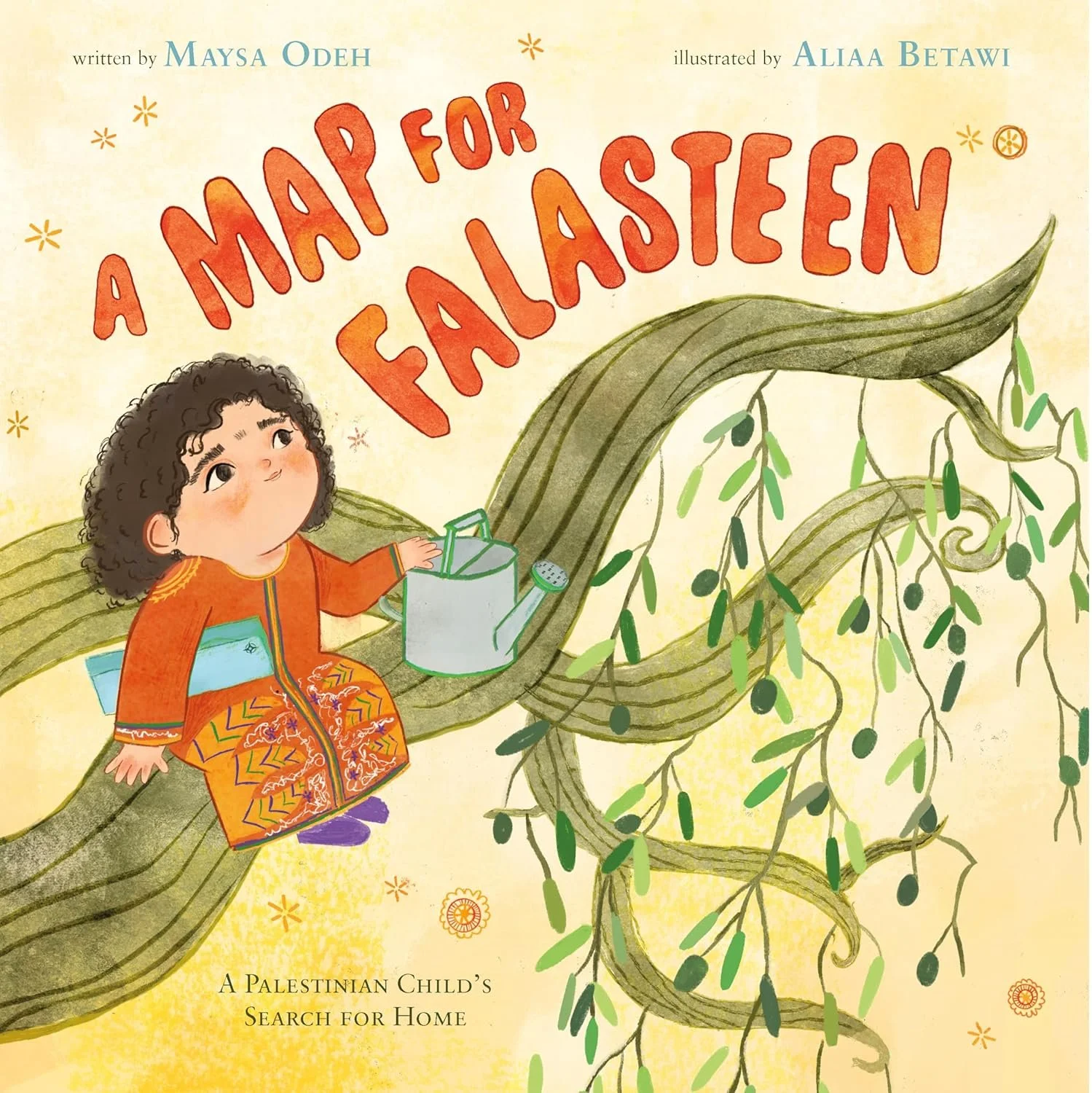
A Map for Falasteen
Book Summary:
A Map for Falasteen is a lyrical picture book about a young Palestinian girl who wants a map that shows her homeland as her family knows it—full of memories, stories, foods, and love. Through conversations with her family, Falasteen learns that maps do not always tell the whole story of a place or its people. The book emphasizes identity, belonging, and the power of memory in the face of displacement.
Recommended Questions:
Why does Falasteen want a map, and why is the map she finds unsatisfying to her?
How does Falasteen’s family describe their homeland differently than a map does?
What recommendations would you give Falasteen when her home and school present different information about the same place? How can she honor and hold her family’s truths while learning at school?
What does this story teach us about the difference between maps and lived experiences?
How can food, stories, language, and memories help people stay connected to a place?
Why might some places or people be missing from maps or textbooks?
How does the book help us understand identity, belonging, and displacement?
What responsibilities do mapmakers, publishers, and educators have when representing places and people?
How can listening to personal stories change the way we understand geography?
Research examples of how maps change over time. How can these changes affect people’s identities, histories, and communities?
NCSS Theme 3: People, Places and Environments
This book explores how people understand and define places beyond physical geography. While political maps may erase or rename places, Falasteen’s family shows how environments are also shaped by culture, history, and lived experience. Students learn that place is both geographic and deeply personal.
Social Justice Anchor Standard 10: Examine diversity in social, cultural, political and historical contexts rather that superficial and simplified ways
A Map for Falasteen challenges simplified political representations of land by showing that places hold layered meanings shaped by history, culture, and memory. Students learn that understanding geography requires examining political, cultural, and historical contexts together.
WA Geography 3: Understands the geographic context of global issues and events
The book helps students understand that people develop strong connections to places through family history, culture, and memory. It demonstrates how political boundaries and maps can change, while human relationships to land remain meaningful. Students examine how geography is shaped not only by physical features but also by human experiences and perspectives.
