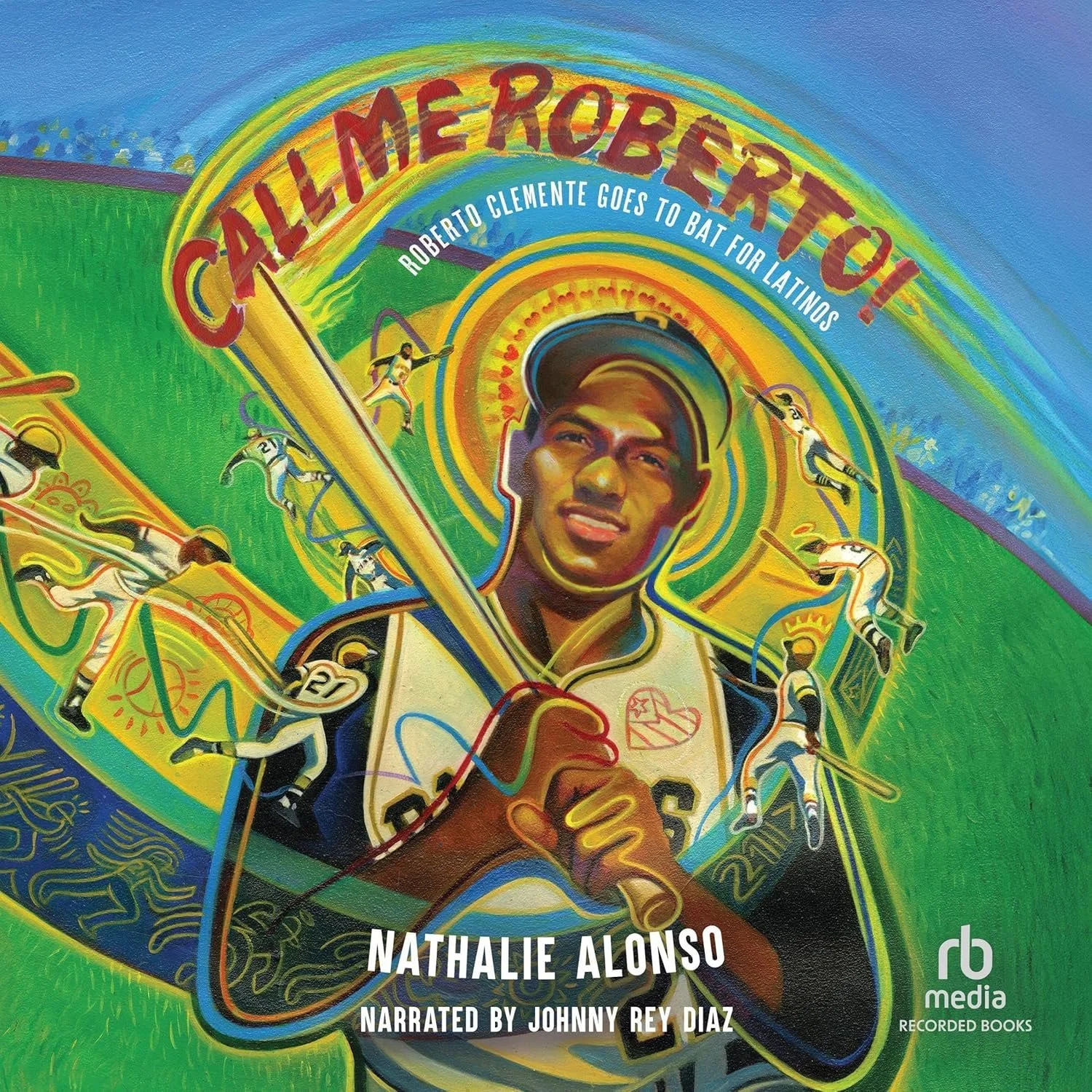
Call Me Roberto!
Book Summary:
This book highlights the extraordinary accomplishments of Roberto Clemente, including his Hall of Fame career, multiple batting titles, Gold Gloves, and his legacy as one of baseball’s greatest players. Alongside these achievements, the story examines the racism, language discrimination, and stereotyping Clemente faced as a Latino athlete, including the refusal to use his full name. By pairing athletic excellence with social injustice, the book shows how Clemente’s courage, pride, and advocacy helped pave the way for greater respect and recognition of Latino players in professional sports.
Recommended Questions:
Where is Puerto Rico located, and how is it uniquely connected to the United States politically, culturally, and historically?
How does this story show Roberto Clemente’s pride in being Puerto Rican, and how did his identity influence his actions and beliefs?
What kinds of discrimination did Roberto Clemente experience during his baseball career, both on and off the field?
Why was Clemente not allowed to stay at the same hotel as his teammates during spring training in Florida? Research the historical time period and explain why segregation was legally permitted there at the time.
Jackie Robinson is widely known as the first Black player in Major League Baseball. How does Clemente’s story and career timeline connect to Robinson’s? What was happening in U.S. society during this period that helps explain the challenges both men faced?
How did Clemente use baseball and his public platform to advocate for Latinos and other marginalized communities?
The book includes several quotes that show how Clemente used his voice to speak out against injustice. Choose one quote and explain what you think Clemente meant and why it mattered at the time:
“I represent the common people of America. So I’m going to be treated like a human being.”
“If I’m good enough to play here, I have to be good enough to be treated like the rest of the players.”
“It’s like being in prison.”
Do you think athletes should make public statements about injustice in society? Why or why not? Support your answer with examples.
How does Major League Baseball honor Roberto Clemente today, particularly on September 15, and why is this recognition important?
NCSS Theme 5: Individuals, Groups and Institutions
This book powerfully examines how Roberto Clemente navigated—and challenged—powerful institutions such as Major League Baseball, the media, and broader U.S. society. Despite facing racism and injustice, Clemente achieved extraordinary success: he was a All-Star, won multiple Gold Glove Awards, appeared in multiple World Series, and became the first Spanish-speaking player to be named World Series MVP. At the same time, institutional bias shaped how he was treated—he was labeled “lazy” when injured, called “Bob” instead of his full name, mocked for his English, and forced to stay in segregated hotels during spring training. The book highlights how Clemente’s excellence and insistence on dignity challenged discriminatory systems and helped pave the way for greater recognition and respect for Latine players.
Social Justice Anchor Standard 14: Recognize ways people can take action agains bias and injustice
This story shows Clemente actively resisting discrimination by correcting others, speaking out publicly, and supporting Latino players. His actions illustrate that justice involves courage, persistence, and using one’s position to advocate for others. Students learn that standing up to injustice can take many forms, from everyday acts to public leadership.
WA Civics 4: Understands civic involvement
The book demonstrates how Roberto Clemente challenged unfair treatment and stereotypes within professional sports and society. By insisting on respect for his name and speaking out against injustice, Clemente modeled civic engagement and advocacy. Students see how individuals can use their voices and influence to push for more equitable treatment of marginalized groups.
Links to Related Primary and Secondary Resources
Clemente’s friendship with and role in honoring Dr. Martin Luther King Jr.
