A River’s Gift
Book Summary:
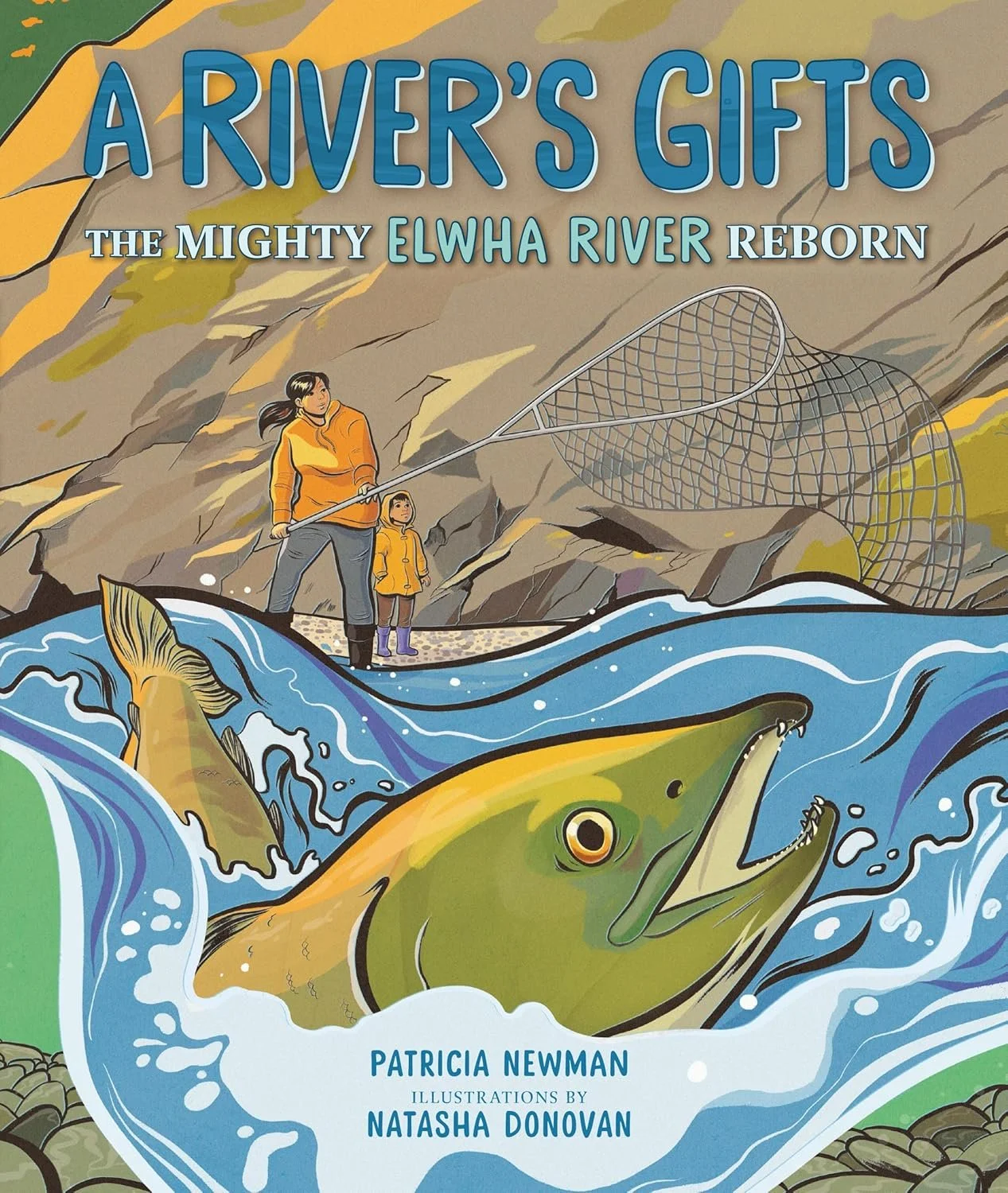
A River’s Gift: The Mighty Elwha River Reborn tells the true story of the Elwha River and the Lower Elwha Klallam Tribe, whose lives and culture were deeply harmed by dams that blocked the river for decades. Through the historic removal of the dams, the river is restored, salmon return, and the Tribe begins to heal cultural, environmental, and spiritual connections to the land. The book highlights resilience, environmental restoration, and Indigenous stewardship.
Recommended Questions:
Why was the Elwha River so important to the Lower Elwha Klallam Tribe before the dams were built?
How did the dams change the river, the salmon, and the lives of the people who depended on them?
Who made the decision to build the dams, and whose voices were missing at the time?
Why do you think restoring the river was important not only for nature but also for the Tribe’s culture and identity?
How does this story show the connection between the environment, culture, and justice?
What responsibilities do governments and communities have when past decisions cause harm?
Research whose ancestral homeland your school is located on. Then investigate how that Indigenous nation is engaging in environmental justice and/or activism today.
NCSS Theme 7: Science, Technology and Society
This book highlights how the Lower Elwha Klallam Tribe’s Indigenous scientific knowledge guided sustainable use of the Elwha River’s resources—especially salmon—long before dams disrupted the ecosystem. The tribe understood how river health, salmon migration, and community well-being were interconnected, shaping responsible harvesting practices that ensured resources could be renewed and shared across generations. When industrial dams blocked salmon runs, these systems of production and distribution were disrupted; the river’s restoration reflects a return to Indigenous knowledge systems that prioritize balance, sustainability, and long-term stewardship over short-term extraction.
Social Justice Anchor Standard 12: Students recognize and describe unfairness and injustice in the world
The book helps students identify environmental injustice faced by the Lower Elwha Klallam Tribe when their river was altered without consent, harming their livelihood and culture. It also models justice by showing how acknowledgment of harm and collective action can lead to repair, restoration, and greater respect for Indigenous rights.
WA Geography 2: Understands human interaction with the environment
This book illustrates how human decisions—such as building dams—changed the physical geography of the Elwha River and disrupted salmon migration, ecosystems, and Indigenous ways of life. It also demonstrates how humans can positively interact with the environment through restoration efforts, using scientific and Indigenous knowledge to repair damaged landscapes. Students learn that people both shape and are shaped by their environment, and that responsible decision-making can lead to environmental healing.
