How Do You Spell UNFAIR?
Book Summary:
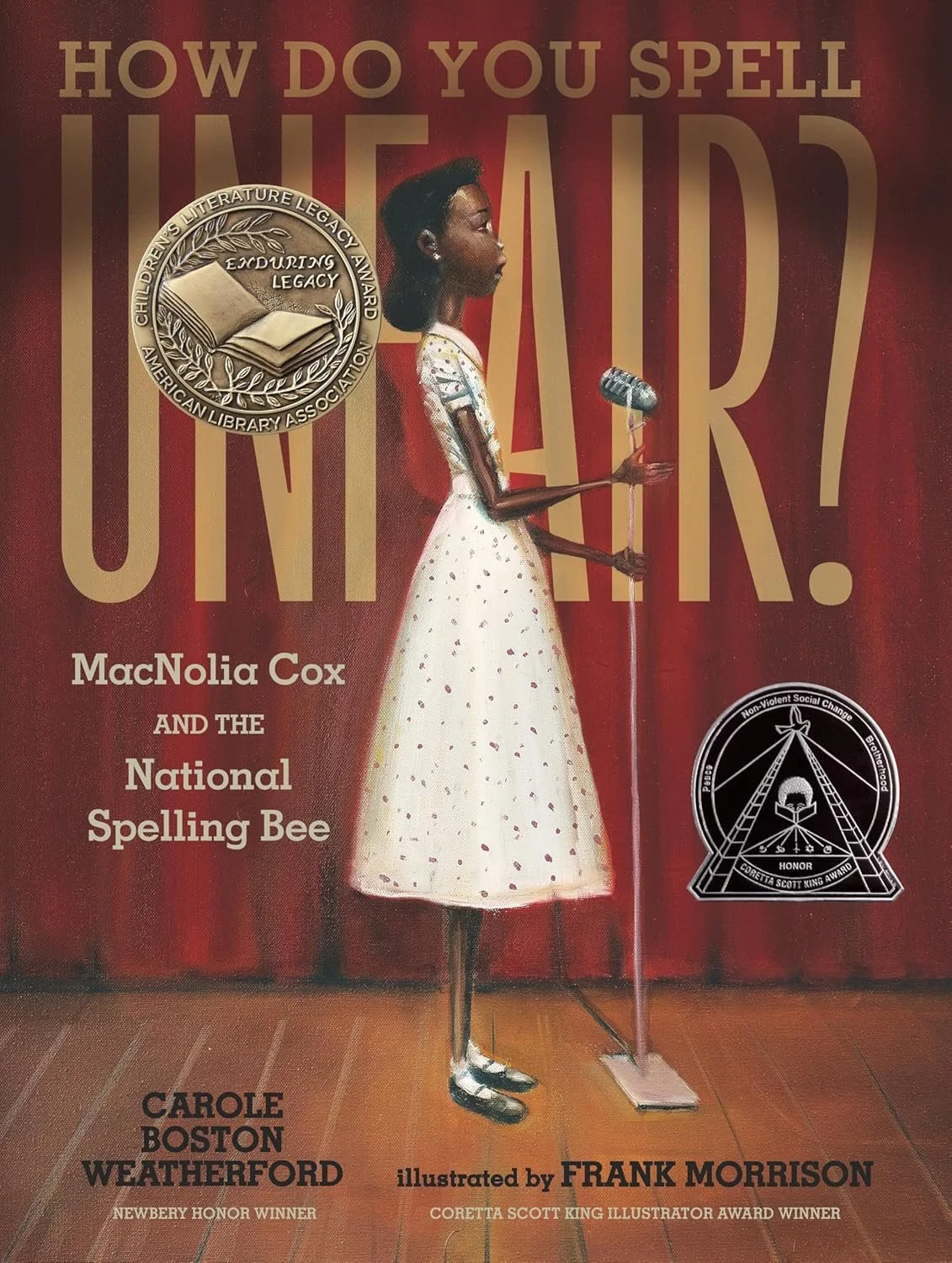
How Do You Spell Unfair? tells the true story of MacNolia Cox, a determined eighth grader from Akron, Ohio, who in 1936 became the first African American to win her city’s spelling bee and advanced to the national competition. Despite her brilliance and preparation, she faced harsh racial discrimination: segregated train cars, hotel exclusion, separate seating at the bee—and even a word not on the official list used to eliminate her. The book honors her courage, perseverance, and dignity in the face of injustice, framing her journey as both a personal triumph and a powerful symbolic challenge to systemic racism.
Recommended Questions:
Create a map tracing MacNolia Cox’s travels to the national spelling bee and indicate where segregation laws forced her to change coaches or adjust her plans.
The book details that she could not stay in the same hotel as the other contestants. How could the contest coordinators have acted to minimize this discriminatory treatment?
Based on MacNolia’s story, how would you define racism?
Why do you think the judges insisted on the word nemesis, even though it was not on the official spelling bee list?
Why is it important to remember and teach stories like MacNolia’s? How do they influence our understanding of civil rights and social justice?
How might MacNolia’s journey have inspired other people—both in her time and today—to challenge unfair systems?
Compare MacNolia’s experience with modern spelling bees or other competitions. What has changed? What forms of injustice might still exist today?
Using the information in the epilogue, construct a timeline highlighting key events that advanced equity and justice in national spelling bees. Choose one specific event or milestone from your timeline that interests you to research.
NCSS Theme 6: Power, Authority and Governance
MacNolia Cox’s experience at the 1936 national bee reflects how institutional power and societal laws — especially segregation and discriminatory practices — governed who could “compete equally.” The book exposes the ways governing structures enforced inequality, even in a civic process like a competition/spelling bee. It invites students to reflect on how law, custom, and power can shape opportunity and fairness.
Social Justice Anchor Standard 12: Systemic Discrimination
The story shows both personal unfair treatment (being forced into a separate train car, separate seating, denied equal accommodation) and systemic injustice (segregation laws, racially biased enforcement of rules in national competition). By documenting MacNolia’s unfair treatment and how she persevered anyway, the book helps students recognize how discrimination operates institutionally, not just at the individual level. It encourages awareness of injustice and empathy toward those who face it.
WA History 4: Understands how historical events inform analysis of contemporary issues and events
MacNolia Cox’s 1936 experience illustrates how discrimination and segregation shaped outcomes in American society. Studying her story helps students link history to present-day civil rights issues and understand the long legacy of systemic racism. Through her story, learners can analyze how past injustices influence current social dynamics and advocacy for equity.
