Lemonade in Winter
Book Summary:
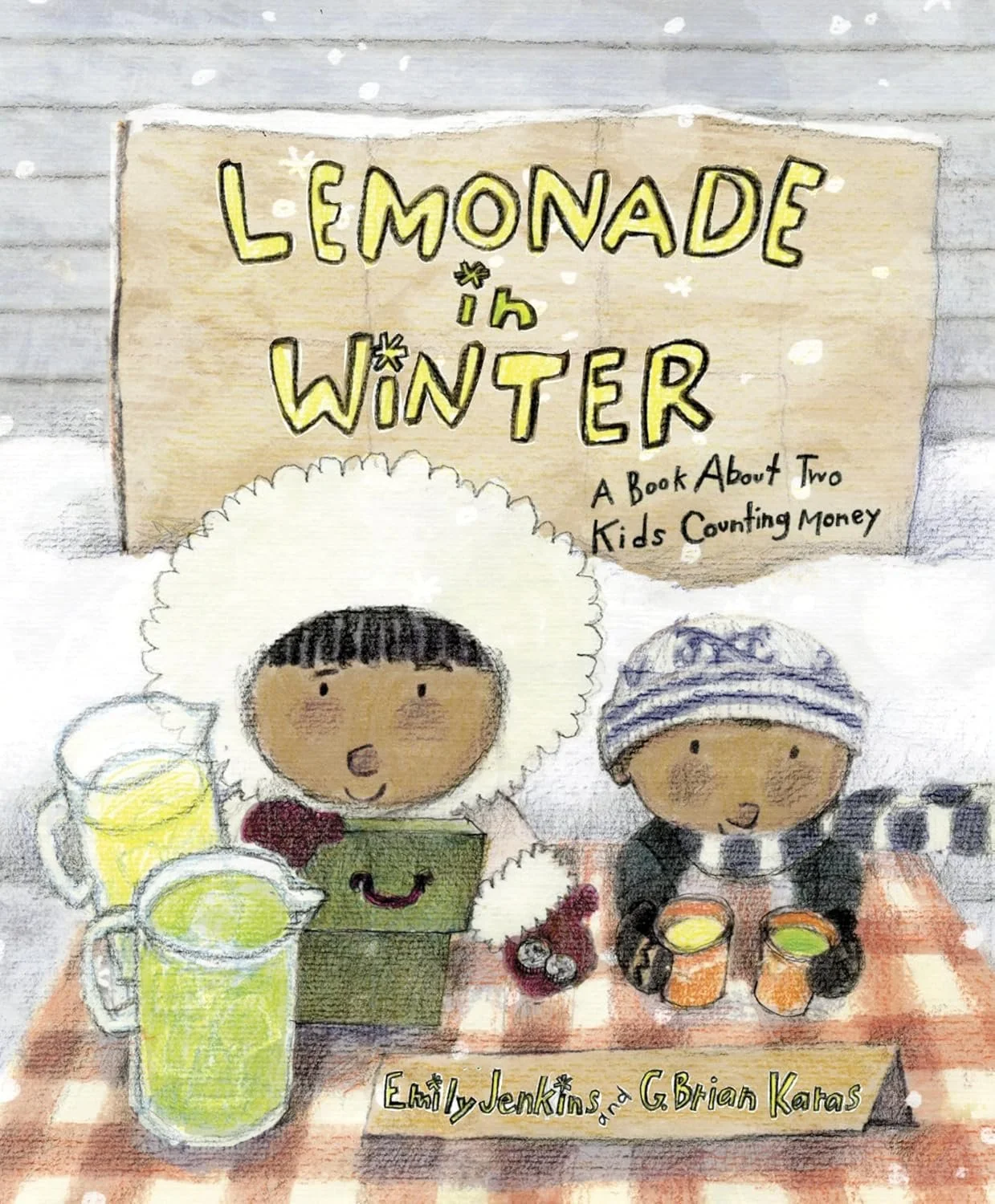
Lemonade in Winter follows siblings Pauline and John-John as they decide—despite the freezing weather—to open a lemonade stand. Throughout the day they problem-solve, revise prices, and practice perseverance as they try to attract customers. By evening, they’ve learned about counting money, making choices, and working together as a team.
Recommended Questions:
Why do Pauline and John-John decide to open a lemonade stand even when adults say it’s not a good idea? What does this show about taking risks in business?
How do the children change their pricing and advertising throughout the day? Why do entrepreneurs sometimes need to adjust their strategies?
When the siblings count their earnings at the end, how can we tell whether their choices were successful? How might they plan differently next time?
Where do you think Pauline and John-John might live, and where are they unlikely to live? What information from the story helps you make these guesses?
How does the winter environment affect their business, and what adjustments do they make because of the weather?
How might a lemonade stand look different in another season or in another place?
What strategies do the children use to sell more lemonade? What additional strategies would you suggest they try?
When they lower their prices to make the lemonade more affordable, how does that connect to fairness and access for customers?
If you were running the stand, how would you adjust the prices to make sure you earned a profit?
What questions would you ask if you were researching how to run a successful lemonade stand?
NCSS Theme 7: Production, Distribution, and Consumption
Lemonade in Winter addresses this theme by showing how the children decide to run a business, set prices, advertise, and evaluate profit—experiencing basic economic concepts firsthand. Their decisions and problem-solving illustrate real-world financial literacy for early learners.
Social Justice Anchor Standard 4: Healthy self-esteem
In Lemonade in Winter, Pauline and John-John show confidence in their ideas and abilities when they decide to run a lemonade stand despite the discouraging comments from adults. They take pride in their work, make decisions together, and stay determined even when sales are slow. At the same time, they treat everyone in the story with respect—including the adults who doubt their plan—demonstrating confidence without dismissing the dignity or perspectives of others.
WA Economics 1: Understands that people have to make choices between wants and needs and evaluate the outcomes of those choices
The book illustrates economic decision-making: the children choose to invest their limited coins in supplies, weigh risks, adjust prices, and evaluate their profit at the end. Students can see how choices have consequences, how entrepreneurs take calculated risks, and how simple financial decisions impact outcomes.
