Speak Up
Book Summary:
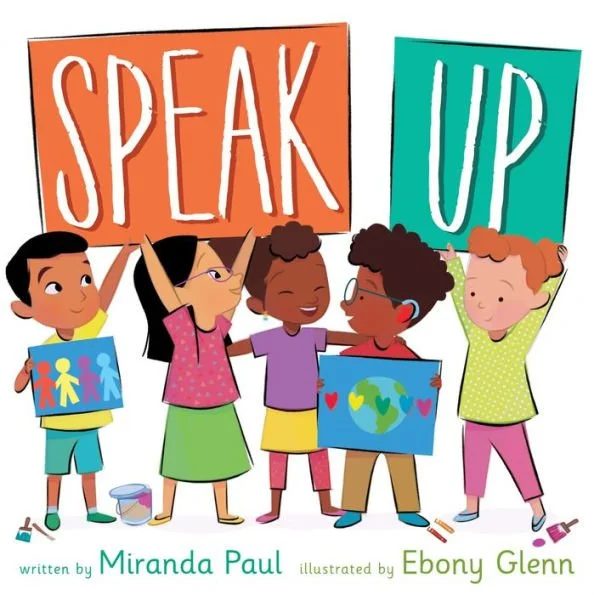
Speak Up encourages young readers to recognize moments when their voice matters—whether they are standing up for themselves, supporting a friend, reporting injustice, or contributing to their community. Through simple text and vivid illustrations, the book models many ways people of all ages can use their voices responsibly and courageously. It emphasizes that speaking up is an act of kindness, fairness, and active citizenship.
Recommended Questions:
How does Speak Up show that everyone—not just adults—can participate in making their community fair and safe?
What responsibilities do individuals have when they witness something unfair happening?
The book demonstrates many ways people can speak up. Which example best reflects how you see yourself speaking up?
What kinds of authority figures appear in the book (teachers, coaches, adults), and how do characters interact with them when they speak up?
Why is it sometimes difficult—yet still important—to speak up to someone in a position of power?
Identify an example from the story where someone was treated unfairly. What might have happened if no one had spoken up?
What positive changes occurred in the story because a character chose to speak up?
How can speaking up influence the way a group or community functions?
Why might someone hesitate to speak up even when they know something is wrong? How can people support one another in finding the courage to speak up?
Can you think of a real-life example—at school, in the community, or in the news—where someone speaking up changed the outcome?
Which illustrations or moments in the book best demonstrate bravery or advocacy?
NCSS Theme 10: Civic Ideals and Practices
The book centers on the idea that individuals—especially young people—have a role in promoting fairness, safety, and community well-being. By showing examples of children speaking up against exclusion, bullying, or unfair treatment, it highlights the responsibilities and practices of engaged community members. This theme reinforces how civic participation occurs not only through formal political processes but in everyday interactions.
Social Justice Anchor Standard 17: Responsibility to stand for injustice
The story illustrates many accessible, age-appropriate ways students can intervene when they witness mistreatment or unfairness. Characters speak up on behalf of peers, advocate for inclusion, and take responsibility for creating a more just community. These examples help students see that taking action against injustice—large or small—is central to promoting equity.
WA Civics 4: Understands civic involvement
Speak Up shows that civic involvement is not limited to voting or holding office; it includes the everyday actions that help maintain fairness and strengthen a community. When students see characters raising concerns, asking for help, advocating for others, or working collaboratively, they gain insight into what active citizenship looks like at their age. The book reinforces the idea that speaking up is a civic responsibility that contributes to a healthy democratic society.
