Ballots For Belva
Book Summary:
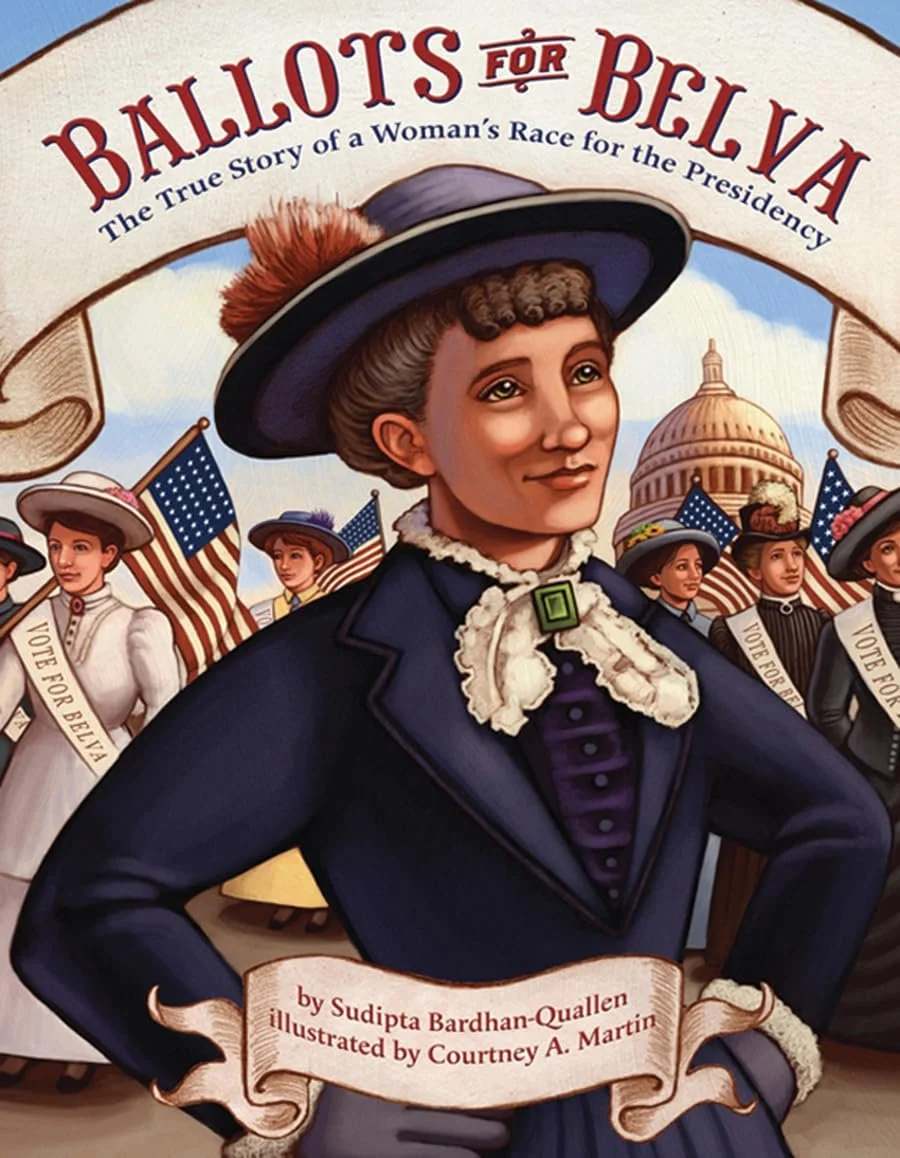
Ballots for Belva tells the story of Belva Lockwood, a pioneering lawyer and activist who became the first woman to run a full national campaign for President of the United States. The book highlights her determination in the face of discrimination and her lifelong fight for women’s rights. Through beautiful storytelling, students learn how one individual can challenge unjust laws and expectations.
Recommended Questions:
How does Belva’s story help us understand the importance of challenging unfair laws or norms?
What evidence does the author provide to demonstrate Belva’s leadership, courage, and persistence?
Although Belva is best known for advocating for women’s rights, the book highlights other ways she fought for justice and inclusion. Identify at least two examples and explain their significance.
Describe the unfairness Belva experienced when she successfully completed all coursework for a law degree but was initially denied her diploma. Why is this an example of systemic discrimination?
Create a list of three reasons people (such as men, women, lawmakers, or voters) might have opposed Belva’s presidential campaign. Then write a rebuttal for each one that exposes the discriminatory thinking behind it.
This book invites us to consider several important democratic ideals. Investigate each of the following terms—suffrage, electoral vote, popular vote, ballot counting—and explain how they connect to the story and to the broader functioning of democracy.
Examine how ballots are described in the book, then research what ballots look like today. How have ballots changed over time, and what additional improvements might still be needed?
What does Belva’s story teach us about who gets to participate in democracy—and who has historically been excluded?
Political cartoons often capture the issues and beliefs of their time. Find two historical political cartoons about Lockwood’s presidential campaign and analyze their messages and intended audiences.
The timeline at the end of the book explains that in the 1780s, all states except New Jersey revoked women’s right to vote. Research this period and this decision to learn more about the causes and consequences of this injustice.
How did Belva Lockwood’s actions influence the women’s rights movement that followed her lifetime?
NCSS Theme 6: Power, Authority and Governance
Ballots for Belva highlights how Belva Lockwood confronted and challenged systemic inequities embedded in legal and political institutions. The book shows how she was initially denied admission to law school, had to petition the president of the institution to receive the diploma she had already earned, and ultimately became the first woman to argue a case before the U.S. Supreme Court—each example revealing how authority structures attempted to restrict her participation. Through these experiences, students learn how individuals can resist exclusionary systems and push for more equitable governance.
Social Justice Anchor Standard 12: Individual and Systemic Injustice
Belva Lockwood’s experiences clearly show how laws and institutions barred women from equal political participation. The book helps students identify the difference between personal prejudice and systemic discrimination, such as legal restrictions and societal norms. It also demonstrates how challenging unjust systems can expand rights for all.
WA Civics 2: Understands the purposes, organization, and function of governments, laws, and political system
Ballots for Belva demonstrates not only discriminatory laws but also flaws in the election system itself. The book describes how many ballots cast for Belva were thrown out and others were counted for Grover Cleveland instead, illustrating how election procedures can reinforce or undermine democratic participation. Her experiences help students see how government structures and election laws function in practice—and how they can be challenged to create fairer systems.
Links to Related Primary and Secondary Resources
Overview of Belva’s role as a lawyer with pictures from the US Supreme Court
Video focusing on Belva’s role as a lawyer and Presidential candidate
