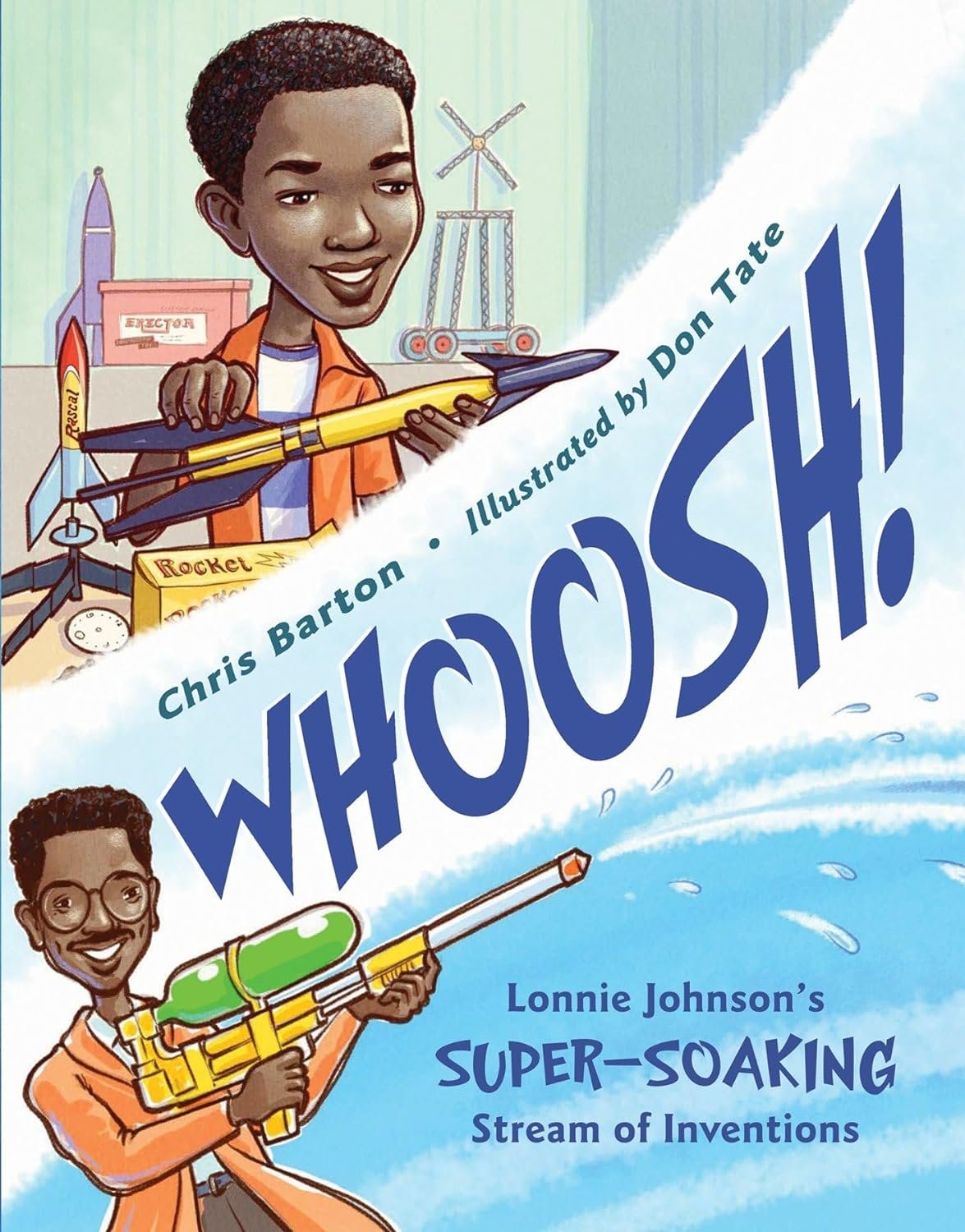
Whoosh!
Book Summary:
Whoosh! tells the true story of engineer and inventor Lonnie Johnson, whose curiosity, creativity, and persistence led him to create the Super Soaker—one of the world’s most popular toys. The book highlights his childhood passion for building and experimenting, as well as the many challenges he faced as a Black engineer navigating barriers in STEM fields. Ultimately, the story celebrates innovation, resilience, and the power of problem-solving.
Recommended Questions:
Lonnie faced many successes but also significant challenges throughout his journey. What obstacles did he encounter, and how did he overcome them? What lessons about perseverance can we learn from his experiences?
Why do you think some companies rejected Lonnie’s invention at first? What does this reveal about risk-taking and decision-making in the business world?
How does the success of the Super Soaker illustrate the relationship between producers and consumers?
What steps did Lonnie take to transform his idea into a marketable product? How did creativity, testing, and problem-solving play a role?
How did racial inequities impact Lonnie as a Blak engineer in the 1960s-1980’s?
How does Lonnie’s story show the connection between historical events—such as the space program, engineering innovations, racial inequities—and an individual’s opportunities?
The author’s note explains that the book aims to diversify the stories we hear about scientists and inventors.
Research other often overlooked inventors and create posters to share around the school. How does highlighting these stories help broaden our understanding of history and innovation?
NCSS Theme 7: Production, Distribution and Consumption
Lonnie Johnson’s invention journey—from idea to product—illustrates key economic concepts such as production, marketing, and consumer demand. Students see how an inventor identifies a problem, creates a prototype, collaborates with companies, and ultimately brings a product to market. The story also shows how new ideas can shape industries and influence what consumers buy.
Social Justice Anchor Standard 17: Responsibility to Stand up to injustice
Whoosh! illustrates how Lonnie Johnson pursued his ideas despite barriers, including racial bias and limited opportunities for Black engineers during his early career. By learning about Lonnie’s perseverance and the systemic challenges he faced, students can reflect on the importance of speaking up and pushing for fairness in spaces where certain voices or talents have been overlooked. The book encourages students to see that when injustice limits someone’s opportunity or recognition, they have a responsibility to advocate for equity and inclusion in their own communities.
WA Economics 2: Understands the components of an economic system
The story demonstrates how inventions move through economic systems—from creation and testing to manufacturing, marketing, and consumer purchase. Students gain insight into how companies evaluate new products, how markets respond, and the role of entrepreneurs and inventors in economic growth. Lonnie Johnson’s partnership with toy companies provides an accessible example of how new ideas enter and shape the marketplace.
