Rainbow Weaver/Tejadora Del Arcoiris
Book Summary:
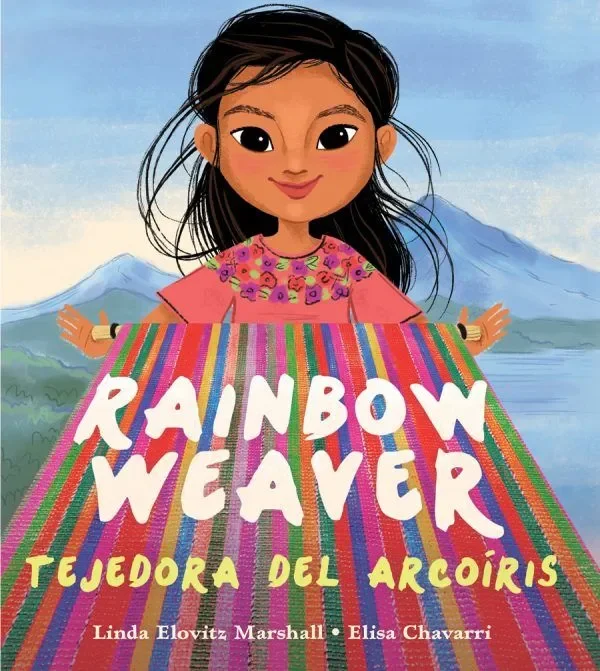
Rainbow Weaver tells the story of Ixchel, a young Mayan girl who wants to learn the traditional weaving practiced by generations of women in her family. When thread is scarce, she creatively repurposes discarded plastic bags to make her own colorful fabric. Her idea strengthens her community by blending cultural tradition with environmental problem-solving.
Recommended Questions:
What resources does Ixchel use to create her weaving, and why are these choices important for her family and community?
How does selling her weaving help you understand the relationship between producers and consumers?
Why is weaving such an important part of Ixchel’s Mayan cultural heritage?
In what ways does Ixchel balance keeping tradition alive with being creative and trying something new?
Why is plastic waste a problem in Ixchel’s community, and how does it affect the environment?
How does the environment around Ixchel influence the materials she has available for weaving?
What does Ixchel teach us about the power young people have to create positive change in their communities?
If Ixchel hadn’t discovered a new material for weaving, what other solutions might her community have explored?
After reading the author’s note, what research did the author do to write an authentic story about a culture she is not part of? Why is this research important?
Why does Ixchel want to help pay for her schoolbooks? What does this tell you about her responsibilities and values?
NCSS Theme 7: Production, Distribution and Consumption
This book explores how goods are created, exchanged, and valued within a community. Ixchel participates in the production of woven goods using creative, sustainable materials, showing how individuals contribute to local economic activity. The sale of her weaving also highlights how communities make decisions about resources, sustainability, and meeting family needs.
Social Justice Anchor Standard 2: Family and Culture
Ixchel’s weaving connects her to her Mayan cultural heritage while also allowing her to express her own identity as a creative problem-solver. The book affirms cultural knowledge by showing how children can honor traditions while making them their own. Students learn how identity is shaped by family, culture, innovation, and community contribution.
WA Geography 2: Understands human interaction with the enviroment
Ixchel’s use of discarded plastic bags as weaving material is a clear example of how humans interact with and reshape their environment. Her solution addresses pollution while sustaining cultural practices, showing how environmental challenges influence human choices. Students can analyze how culture, environment, and resource use are interconnected.
