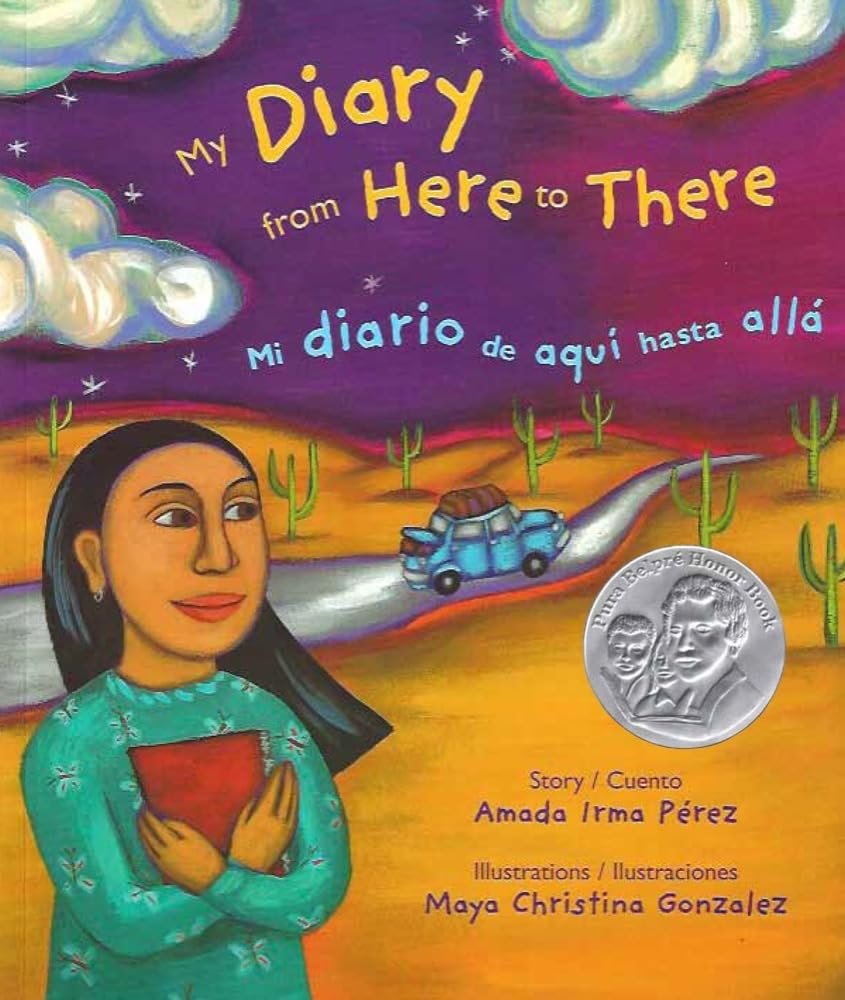
My Diary from Here to There/Mi diario de aqui hasta allá
Book Summary:
My Diary from Here to There by Amada Irma Pérez is a bilingual picture book written in diary format, telling the true story of the author’s childhood move from Mexico to California. Through personal reflections, she describes the uncertainty, hope, fear, and resilience her family experiences as immigrants seeking better opportunities. The story highlights family bonds, identity, and the emotional realities of migration.
Recommended Questions:
How does the book help you understand the experiences of immigrants?
Have you ever moved? How might that help you understand Amada’s emotions?
What time period is this story set in, and what evidence helps you determine that?
Why do you think the author sometimes writes Spanish first and then English, and other times English first followed by Spanish?
What might have pushed the family to leave Mexico and what could have pulled them toward the United States?
Who is César Chávez and why is he mentioned in the story?
What might have happened if her father had not received green cards? What is a green card and why was it important?
How does the author describe the landscape in Mexico and the U.S.? In what ways are they similar or different?
Why do you think Nana says, “Never forget who you are and where you are from. Keep your language and culture alive in your diary and in your heart”?
How do the main characters feelings about the move change from the beginning to the end? What experiences caused her thinking to shift?
NCSS Theme 9: Global Connections
This book illustrates how families are interconnected across international borders and how global factors influence daily life. The story follows a real cross-border migration and demonstrates how economic opportunity, policy, and immigration systems create challenges and possibilities for families. Students see firsthand how people, ideas, and cultures move between countries and how these movements shape identity and community.
Social Justice Anchor Standard 2: Multiple Identity Groups
Through bilingual diary entries and reflections on her experiences in Mexico and the United States, Amada explores her identity as a Mexican immigrant, a bilingual speaker, and a child navigating two cultures. Readers gain insight into the importance of valuing heritage, language, and family history while adapting to new social and cultural contexts.
WA Geography 3: Understands the geographic context of global issues and events
The book focuses on cross-border movement, geographic and cultural differences, and how place shapes opportunities and challenges for families. Students can explore how migration is influenced by both physical landscapes and political or social systems, supporting geographic reasoning about global issues.
