Freedom Summer
Book Summary:
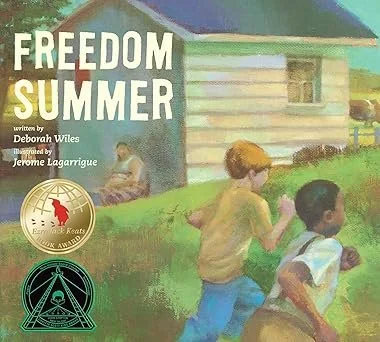
Freedom Summer tells the story of two friends—one Black, one white—growing up in Mississippi during the Civil Rights Movement. When the Civil Rights Act is passed, the boys believe they will finally be allowed to swim together in the town pool, only to find it has been closed rather than integrated. The book illustrates both the progress and resistance that shaped the fight for racial equality in the 1960s.
Recommended Questions:
What time period is this book depicting, and what evidence from the story supports your answer? What laws were passed during this time regarding segregation?
Why does the town close the swimming pool instead of integrating it? What does this decision reveal about resistance to social change?
Imagine you have been asked to give a speech at a town meeting in support of opening and integrating the pool. What would you say?
How does this story help us understand what life was like during the Civil Rights Movement? What has changed since then, and what issues still need attention today?
Research the Swope Park Pool in Kansas City to learn more about pools that were closed rather than integrated. What did you discover?
Read the author’s note to learn more about the Freedom Summer movement. Why do you think the author chose this title for the book?
Why do you think it is important to John Henry that he uses his own nickel to buy an ice pop at the end of the story? What does this detail tell you about his character or the themes of the book?
NCSS Theme 6: Power, Governance and Authority
This theme focuses on how laws are created, enforced, and experienced by individuals and communities. The book shows how legal progress, like the Civil Rights Act, does not always reflect immediate social change, and how people resisted or embraced new laws related to racial equality. Students see firsthand how governance influences daily life and how individuals respond to power structures.
Social Justice Anchor Standard 16: Speaking Up
In Freedom Summer, the boys experience an act of discrimination when the town pool is closed instead of being integrated. The emotional impact of this moment encourages students to identify injustice, reflect on how it affects people, and consider ways individuals can speak up or work for fairness in their own communities.
WA History 2: Understands and analyzes causal factors that have shaped major events in history
The book highlights cause and effect within the Civil Rights Movement—specifically how the passing of new civil rights laws aimed to challenge segregation, yet systemic racism persisted. Students can analyze why the pool was closed, what this reveals about resistance to change, and how historical forces of discrimination shaped daily life. This supports critical thinking about how past events influence social progress and continue to shape the present.
