The Watcher: Jane Goodall’s Life With Chimps
Book Summary:
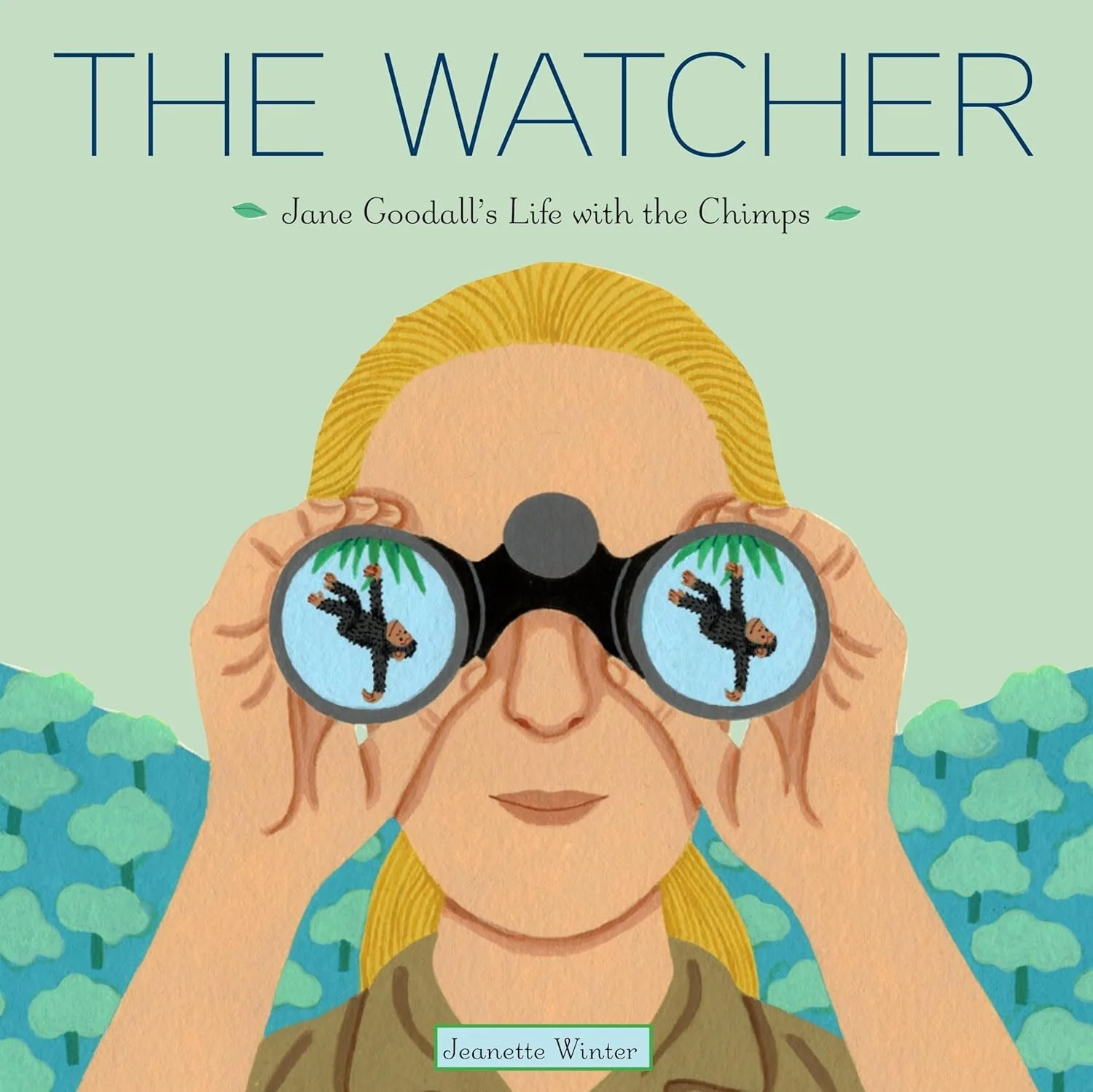
The Watcher tells the story of Jane Goodall and her groundbreaking research studying chimpanzees in Gombe National Park, Tanzania. Through patient observation, Jane discovers that chimpanzees have complex social behaviors, emotions, and intelligence, challenging prior assumptions about humans and animals. The book highlights curiosity, perseverance, empathy, and the importance of respecting both animals and their environment.
Recommended Questions:
How does Jane Goodall show respect for the chimpanzees while studying them? Why is this important?
How do the location and environment of Gombe National Park affect the behavior and survival of the chimpanzees?
Why do you think Jane was patient and spent so much time observing rather than immediately trying to interact with the chimps?
How do humans impact the natural habitats of animals? What responsibilities do we have toward other living beings?
How might Jane’s discoveries about chimpanzees change the way people think about animals and humans?
What challenges do you think Jane faced as a woman scientist in a remote area studying animals? How does this relate to thinking about inclusivity and diversity in careers?
How can we apply lessons from Jane’s patience, observation, and respect in our own interactions with people and the environment?
How did Jane’s identity and background affect her opportunities to study chimpanzees?
NCSS Theme 3: People, Places and Environments
The book emphasizes how humans interact with the natural world and how understanding these interactions helps us make informed decisions about the environment. Jane’s careful observation and study of chimpanzees show students how geography, ecosystems, and cultural respect for the land impact both wildlife and human communities.
Social Justice Anchor Standard 18: Making a Difference
Jane Goodall’s story highlights how her identity—as a woman scientist in a male-dominated field—and her relative privilege (education, opportunity, and access to resources) shaped her ability to conduct research and interact with both the chimpanzees and local communities. Students can explore how power dynamics and identity influence access, decision-making, and relationships, and how using privilege responsibly can lead to positive outcomes for others.
WA Geography 2: Understands human interaction with the environment
The book illustrates how humans and animals share ecosystems and how human actions, such as conservation and research, can positively or negatively affect the environment. Students can explore how Jane’s work reflects careful, ethical interaction with the natural world and the importance of stewardship.
