I Ain’t Gonna Paint No More!
Book Summary:
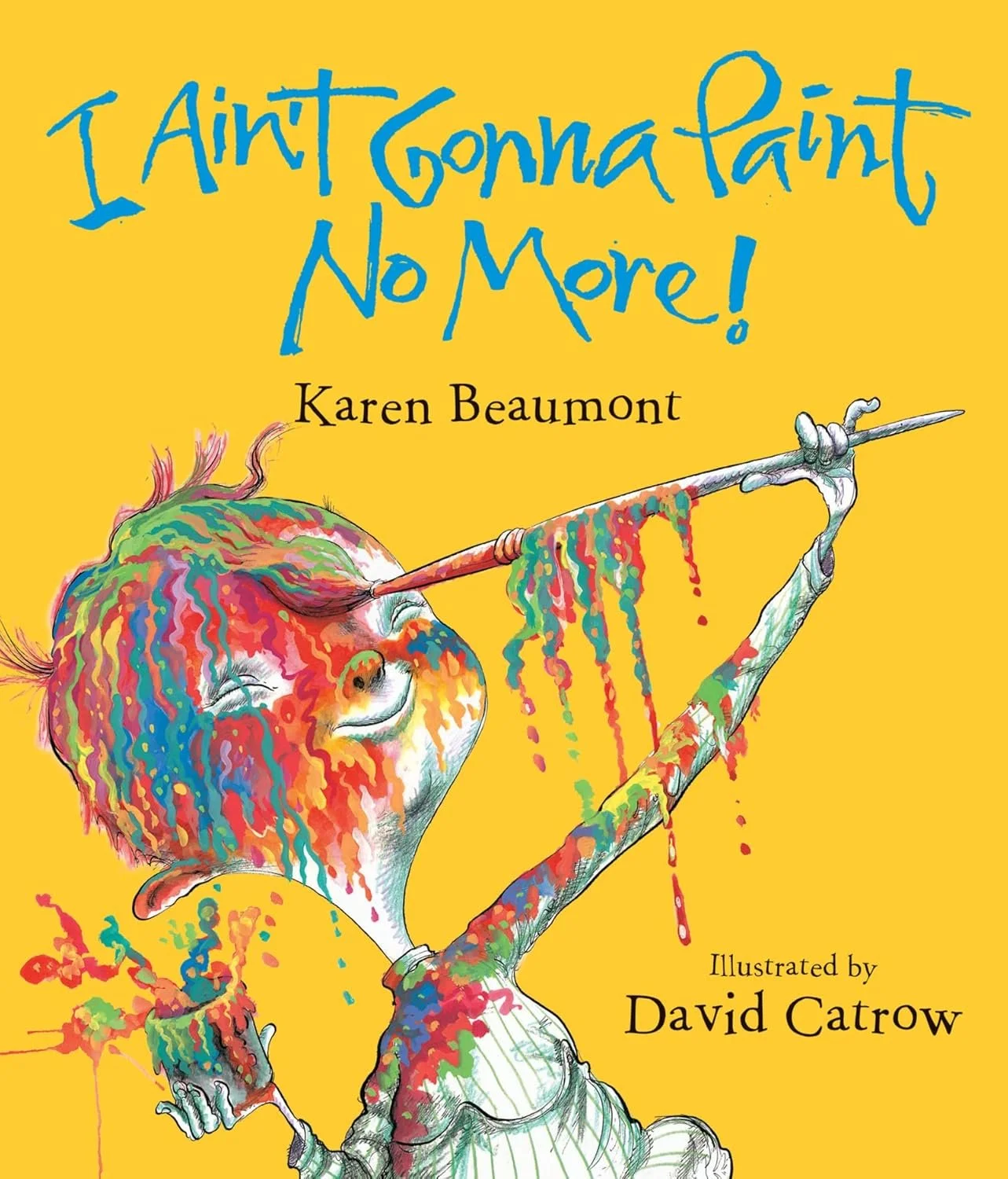
I Ain’t Gonna Paint No More is a humorous story about a boy who decides to paint himself instead of the walls. He begins painting his body in all sorts of colors, causing chaos and laughter, until he realizes the silliness of his actions. The story highlights creativity, self-expression, understanding consequences, and celebrates regional dialects as a valid form of cultural expression.
Recommended Questions:
Why do you think the boy decided to paint himself instead of the walls? How do his actions affect others?
What are some of the consequences of his choices? How do you think his family or friends feel about what he’s doing?
How does the boy’s creative expression help him learn about rules, limits, and responsibility?
Can you think of a time when you wanted to do something fun but it wasn’t the best choice? How did you handle it?
How should we balance self-expression with consideration for others?
How does the story show that individual actions can have an impact on the larger group or environment?
Why do you think the author chose to use phrases like “ain’t”? What can this tell us about the boy’s cultural or geographic background?
How can respecting regional language and dialects help us better understand and appreciate people from different communities?
How does the story use humor to teach a lesson about behavior, responsibility, creativity, and cultural identity?
NCSS Theme 4: Individual Development and Identity
The book explores how individuals interact with rules, societal expectations, and cultural norms. The boy’s playful rebellion against painting the walls demonstrates how personal choices affect others, while his use of regional language reflects the diversity of cultural expression in everyday life. Students can discuss how language and dialects are part of identity and community.
Social Justice Anchor Standard 6: Valuing Diversity
The story encourages students to recognize and appreciate differences in behavior, creativity, and language. The boy’s playful use of painting himself and his regional dialect (“ain’t”) may be different from students’ own experiences, but the story models responding with curiosity, humor, and acceptance. Students can practice being comfortable with peers who express themselves in unique ways while still finding common ground in shared experiences.
WA Social Studies Skills 1: Uses critical reasoning to analyze and evaluate claims
Students can evaluate the boy’s actions and consider both social and cultural contexts, including his choice of words. They learn to reason about how personal actions and cultural identity intersect with community norms, responsibilities, and respect for diversity.
