The United States v. Jackie Robinson
Book Summary:
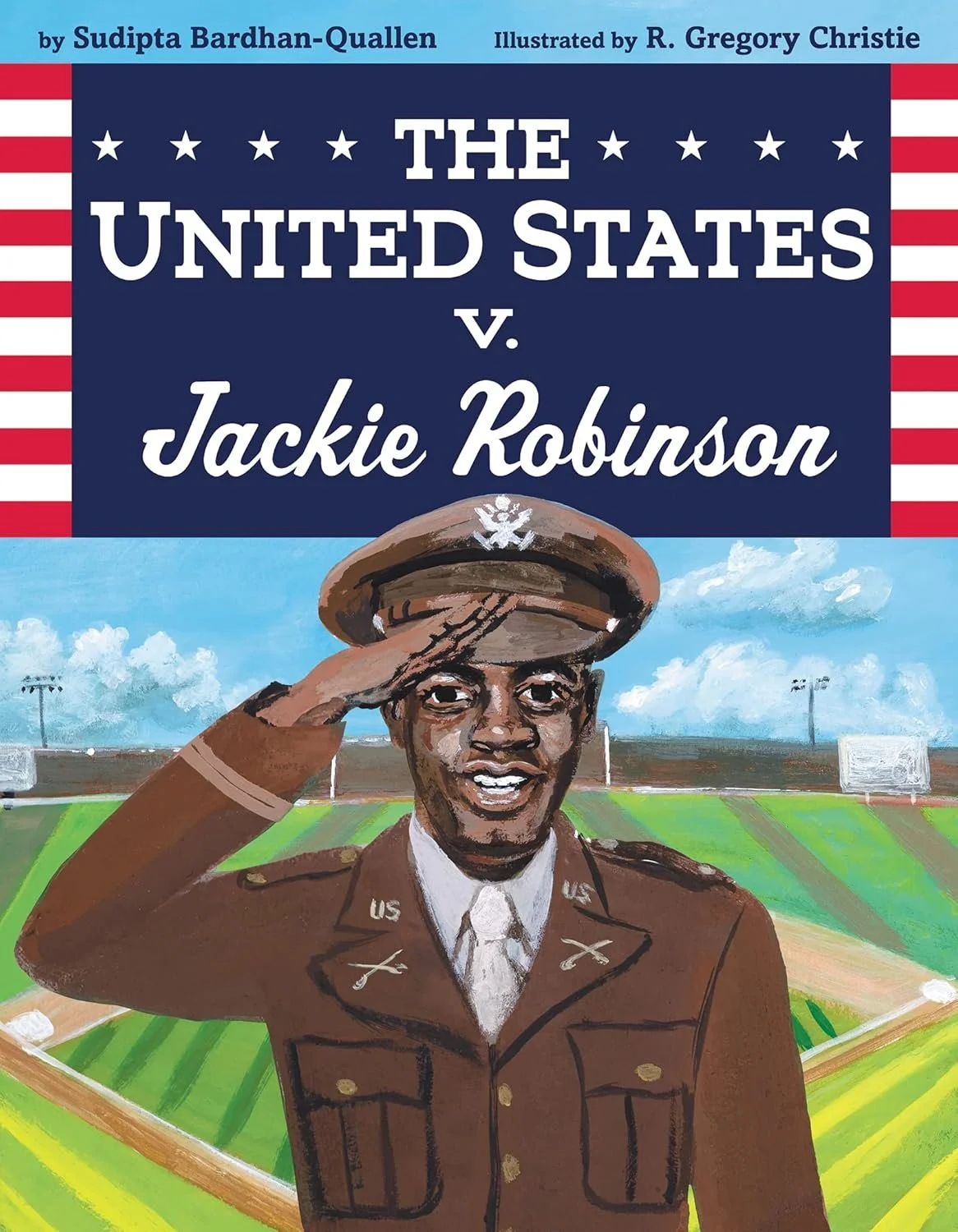
The United States v. Jackie Robinson tells the little-known story of Robinson’s early resistance to segregation years before he joined Major League Baseball. The book centers on the 1944 incident in which Robinson, while serving in the U.S. Army, refused to move to the back of a military bus and was court-martialed for standing up to racial injustice. His determination, dignity, and courage show that his fight for equality began long before he broke baseball’s color barrier.
Recommended Questions:
The story begins by connecting Rosa Parks and Jackie Robinson. Why do you think Rosa Parks is widely known for refusing to give up her seat, while far fewer people know that Jackie Robinson took a similar stand years earlier?
Research Rosa Parks to determine how many years apart these two historical events took place.
Why do you think Jackie’s mother refused to move from her home even though their family was the only Black family living on that street?
In discussing the U.S. entering World War II, the book states, “Americans from all walks of life—including Jackie Robinson—answered their nation’s call to defend freedom around the globe.” What does this phrase mean in your own words?
Why might the officer have told Jackie that he had to play for the “colored baseball team” even though no such team actually existed?
Why do you think the Army bus driver was not arrested, but Jackie was, even though Jackie had the legal right to sit anywhere on the bus?
Choose three events from the timeline at the back of the book to investigate further. What did you learn about these moments in Robinson’s life?
How did Robinson’s refusal to move on the bus connect to his later role as a civil rights advocate and groundbreaking athlete?
How does Jackie Robinson’s stand in this story reflect American ideals about fairness, equality, and justice? Where do we see those ideals upheld—or contradicted—in the story?
Standards:
NCSS Theme 10:
The book highlights civic participation, the responsibilities of individuals in a democracy, and the ongoing struggle to expand the meaning of equality under the law. By portraying Robinson challenging unjust rules within the Army, students see how ordinary citizens—and soldiers—can take action to uphold constitutional ideals, even when institutions fail to protect them.
Social Justice Anchor Standard 13: Examining Inequity
The United States v. Jackie Robinson directly illustrates how racial bias shaped Robinson’s treatment in the military and how unjust systems were used to control and punish Black service members. By examining Robinson’s court-martial, students see the real-world consequences of discriminatory laws and practices. The book encourages students to identify how bias influences decisions, policies, and power—and to think about what meaningful change requires.
WA Civics 2: Understands the purposes, organization and function of governments, laws and political systems
The United States v. Jackie Robinson gives students a clear example of how government systems and laws function—both fairly and unfairly. Robinson’s court-martial demonstrates how military law operated during a period when segregation was still enforced, revealing how policies and institutions can uphold or challenge injustice. By studying this case, students analyze how legal systems work, how authority is exercised, and how individuals can navigate or resist those systems to advocate for their rights.
A Links to Related Primary and Secondary Resources
Jackie writes letters to Presidents in support of civil rights
Smithsonian Museum information about Jackie
