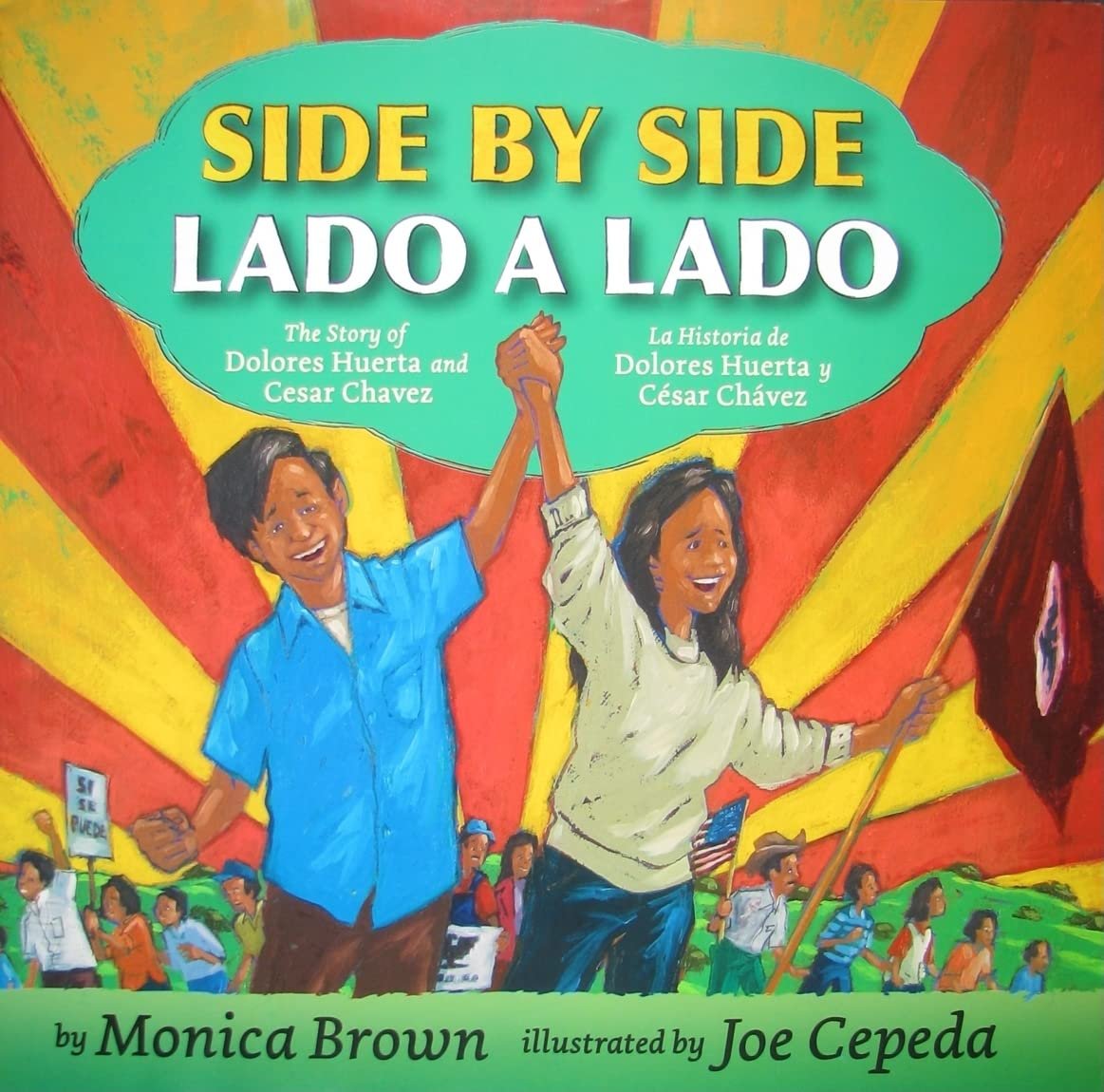
Side By Side/Lado A Lado
Book Summary:
Side by Side / Lado a Lado tells the parallel stories of Dolores Huerta and César Chávez, two leaders who worked tirelessly to improve the lives of farmworkers. Through bilingual narration, the book highlights how their childhood experiences shaped their commitment to justice and how they united to organize farmworkers, lead strikes, and advocate for fair working conditions. Their partnership shows how collective action can bring meaningful and lasting change.
Recommended Questions:
What childhood experiences shaped Dolores Huerta and César Chávez and helped make them the leaders they became?
What leadership qualities do Dolores Huerta and César Chávez share? In what ways did their approaches differ?
What specific examples of unfairness or injustice do farmworkers face in the book?
The book says, “César and Dolores asked people to stop buying grapes from California.” Research the Delano Grape Strike to learn more about this historical event.
Find historical flyers or posters produced by the United Farm Workers during the grape strike. How did their design, language, and distribution make them effective organizing tools?
How could people who were not farmworkers support the fight against the injustices farmworkers faced? List concrete actions individuals or communities could take.
The phrase “Sí se puede” is widely used in Latinx communities and originated with Dolores Huerta. What does the phrase mean literally and figuratively, and why does it remain important today?
Research the United Farm Workers (UFW) flag., and explain its significance to the movement and this book.
Dolores and César were not the only leaders. Research Larry Itliong and explain how he worked with Dolores Huerta and César Chávez during the Delano actions.
Standards:
NCSS Theme 6: Power, Governance and Authority
The book aligns strongly with this theme because it demonstrates how people organize to influence systems of power and challenge unfair practices. By depicting the formation of the farmworkers’ movement, the book illustrates how leaders, laws, and civic action shape the rights of workers. It shows children how individuals and groups can participate in governance by protesting, organizing, and negotiating for justice.
Social Justice Anchor Standard 12:
The book explicitly describes unfair working conditions for farmworkers and the systemic injustices they faced, including low wages, unsafe environments, and exploitation. It helps students understand the difference between individual acts of unfairness and structural problems rooted in laws, policies, and economic systems. Through the examples of Huerta and Chávez, readers see how communities can confront and change unjust systems through collective action.
WA Civics 4: Understands Civic Involvement
Dolores Huerta and César Chávez modeled civic involvement through community organizing, advocacy, and participation in democratic processes such as strikes, boycotts, and negotiations. Students learn that civic involvement includes speaking up, supporting community needs, and working collaboratively to effect change. The book provides a clear example of how ordinary people can engage in civic life to challenge injustices and improve society.
