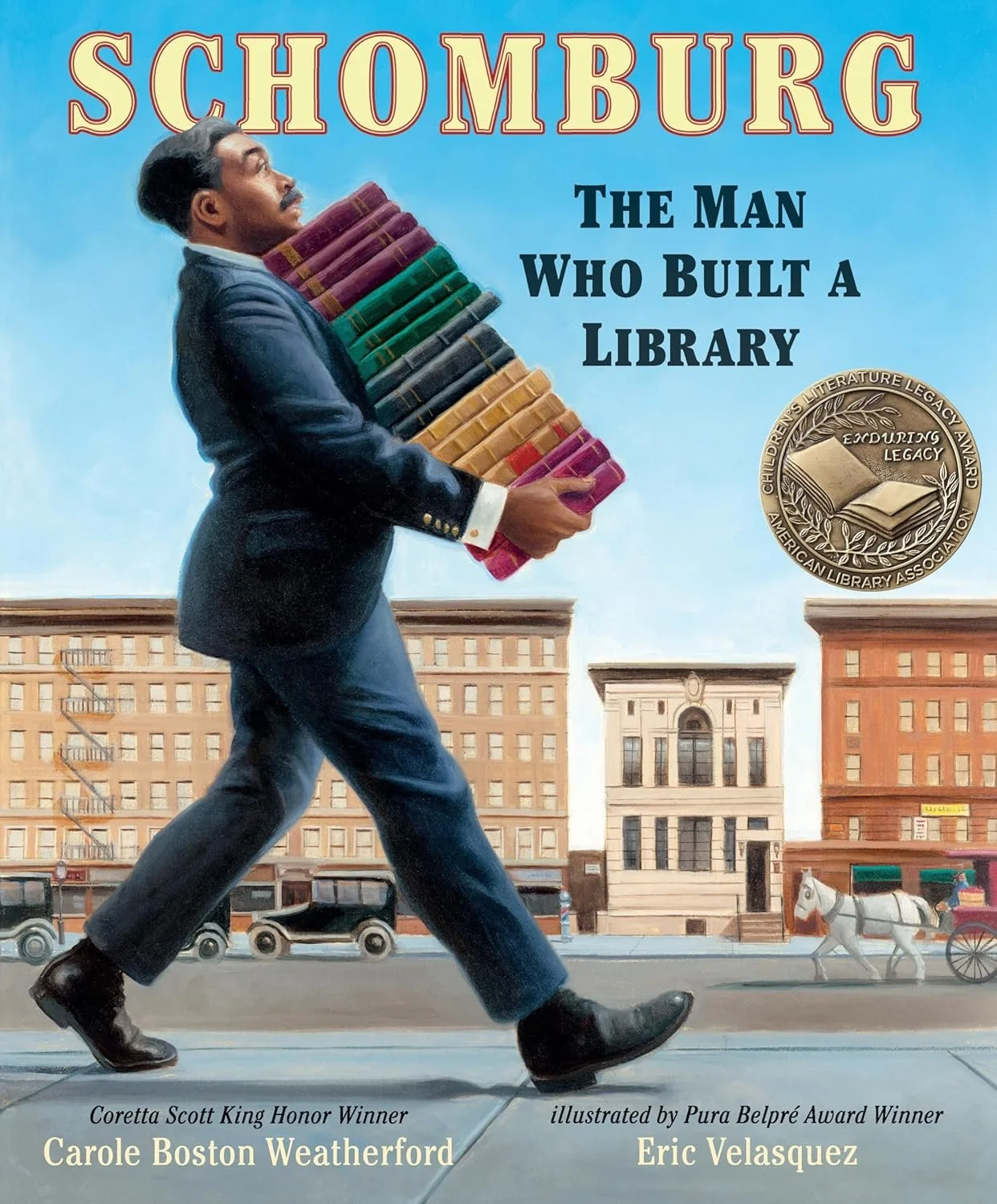
Schomburg The Man Who Built a Library
Book Summary:
Schomburg: The Man Who Built a Library tells the story of Arturo Alfonso Schomburg, a Puerto Rican-born historian, writer, and collector who dedicated his life to preserving the history and achievements of African and African diaspora peoples. The book highlights his tireless work collecting books, artifacts, and documents that chronicled Black history often ignored or erased. Schomburg’s efforts eventually contributed to the foundation of the Schomburg Center for Research in Black Culture, a vital resource for scholars and the public.
Recommended Questions:
Why do you think Arturo Schomburg dedicated his life to collecting books and artifacts about African and African diaspora history?
How does preserving cultural history help communities maintain their identity and prevent erasure?
Which artifacts collected by Schomburg surprised you the most, and why?
The book mentions that there is no record of Schomburg attending school. How does this help us understand that artifacts and historical records can be missing or incomplete?
List three challenges Schomburg faced as a historian and collector, and explain how he overcame them.
How do Schomburg’s actions show the connection between personal identity and social responsibility?
Why are libraries and librarians important for preserving history and cultural knowledge?
Why is it important for libraries and archives to include histories that are often ignored or marginalized?
Research the Schomburg Center for Research in Black Culture. How does its work today reflect Arturo Schomburg’s vision? How can students help continue his legacy of valuing and sharing cultural knowledge?
Standards:
NCSS Theme 5: Individuals, Groups, and Institutions
Schomburg: The Man Who Built a Library highlights how one individual’s actions—Arturo Schomburg—interacted with larger institutions, such as libraries, archives, and scholarly communities, to preserve and share African and African diaspora history. By collecting books, artifacts, and documents, Schomburg influenced both his community and cultural institutions, showing how individuals can shape and strengthen social and cultural structures. The Schomburg Center for Research in Black Culture, which he helped develop, continues this work today, demonstrating how institutions can carry forward the vision of committed individuals.
Social Justice Anchor Standard 10: Respectful Dialogue
Arturo Schomburg dedicated his life to collecting and preserving the histories, achievements, and cultural contributions of African and African diaspora communities—histories that were often ignored or marginalized. By documenting this diversity, Schomburg helped students and scholars understand the richness and complexity of Black experiences across different historical periods and societies. His work encourages learners to recognize the importance of diverse perspectives in shaping culture, identity, and historical knowledge.
WA History 4: Understands how historical events inform analysis of contemporary issues and events
Schomburg’s work in documenting Black history demonstrates the importance of knowing the past to understand and challenge ongoing social inequalities. His preservation of knowledge provides context for contemporary discussions about race, representation, and cultural inclusion. Students can see how historical research and advocacy inform present-day social justice efforts and policies.
