Dia De Los Muertos
Book Summary:
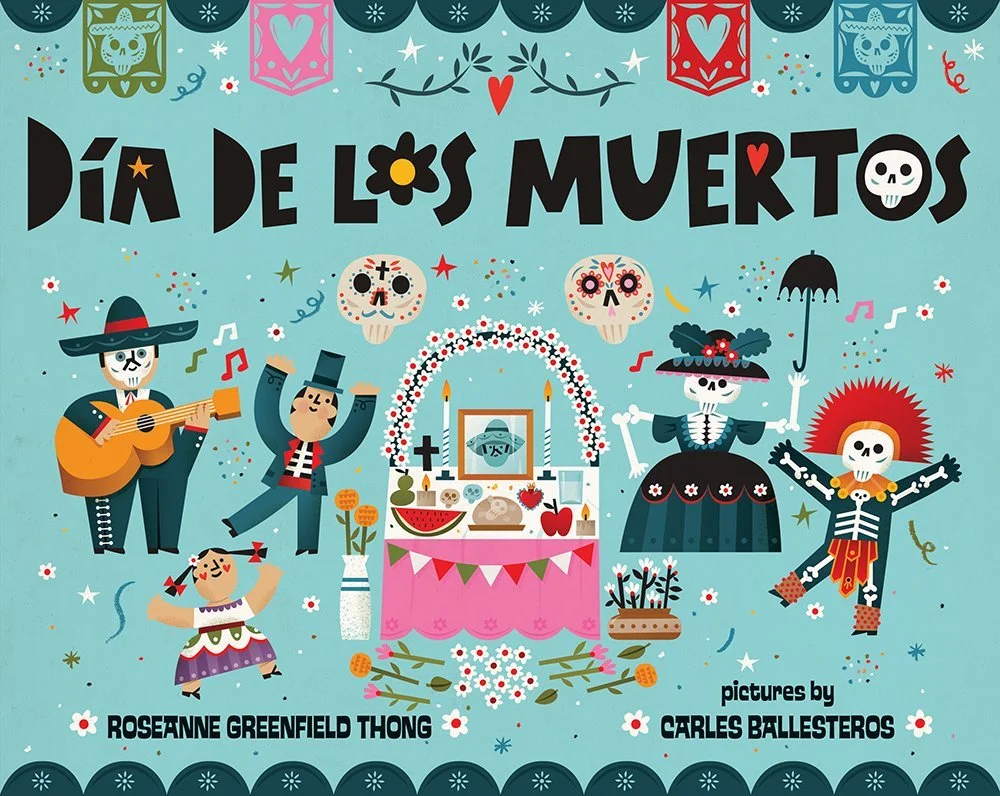
The book centers on cultural traditions, values, and practices within Mexican and Mexican American communities. Students learn how rituals such as making ofrendas, decorating sugar skulls, and visiting cemeteries express shared beliefs about family, memory, and honoring those who have passed. This theme helps students explore how culture shapes identity and community life.
Recommended Questions:
How do the traditions shown in the book help families remember and stay connected to loved ones who have passed away?
Where did Día de los Muertos originate, and where is it celebrated today? How might the celebration look different across various communities or regions?
How does the book help challenge stereotypes or misconceptions about Día de los Muertos being “scary”?
The book references several historical and cultural figures (such as Pancho Villa, La Llorona, and Frida Kahlo). Choose one to research further. Why do you think the author chose to include this figure in the book?
How is Día de los Muertos connected to Aztec and other pre-Columbian traditions? What elements of the holiday today reflect those cultural practices?
How does learning about Día de los Muertos deepen our understanding of the diversity within Latin American cultures?
Standards:
NCSS Theme 1: Culture
The book centers on cultural traditions, values, and practices within Mexican and Mexican American communities. Students learn how rituals such as making ofrendas, decorating sugar skulls, and visiting cemeteries express shared beliefs about family, memory, and honoring those who have passed. This theme helps students explore how culture shapes identity and community life.
Social Justice Anchor Standard 2: Family and Culture
This Día de los Muertos book affirms children’s cultural identities by presenting the holiday as a meaningful, joyful tradition rooted in family and community. It provides meaningful cultural and historical context, helping students develop the language to describe their own connections to heritage, memory, and tradition. By showing diverse ways families honor ancestors, the book encourages readers to recognize and value the cultural groups they belong to, while appreciating those of others.
WA Geography 2: Understands human interaction with the environment
The book helps students understand how cultural traditions—such as ofrendas, marigolds, sugar skulls, and family gatherings—shape the human characteristics of places where Día de los Muertos is celebrated. By showing how communities in Mexico, the U.S., and other regions honor their ancestors in similar yet locally unique ways, the book highlights how cultural practices help define a region’s identity. It allows students to see how traditions connect people to place, history, and community, reinforcing the idea that regions are shaped not only by geography but by cultural meaning and human experience.
