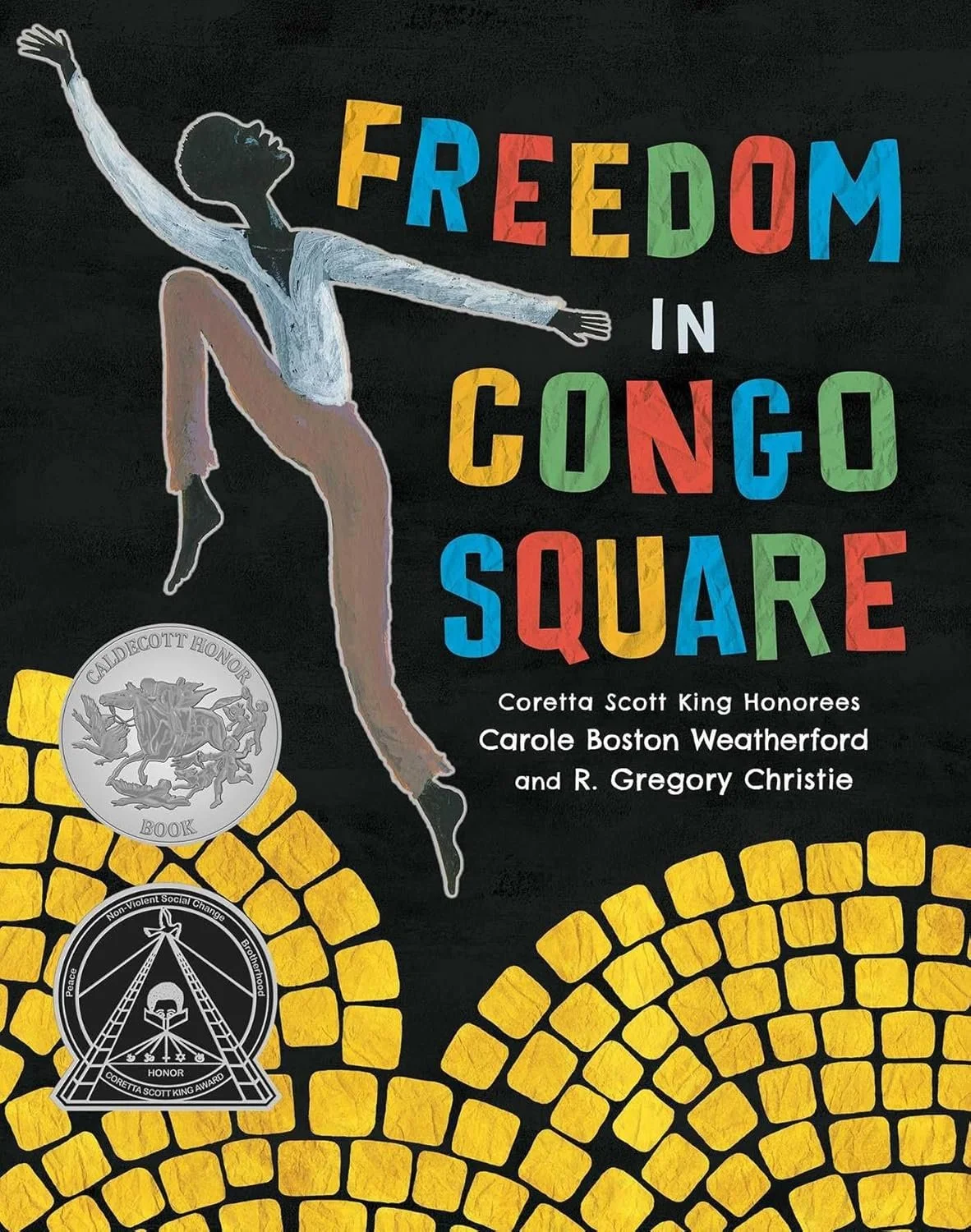
Freedom in Congo Square
Book Summary:
Freedom in Congo Square tells the story of the enslaved and free African‑Americans in 19th‑century New Orleans who counted down the days of hard labor each week so they could gather on Sundays in the historic gathering place known as Congo Square. On those Sundays they were able to sing, dance, trade, and renew cultural traditions—a powerful moment of collective freedom and resilience. The book uses poetic verse and striking illustrations to contrast the toil of Monday‑through‑Saturday with the joy of Sunday, highlighting the enduring strength of community and culture.
Recommended Questions:
1. A recent video of dance in Congo Square shows modern performances. How does that connect to the content or illustrations in the book?
What movements, rhythms, or instruments resemble those shown or described in the book?
How does the energy, gathering, or celebration reflect the historical practices?
In what ways does the performance show cultural continuity from the past to today?
2. The foreword uses the term “enslaved people.” The book text uses “slaves.” What is the difference? Why might the author use both?
3. What is the Code Noir, and how does it connect to this book?
4. The author’s note states that enslaved people were often forbidden from assembling or making music. Why do you think that was? What might whites have feared?
5. Why do you think dancing and assembly were allowed in Congo Square?
6. What historical details in the book help you understand what daily life was like under slavery?
7. Why do you think Congo Square is still remembered and honored today?
Standards:
NCSS Theme 1: Culture
The book explores how African cultural traditions survived despite the oppressive conditions of slavery. Congo Square is portrayed as a place where people could dance, drum, gather, and reconnect with their cultural roots, even if only briefly. This highlights how communities maintain identity, creativity, and cultural memory even in the face of systemic oppression.
Social Justice Anchor Standard 19:
Freedom in Congo Square shows how enslaved Africans found ways to resist and assert agency, even within extreme oppression. By gathering, singing, drumming, and dancing in Congo Square, they claimed a small space of freedom and cultural expression despite the restrictions imposed on them.
WA History 2: Understands and analyzes causal factors that have shaped major events in history
The book illustrates the historical realities of slavery, including the laws, social systems, and daily labor demands that shaped enslaved people’s experiences. By depicting both the oppressive structures and the unique context that allowed Congo Square to exist, students can analyze the causes and forces that shaped this historical moment. This helps students understand how historical power systems influenced people’s lives and how cultural survival emerged within these constraints.
