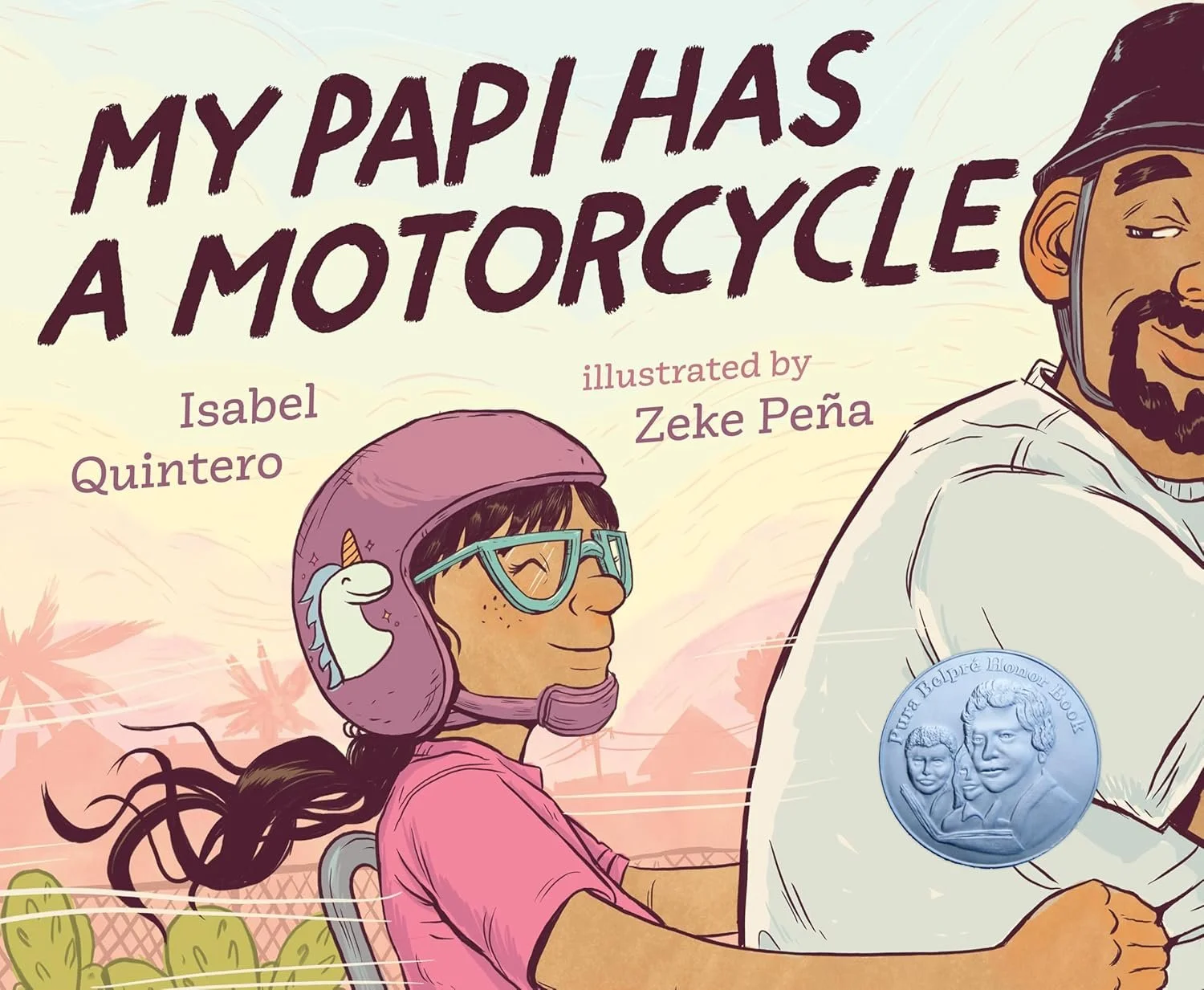
My Papi Has A Motorcycle
Book Summary:
This picture book follows Daisy Ramona as she hops on her papi’s motorcycle and together they ride through their neighborhood, observing people she knows, beloved landmarks, and the changing community around them. While Daisy experiences the vibrant life of her neighborhood, she also senses the transitions coming to the place she calls home — and finds comfort in the constant love her papi gives.
Recommended Questions:
What people, places, and details did Daisy notice during the ride? How do they help you understand her community?
What history is reflected in the murals she drives past? How does that history connect with her family history?
How does Daisy feel about the changes happening in her neighborhood? What do you think stays the same, and what worries her?
How does Daisy’s relationship with her papi shape her understanding of her own identity?
What do the illustrations tell us about the heritage and contributions of the community?
If you were telling a story about your community like Daisy does, what places would you highlight? Think about parks, murals, schools, shops, cultural centers, or streets that hold special meaning. Why are these places important to you and your neighbors?
How can you find out more about the history and stories of your community? Consider talking with family members, neighbors, or local elders; visiting libraries, archives, or museums; exploring local newspapers; or documenting the people, buildings, and traditions you see every day. How do these stories help you understand who you are and the people around you?
How do the Spanish words used in the book enhance the story?
Standards:
NCSS Theme 4: Individual Development and Identity
Daisy’s relationship with her father and her deep connection to her neighborhood reflect her development of identity — both personal (her bond with papi) and cultural (the immigrant‑community neighborhood, the murals, the places). The story shows how she understands herself in relation to her community and heritage, reinforcing how personal identity is shaped by family, place and change.
Social Justice Anchor Standard 20: Sustained Commitment
While the story doesn’t depict overt activism, it subtly invites reflection on community change, equitable recognition of immigrant labor and the value of the people (“immigrants who worked” the groves, the neighborhood heritage) who built the place. Daisy’s ride encourages students to notice whose stories are told and preserved, and whose might be fading — thus offering a doorway to action in honoring often‑unseen contributions and supporting community memory and justice.
WA Social Studies Skills 2: Uses inquiry-based research
Teachers and students can use Daisy’s ride as a starting point for inquiry: What is the history of this neighborhood? Who built these places? How are neighborhoods changing? Students can research local community landmarks, immigrant labor history, or neighborhood change and then form questions, gather information, evaluate change over time — all part of inquiry‑based research.
