Mamie Tape Fights to go to School
Book Summary:
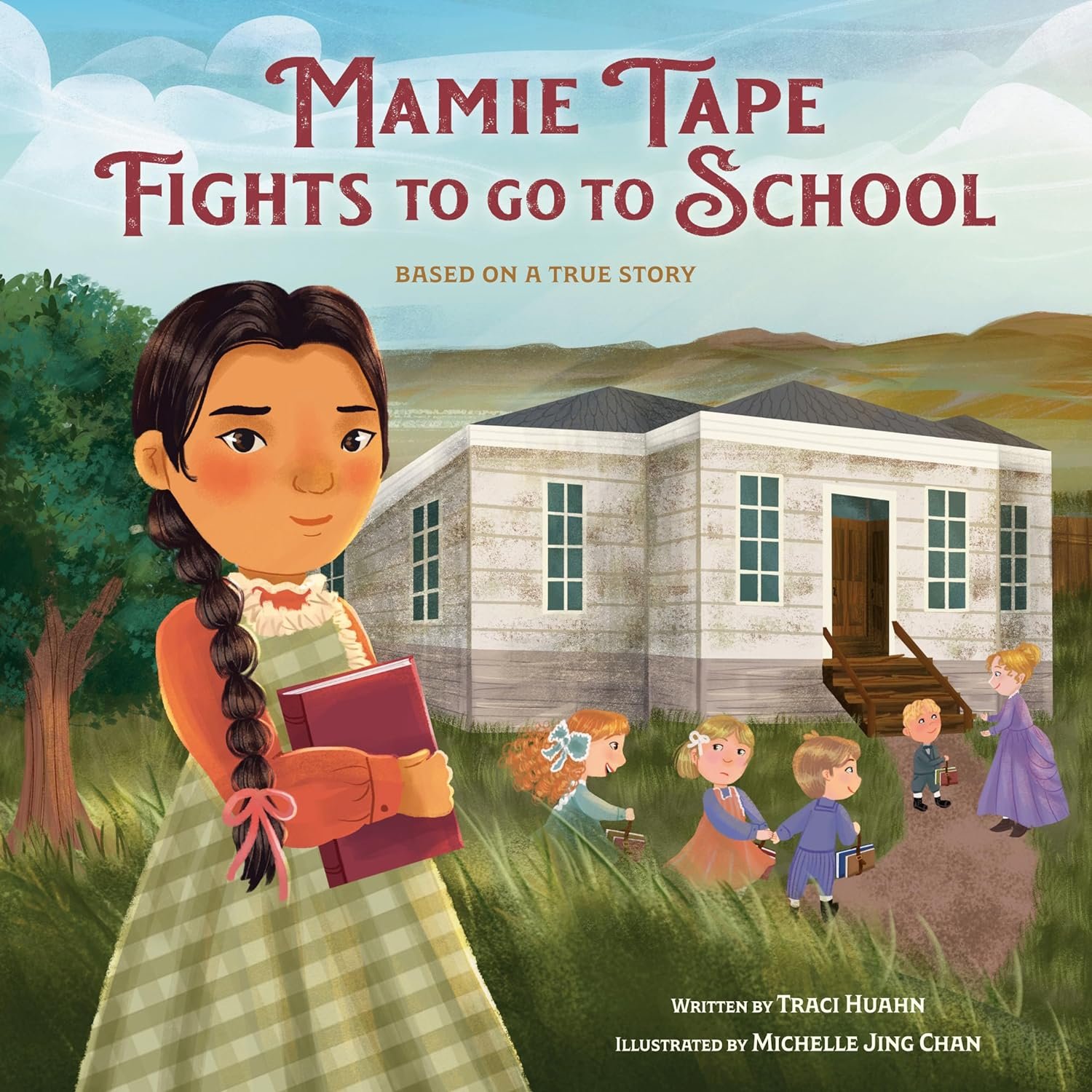
This story aligns with the NCSS theme of Power, Authority, and Governance because it focuses on how institutional power (school boards, laws, courts) controlled who could access public education and how marginalized groups challenged that power. Through the Tape family’s fight, students see how authority is exercised and contested, and how governance structures (laws, courts, school systems) impact everyday lives.
Recommended Questions:
Why do you think it was hard to find a white doctor to provide a certificate of vaccination for Mamie?
Research this time period (1880s). What historical events are occurring that impact Mamie and her family, such as the Chinese Exclusion Act?
Why do you think San Francisco did not allow Chinese children to attend its schools?
Read the author’s note to learn more about school segregation in California. How do you think Mamie felt in 1947 (when she was 71) during the Mendez v. Westminster case?
Imagine Mamie is asked to give the Mendez family advice. What advice might she give them?
How did Mamie’s parents use the legal system to challenge unfair treatment? What can we learn from their approach today?
Even though Mamie won the right to attend a public school, segregation continued. What does this teach us about the difference between legal change and social change?
Standards:
NCSS Theme 6: Power, Governance and authority
The book aligns with this theme because it demonstrates how institutional power—through school boards, laws, and courts—controlled who could access public education. The Tape family challenged that authority and highlighted how governance structures can both oppress and be contested. Students can analyze how legal decisions, government policies, and civic action interact to shape society.
Social Justice Anchor Standard 13: Examining Inequity
Mamie Tape’s story connects to this standard because it highlights systemic inequities in 19th-century California, where Chinese-American children were denied access to public education due to racial discrimination. The book shows how laws, school policies, and social biases created unequal opportunities and how the Tape family challenged these injustices. Students can analyze how structural inequities operate and consider ways to advocate for fairness and inclusion in education and society today.
WA History 1: Understands historical chronology
The book situates Mamie Tape’s life and legal battle within the broader timeline of 19th-century California and U.S. history. Students can see how her fight for educational access occurred amid the rise of anti-Chinese sentiment, the passage of the Chinese Exclusion Act (1882), and other social and legal developments of the era. It also demonstrates how long it took for California laws and policies to change, as later cases like Mendez v. Westminster (1947) continued to challenge school segregation decades after Tape’s case. Understanding this chronological context helps students recognize how historical events are interconnected and how individual and legal actions influence the trajectory of civil rights and social change.
