The Library Bus
Book Summary:
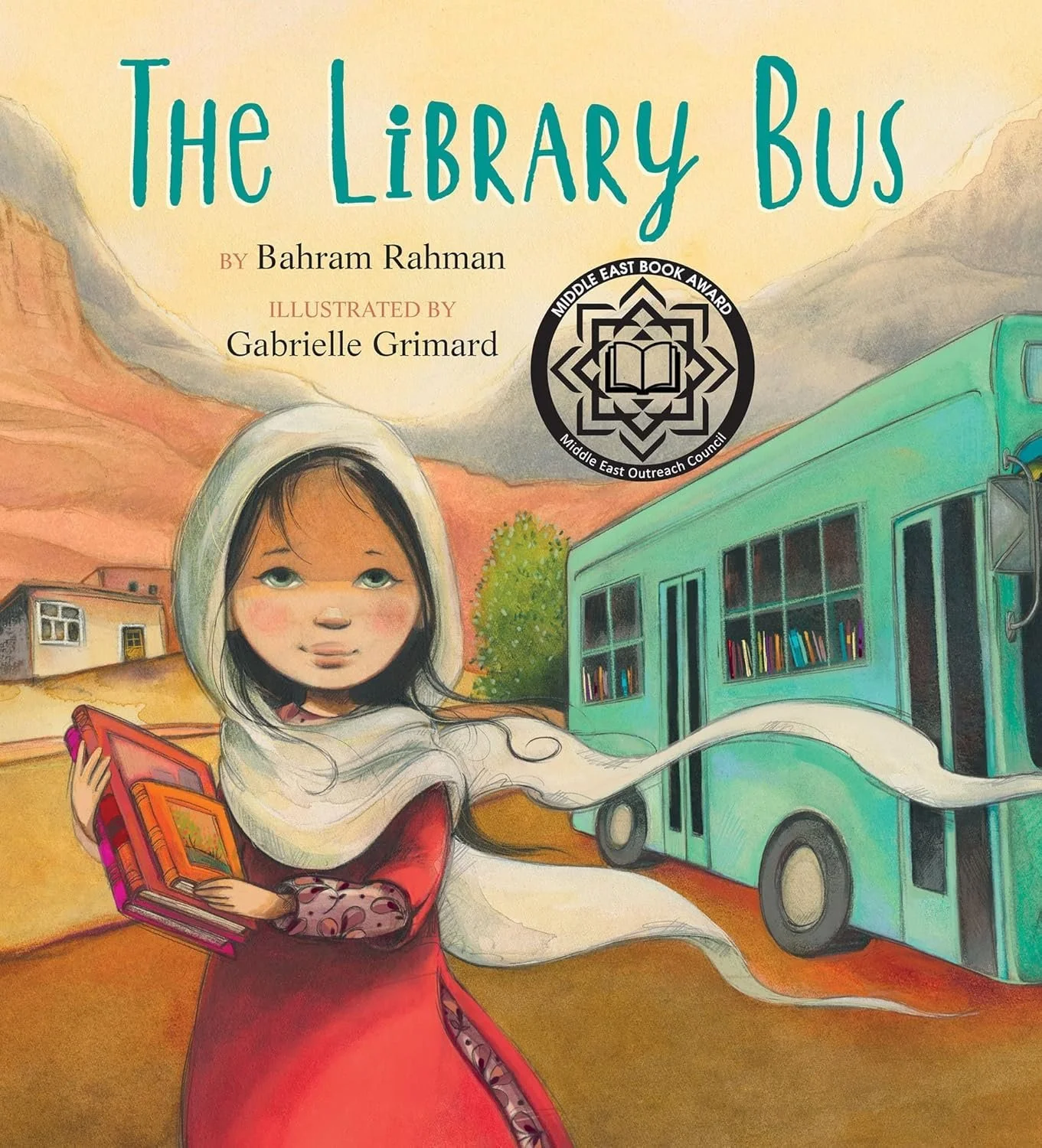
The Library Bus tells the story of five-year-old Pari as she joins her mother on a mobile library that travels from Kabul to villages and a refugee camp, bringing books and lessons to girls with limited access to education. As Pari helps distribute notebooks and watches girls learn to read and write, she discovers how fortunate she is to attend school—something many Afghan girls were once forbidden to do under Taliban rule. Inspired by real library buses in Afghanistan, the story celebrates literacy, resilience, and the determination of women and girls to claim education.
Recommended Questions:
Why do you think Pari is nervous on her first day helping on the library bus?
What does Pari learn from her mother about girls’ education in Afghanistan, and why is this important? How does this help her understand the significance of the work they are doing now?
Why is access to education important for individuals and societies?
Why is literacy a powerful tool for both individuals and communities?
How do Pari and her mother demonstrate courage and leadership throughout the story?
What differences do you notice between Pari’s opportunities and those of the girls living in the village and the refugee camp? Why is it important for Pari to recognize these differences while remaining humble and compassionate rather than arrogant as she continues helping others?
The book mentions tents in the refugee camp from two organizations—the World Food Programme and the United Nations High Commissioner for Refugees (UNHCR). Research these organizations to learn how they support refugees. What kinds of help do they provide, and why is their work important?
Imagine you have been asked to recommend books to add to the library bus collection. What books would you choose, and why do you think they would be meaningful and appreciated by the girls in Afghanistan?
NCSS Theme 2: Time, Continuity and Change
This book helps students understand how historical events shape people’s lives across time. Through Pari’s conversations with her mother, readers learn how girls’ access to education in Afghanistan changed before, during, and after the Taliban’s first regime. The story shows continuity and change by comparing past restrictions on learning with present efforts to expand educational opportunities, helping students see how history influences current social conditions.
Social Justice Anchor Standard 12: Individual and institutional bias
The book helps students understand gender-based educational inequality experienced by Afghan girls during and after the Taliban’s first regime. By showing women teaching and learning despite restrictions, the story highlights resistance to injustice and the importance of equitable access to education. Students are encouraged to reflect on education as a human right.
WA Civics 4: Understands civic involvement
The library bus represents civic action addressing unequal access to education. Pari’s mother and community members actively support literacy by bringing learning resources directly to villages and refugee camps. The story demonstrates how civic participation can be used to overcome barriers to education.
