Dancing Hands
Book Summary:
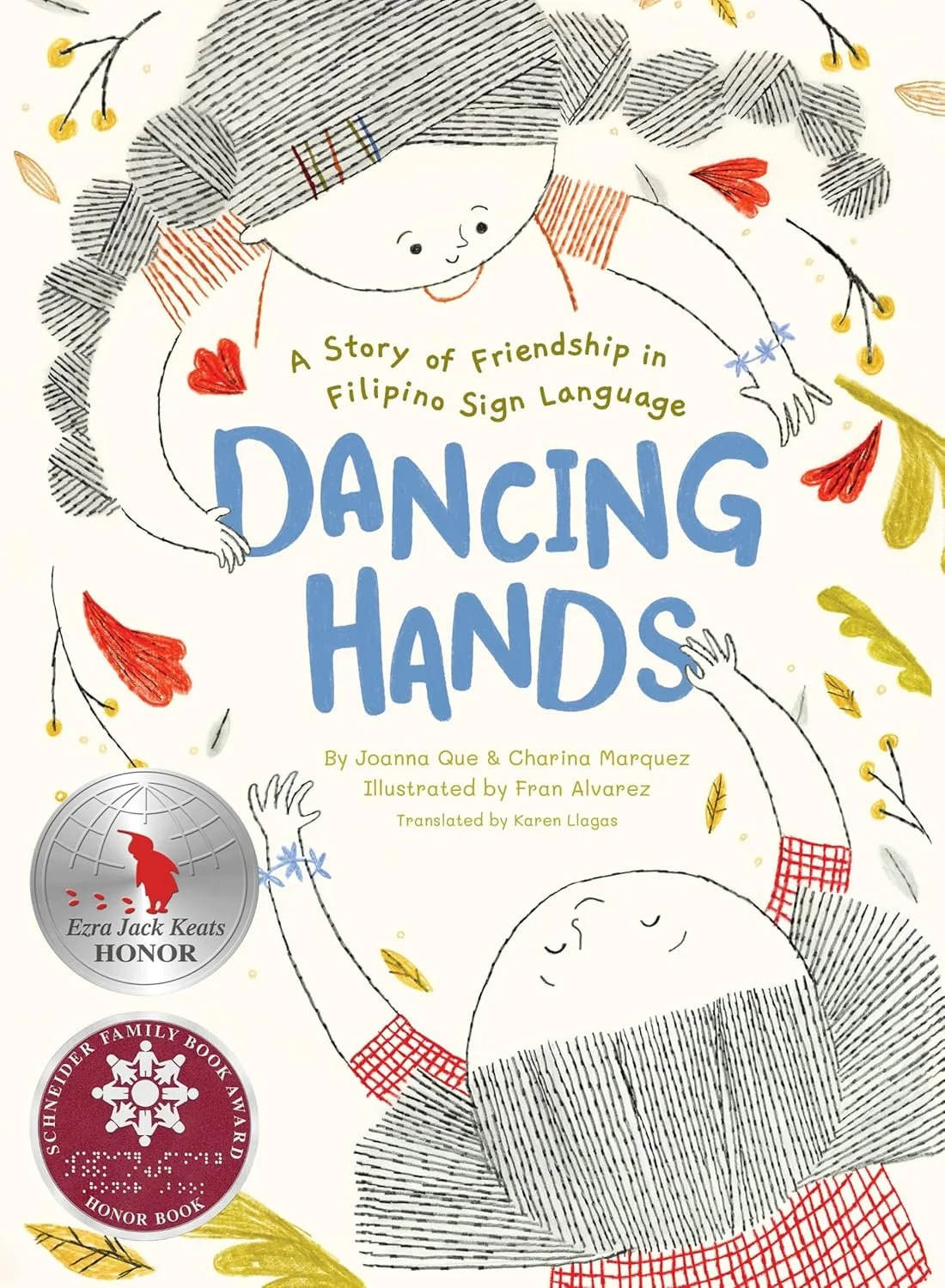
Dancing Hands tells the story of Sam, a young girl who becomes curious when her new neighbor communicates using Filipino Sign Language. As Sam befriends Mai, she learns to sign so they can communicate, discovering that friendship can grow through patience, curiosity, and shared learning. The book celebrates inclusion, communication across differences, and the beauty of Filipino Sign Language.
Recommended Questions:
How does learning Filipino Sign Language change Sam’s relationship with Mai?
In what ways do Sam and Mai show respect for one another?
How does the story demonstrate that language is an important part of culture and identity?
Why is it important to have Filipino Sign Language instead of relying only on a universal sign language?
Should governments and schools take action to protect and teach local sign languages? Why or why not?
How can cultural attitudes toward Deaf communities influence whether sign languages are preserved or lost?
How might new technologies, such as hearing aids and communication devices, affect the use of sign language and Deaf communities?
What responsibilities do communities have to preserve languages that are at risk of disappearing?
Why is it important to have Filipino Sign Language—and the hundreds of other specific sign languages used around the world—instead of relying only on a single universal sign language? How do these languages support culture, identity, and community?
Investigate resources just as this to learn more about Filipino Sign Language https://www.youtube.com/watch?v=leTo5-lzex4
NCSS Theme 9: Global Connections
This book demonstrates how communication systems, languages, and cultures are connected across the world. The author’s note explains that globalization influences which sign languages become widely used and which may decline, demonstrating how global connections can shape cultural practices and linguistic diversity. Students learn that increased global interaction brings opportunities for communication while also creating challenges in preserving local languages and cultural identities.
Social Justice Anchor Standard 8: Respectful curiosity
Dancing Hands models respectful curiosity as Sam seeks to understand Mai’s language instead of viewing it as unfamiliar or strange. The friendship demonstrates how openness and learning from others create inclusive communities. The story promotes valuing linguistic and cultural diversity, including Deaf culture and Filipino identity.
WA Social Studies Skills 3: Deliberate on public issues
The author’s note explains that globalization, cultural attitudes, education systems, and new technologies can influence whether sign languages grow or decline, sometimes causing smaller local sign languages to disappear. This invites students to deliberate the public issue of language preservation by considering how societies make decisions about accessibility, inclusion, and cultural respect. The book encourages discussion about how communities and governments can support Deaf communities and protect linguistic diversity so that important languages and cultural identities are not lost.
