Until Someone Listens
Book Summary:
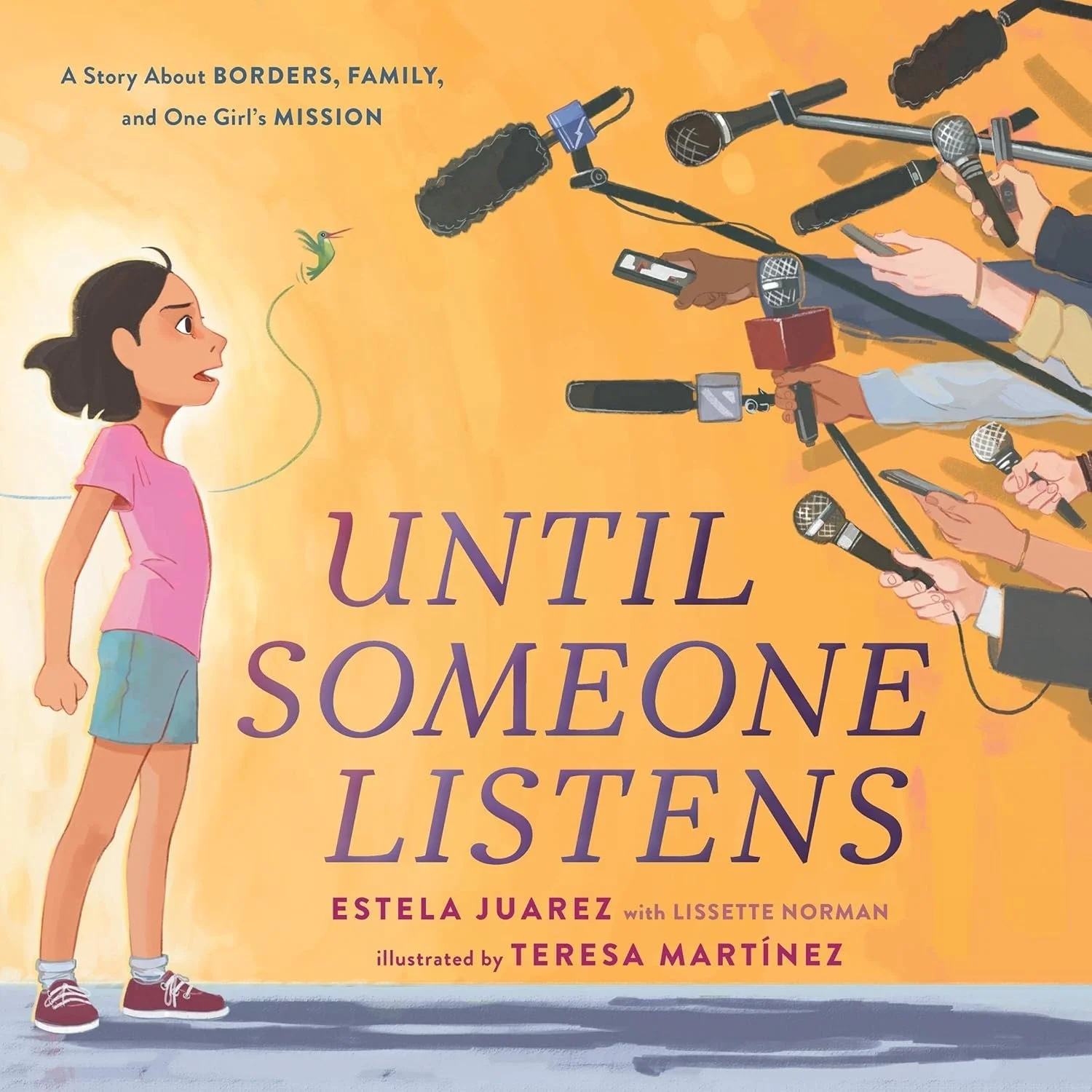
Until Someone Listens tells the true story of Estela Juarez, a young girl whose mother was detained and deported, separating their family. Determined to be heard, Estela spoke publicly and advocated for immigrant families affected by deportation policies. The book highlights youth activism, resilience, and the power of speaking out for justice.
Recommended Questions:
How does this story show the complicated nature of immigration laws that affect families with mixed immigration status?
Choose one phrase from the book and explain its importance:
“ My mom didn’t do anything wrong. She was just born somewhere else.” or “Families should end up how they started — together.” What message does the author want readers to understand through this statement?
What does the title Until Someone Listens convey about Estela’s experience and goals?
Look closely at the illustrations next to the text, “At first I read, then I wrote.” What books is Estela reading? Research those books. Why might the illustrator have included them?
How can reading and research help people learn to use their voice or advocate for change?
How is the author connected to the story? Why does telling her own story make the message more powerful?
In what ways is this book itself an example of using one’s voice “until someone listens”?
Research and watch interviews Estela Juarez gave to news organizations. How does this help you better understand Estella’s message and activism?
NCSS Theme 10: Civic Ideals and Practices
This book demonstrates how individuals—including children—participate in civic life to influence public awareness and policy discussions. Estela’s advocacy shows how citizens use voice, protest, and public storytelling to address injustice. Students learn that civic participation can occur through peaceful action, communication, and community engagement.
Social Justice Anchor Standard 20: Sustained Commitment
Estela’s story models how individuals take action when they recognize injustice affecting themselves or others. The book encourages students to see advocacy, storytelling, and peaceful activism as meaningful ways to promote fairness and human dignity. It reinforces the idea that young people can contribute to social change.
WA Civics 4: Understands civic involvement
The story illustrates how individuals engage in civic processes to address public issues that affect their communities. Estela participates in public dialogue by sharing her experiences and advocating for change, demonstrating how civic action can raise awareness and influence societal conversations. Students examine how participation in civic life extends beyond voting to include advocacy and public expression.
