Cora Cooks Pancit
Book Summary:
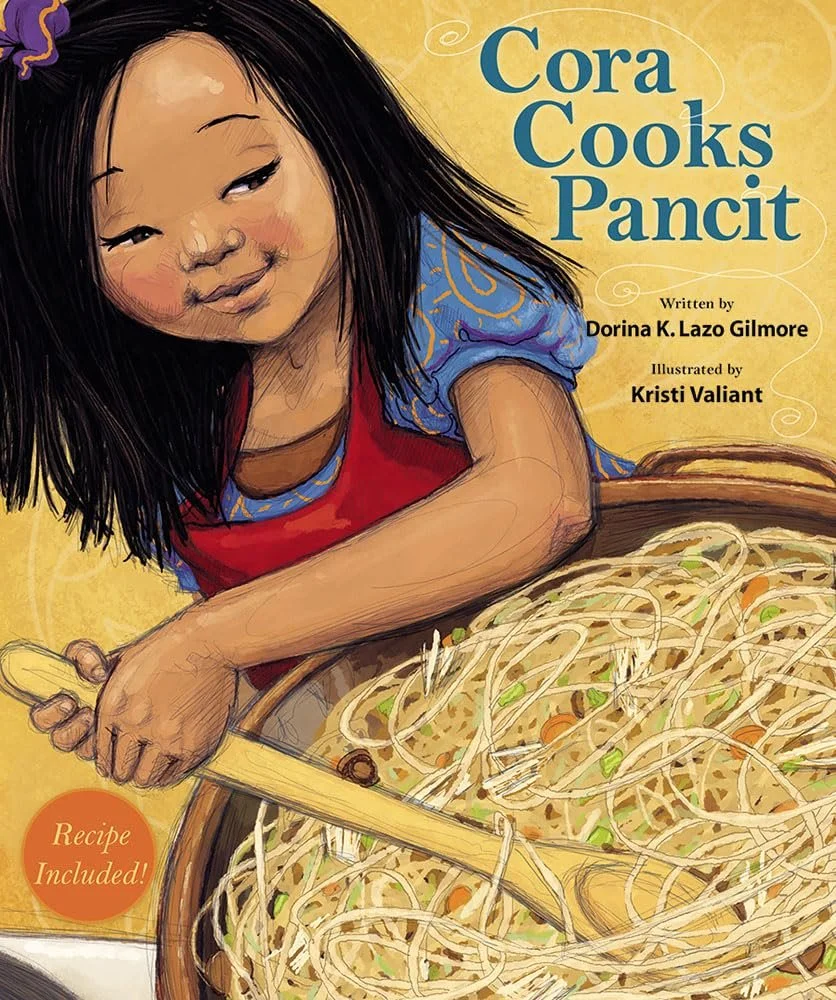
Cora Cooks Pancit tells the story of a young Filipino American girl who wants to participate in cooking alongside her older siblings. When Cora is finally invited to help her mother prepare pancit, she learns patience, responsibility, and the importance of family traditions. The story highlights how cultural identity and heritage are passed down through everyday experiences like cooking and sharing food.
Recommended Questions:
Why is cooking pancit important to Cora and her family?
How this book how food helps preserve culture across generations?
How might cooking traditional foods help immigrant families stay connected to their heritage?
What does Cora learn about responsibility and belonging through cooking?
How might migration and cultural exchange influence the foods people eat?
The book refers to Lolo cooking for California farmworkers who picked strawberries and grapes in the fields. Research Larry Itliong to learn more about Filipino leadership during the farm labor movement of the 1960s. Explore how Filipino American workers organized for fair wages and working conditions and how their leadership contributed to major labor actions such as the Delano Grape Strike.
Research the history of pancit to learn more about its cultural significance. Consider exploring the following ideas:
The origin and meaning of the name pancit
How Chinese merchants introduced noodle dishes to the Philippines
How ingredients and cooking styles were adapted to reflect Filipino tastes and local resources
The cultural symbolism of long noodles, especially their connection to longevity, celebration, and family traditions
NCSS Theme 9: Global Connections
This book shows how cooking and storytelling pass cultural knowledge across generations and link families to places around the world. As Cora prepares pancit with her mother, she participates in traditions shaped by stories her grandfather once shared about the Philippines, where he was born. The story illustrates how food and family traditions carry history, culture, and global connections from one generation to the next.
Social Justice Anchor Standard 1: Positive Social Identities
Cora’s experience affirms cultural pride and belonging within a Filipino American family. The book helps students recognize how cultural traditions strengthen identity and counter feelings of exclusion or invisibility often experienced by historically marginalized communities. It encourages appreciation of diverse cultural experiences and respect for family heritage.
WA Economics 1: Understands people have to make choices between wants and needs and evaluate outcomes
Cora learns that cooking requires planning, patience, and responsible decision-making. She must follow directions, wait her turn, and make careful choices while helping prepare a family meal, illustrating how everyday decisions contribute to meeting family needs. The story helps students understand how families make choices about time, resources, and responsibilities when preparing and sharing food together.
