Fatty Legs
Book Summary:
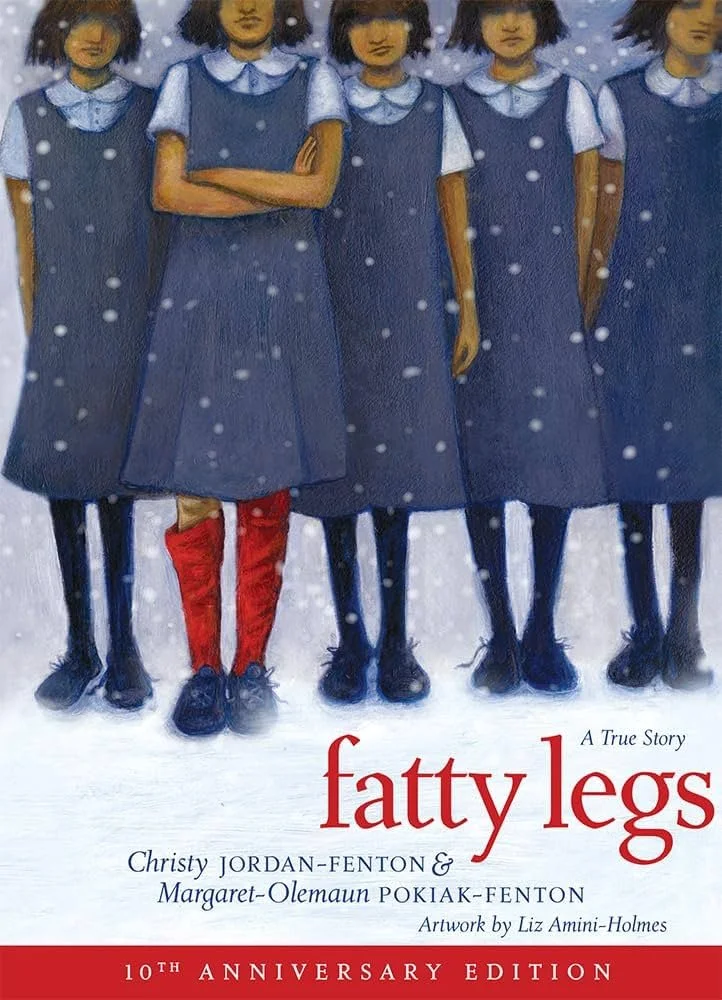
This early chapter book is a true memoir about eight‑year‑old Inuit girl Margaret‑Olemaun Pokiak‑Fenton, who is determined to learn to read and persuades her father to let her attend a distant residential school. At school she faces harsh treatment, including being humiliated with a pair of red stockings that earn her the unkind nickname “Fatty Legs,” yet she stands up for herself and ultimately perseveres with dignity and courage. The story highlights both the challenges of the residential school system and Margaret‑Olemaun’s resilience in maintaining her spirit.
Recommended Questions:
Why did Olemaun want to attend the residential school, even though others warned her about what it would be like? What did education mean to her?
What challenges did Olemaun face at the residential school, and how did she respond to them? What does this tell us about her character?
Why do you think the author chose the title Fatty Legs? Why were the red socks and the name-calling such an important part of Olemaun’s experience?
How was Olemaun’s Inuvialuit culture important to her strength and resilience? In what ways did her cultural identity help her endure hardship?
How does this story help us better understand the history of residential schools and their impact on Indigenous families and communities?
How is reading a memoir like Fatty Legs different from learning about residential schools through a textbook? What do we gain from hearing a personal story?
How does hearing Olemaun’s voice as a young girl shape your understanding of the past compared to only reading historical facts?
After reading Fatty Legs, read When I Was Eight, the picture-book version of the same story. What details from Fatty Legs would you add to the picture book? If you could add one important scene, which would you choose and why?
Research residential schools that operated near your community or school. What tribes were affected, and how is this history remembered or acknowledged today?
NCSS Theme 1: Culture
Fatty Legs shows how Margaret‑Olemaun’s Inuvialuit cultural identity shapes her strengths, values, and worldview before, during, and after her time in the residential school. The book illustrates how Indigenous traditions, language, and sense of self are challenged by assimilationist policies, yet ultimately remain central to her identity—a key focus of understanding how culture influences individual development and human interactions.
Social Justice Anchor Standard 13: Harmful impact of bias and injustice on the world, historically and today
Fatty Legs directly shows how systemic injustice—in this case the Canadian residential school system—aimed to strip Indigenous children of their culture, language, and identity as part of a biased assimilation policy. Students reading the memoir can see the real human impact of prejudice and institutional injustice, and connect those historical harms to ongoing discussions about Indigenous rights, cultural survival, and reconciliation.
WA History 4: Understand how historical events inform analysis of contemporary issues
Fatty Legs helps students understand how the history of residential schools continues to affect Indigenous peoples today, including impacts on identity, education, and community trust. By examining Olemaun’s experiences of discrimination and resilience, students can connect past injustices to contemporary issues such as cultural preservation, educational equity, and reconciliation. The book encourages learners to consider how historical systems of oppression shape present-day realities and why acknowledging this history matters now.
