Those Shoes
Book Summary:
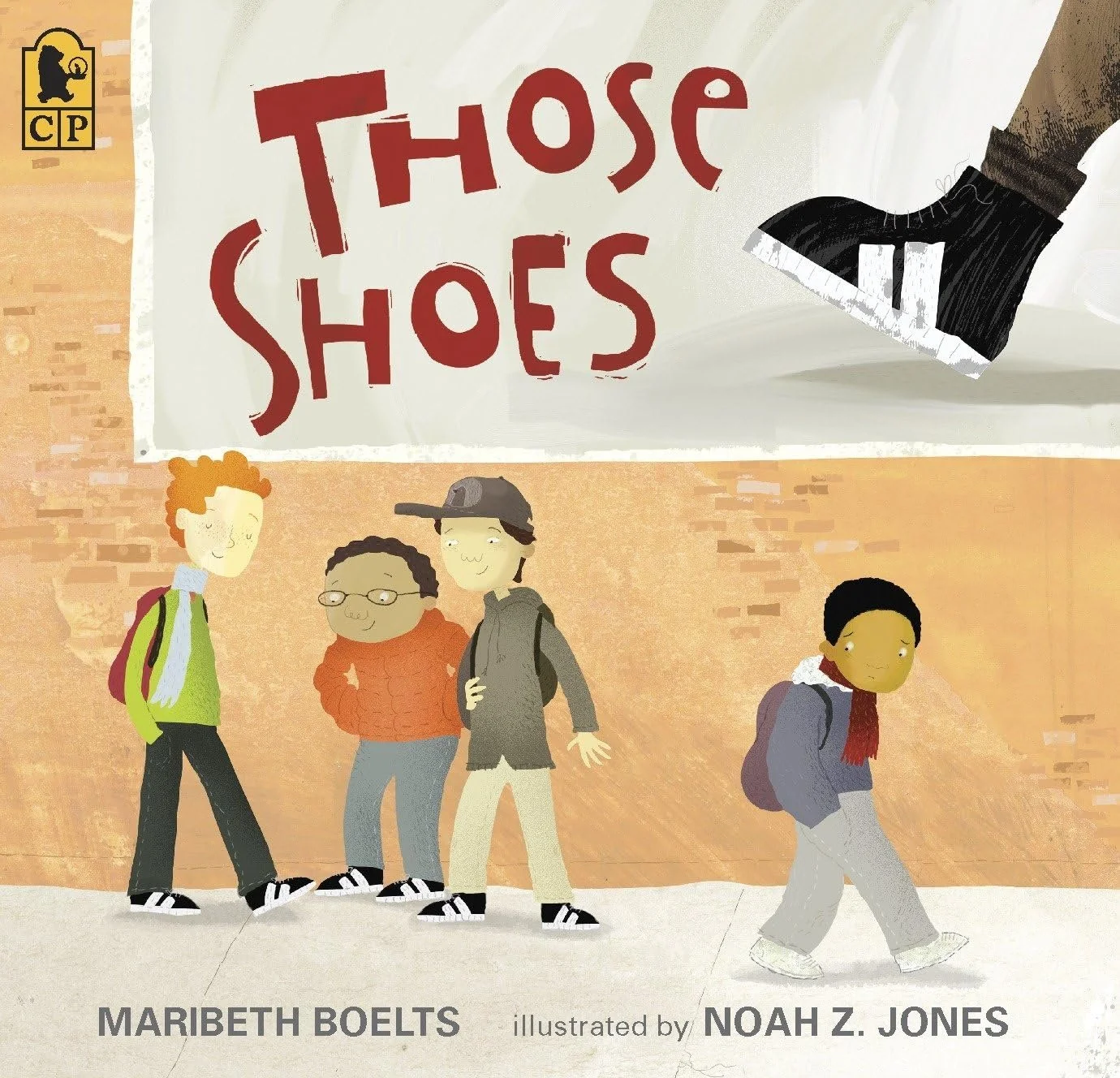
Those Shoes tells the story of Jeremy, a boy who really wants a pair of popular black high‑top sneakers that all his classmates seem to have, but his family can’t afford them. After his old shoes fall apart and he finds a thrift‑store pair that don’t fit, he ultimately gives them to a friend who needs them more and learns that friendships, family, and gratitude are more important than “cool” things.
Recommended Questions:
Why did Jeremy want “those shoes” so much? How did the other kids’ shoes influence how he felt?
What was the difference between a want and a need in Jeremy’s situation? How did his grandmother help him understand that?
How did the way other kids treated Jeremy because of his shoes make him feel? What does that teach us about treating others with kindness?
Why did Jeremy decide to give the shoes to Antonio even though he really wanted them? What does that decision say about his character?
How did Jeremy’s feelings change from the beginning of the story to the end?
What does this book teach us about what really matters in friendships and in our community?
Can you think of a time when you wanted something because others had it? How did that make you feel, and how is it similar to or different from Jeremy’s experience?
How might students at school help make sure everyone feels included and valued, even if they don’t have the “cool” things others do?
What are some ways people in your community make choices between wants and needs? How do those choices affect others?
The book shows Mr. Alfrey’s kindness when he gives shoes to Jeremy. However, it’s not clear whether Mr. Alfrey knew how the other kids were treating Jeremy and making him feel left out because of his shoes. If you were Mr. Alfrey, how would you teach the other kids that unkind words and behavior are not acceptable at school?
NCSS Theme 7: Production, Distribution and Consumption
Students can analyze Jeremy’s choice and think about how families, schools, and communities make decisions about resources, showing the economic principle that resources are limited and choices have consequences. This encourages discussion about fairness, sharing, and evaluating outcomes of economic decisions.
Social Justice Anchor Standard 1: Positive Social Identities
Those Shoes shows how Jeremy’s sense of self and personal values grow through his experiences. He starts by defining himself through what he wants—“those shoes”—but grows to value empathy, generosity, and understanding others’ needs, highlighting how identity is shaped by personal choices and relationships.
WA Economics 1: Understands that people have choices between wants and needs and evaluates the outcomes of those choices
In Those Shoes, Jeremy wants the popular black high‑top sneakers, which represent a want, but he also has basic needs, like shoes that fit and protect his feet. The story illustrates how families and individuals must make decisions about limited resources and priorities. Jeremy ultimately chooses to give the shoes to Antonio, someone who has a greater need, demonstrating how evaluating choices between wants and needs can impact others and teach empathy.
