The Day the Crayons Quit
Book Summary:
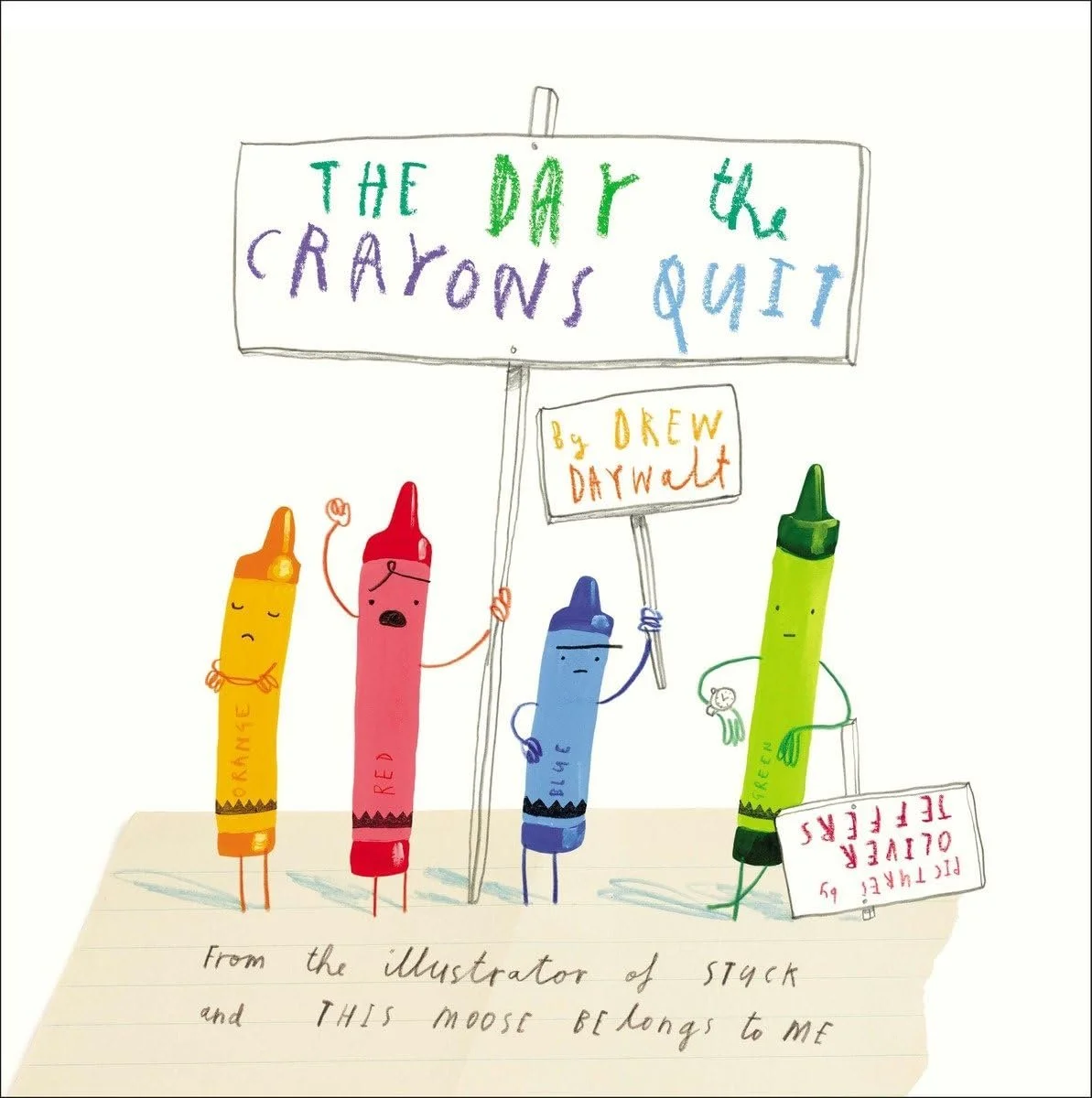
The Day the Crayons Quit tells the story of Duncan, a young boy who discovers that his crayons have written letters explaining why they are unhappy with how they are used. Each crayon voices concerns about fairness, overuse, neglect, or stereotyping. Through listening and problem-solving, Duncan finds a creative solution that honors everyone’s perspectives.
Recommended Questions:
Why do the crayons decide to write letters instead of continuing to stay quiet? What does this teach us about the importance of speaking up when something feels unfair?
How does the story change when we hear from many crayons instead of just one? Why is it important to listen to multiple voices?
Which crayon’s letter stood out to you the most, and why?
How do the crayons’ experiences show both fairness and unfairness? Can you think of real-life situations where some voices are heard more than others?
What is the difference between everyone being treated the same and everyone being treated fairly in the story?
Who has power in the story at the beginning, and how does that power shift by the end? What responsibilities do people with power have?
Why is it important to consider different viewpoints before making a decision? How does this help a community work better?
How does Duncan show civic responsibility in the way he responds to the crayons’ concerns?
What might have happened if Duncan had ignored the crayons’ letters? What does this suggest about civic responsibility and participation?
What does this story teach us about compromise and problem-solving in a community?
Can you think of another solution Duncan could have chosen? What might have been the pros and cons of that choice?
How does this story connect to ideas about rights, responsibilities, and participation in a classroom or in society?
NCSS Theme 6: Power Governance and Authority
This book illustrates how individuals express grievances and advocate for change when they feel treated unfairly. The crayons model civic participation by organizing, articulating concerns, and seeking a more just distribution of power and resources. Duncan’s response reflects negotiation, compromise, and shared decision-making—key elements of democratic processes.
Social Justice Anchor Standard 16: Empathy when people are excluded or mistreated
Each crayon describes experiences of exclusion, overuse, or stereotyping, encouraging readers to recognize injustice and empathize with marginalized voices. The story helps students understand that fairness requires listening and structural change, not just good intentions. Duncan’s actions model how empathy can lead to more equitable outcomes.
WA Social Studies Skills 3: Deliberates on public issues
The crayons’ letters present a shared public issue—unfair treatment and lack of voice—that requires discussion and collective problem-solving. Duncan must weigh competing perspectives, deliberate possible solutions, and make decisions that consider the needs of all parties. This mirrors civic deliberation and helps students practice evaluating viewpoints and resolving conflicts through dialogue.
