Contenders
Book Summary:
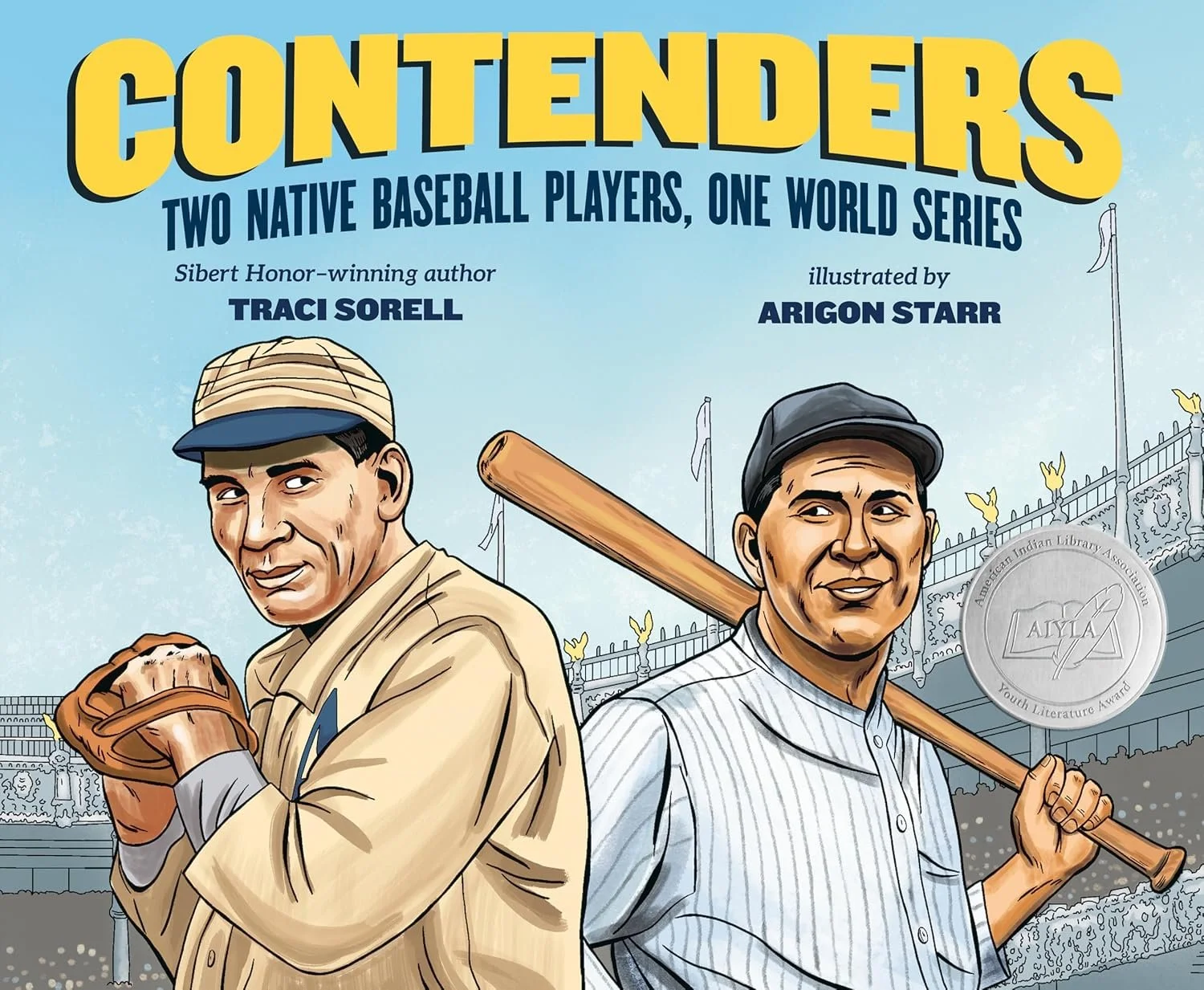
Contenders tells the parallel true stories of Charles Albert Bender (Ojibwe) and John Meyers (Ho-Chunk), two Native American baseball players who faced racism and exclusion while rising to play in the 1911 World Series. Despite systemic barriers, both men used resilience, skill, and cultural pride to succeed in professional baseball. The book highlights perseverance, identity, and the struggle for equity in American sports and society.
Recommended Questions:
Why is it important that the book tells both players’ stories side by side rather than focusing on just one? How does this structure deepen our understanding of their experiences?
Whose perspectives are often missing from sports stories and sports history? Why does it matter whose voices are included or excluded?
How do Charles Bender’s and John Meyers’ experiences reflect the broader treatment of Native Americans in the United States during this time period?
In what ways did professional baseball function as both an opportunity and a barrier for Bender and Meyers?
The book includes racist language and stereotypes, such as calling the players “chiefs,” using the term “redskins,” or framing games as “Indian against Indian.” Why are these terms harmful and disrespectful, even when they were commonly used at the time?
Why is it important that the author includes these hurtful terms instead of leaving them out? How does naming this language help readers better understand historical injustice?
The book describes Charles (“Al”) Bender attending a boarding school and then living with White families during the summer. Why do you think Native children were placed in these situations? Why weren’t they allowed to return home to their families?
Despite facing racism from teammates, fans, sportswriters, and umpires, why do you think Bender and Meyers were determined to continue making a living playing baseball? What does this reveal about resilience and resistance?
The final pages describe derogatory chants, signs, and mascots that Indigenous players and communities still face today. Why do you think the author chose to end the book by naming these ongoing issues?
NCSS Theme 5: Individuals, Groups and Institutions
This book examines how Native American athletes navigated institutions such as professional sports, media, and U.S. society that were shaped by discrimination. Bender and Meyers’ experiences reveal how individuals both challenge and are constrained by institutional racism. Their stories help students analyze how systems can exclude certain groups while also being sites of resistance and change.
Social Justice Anchor Standard 11: Recognize stereotypes and relate to people as individuals rather than representatives of groups
The book directly addresses harmful stereotypes and racist treatment directed at Native American players in professional sports and the media. Through Bender’s and Meyers’ experiences, students learn how prejudice limits opportunities and shapes public perception. The text supports critical conversations about recognizing injustice and understanding its personal and systemic impacts.
WA History 3: Understands that there are multiple perspectives and interpretations of historical events
Contenders centers Native perspectives often excluded from dominant historical narratives about baseball and early 20th-century America. By presenting the lived experiences of two Native athletes, the book challenges simplified or celebratory versions of sports history. Students learn that history looks different depending on whose stories are told and whose voices are amplified.
