Todos Iguales/All Equal
Book Summary:
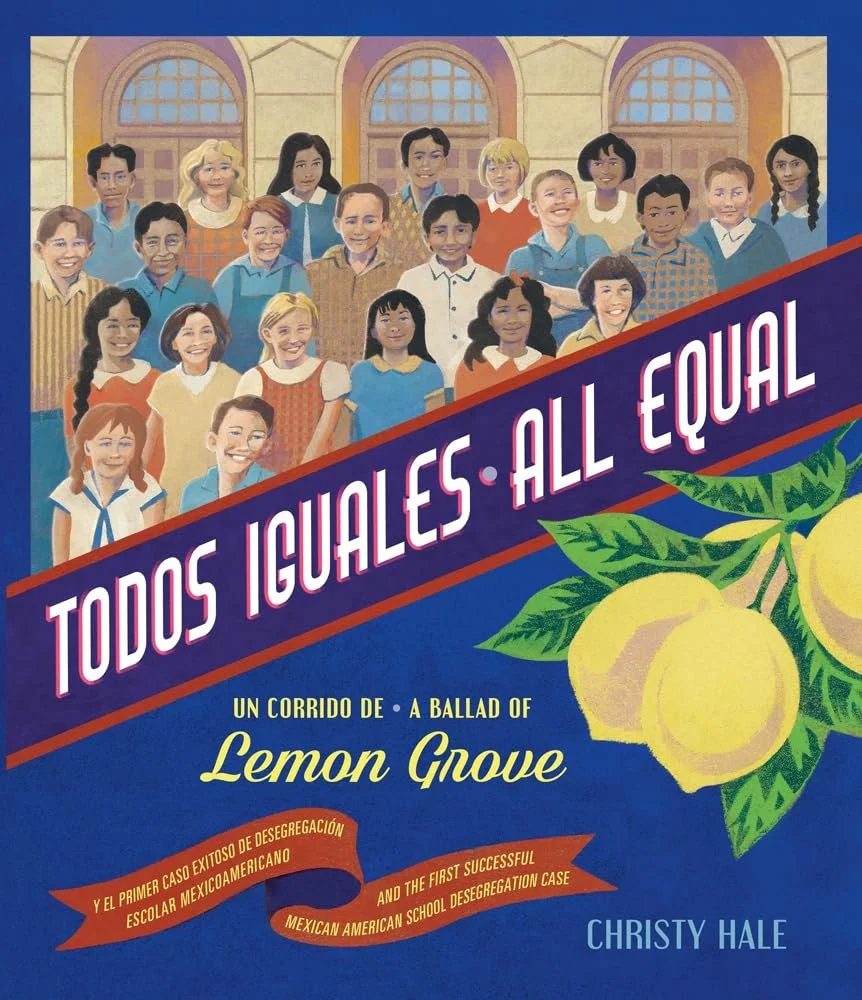
Todos Iguales / All Equal tells the true story of Mexican American children in Lemon Grove, California, who once attended school alongside their classmates. In 1931, the school board voted to separate these students and place them in an inferior, segregated school based solely on their ethnicity. With the support of their families and community, the children challenged this injustice in court and won the first successful school desegregation case in U.S. history.
Recommended Questions:
If you were a student or parent in Lemon Grove in 1931, what actions might you have taken to help the Mexican-American children?
Why is education an important right to protect, and how does it affect individuals and communities?
This bilingual book presents the Spanish text first, followed by the English text. Why do you think the author chose to do this? What does it tell us about honoring voice and language?
Imagine you are Roberto Alvarez, 12 years old, and you must take the witness stand to represent all Mexican-American children. How would you handle the pressure of disproving claims that Mexican students needed “special attention” because they spoke limited English or had other “deficiencies”?
If you could interview a character from the story (Alvaro, Principal Green, a school board member, lawyers, Judge Chamberlin, teachers, etc.), who would you choose and what questions would you ask?
Research Roberto Alvarez to learn how he continued to help his community after the trial and as an adult. What impact did his efforts have?
Watch The Lemon Grove Incident documentary (PBS link) to learn more about this story. What new details or insights did you gain from the video that were not in the book?
NCSS Theme 6: Power, Authority and Governance
The book illustrates how laws and government authority can be used both to enforce injustice and to correct it. When the school district tried to segregate Mexican American students, families challenged that decision through the legal system. This story shows how people can use the courts to hold those in power accountable and create change.
Social Justice Anchor Standard 15: History of Social Justice
By studying the Lemon Grove case, students learn how ordinary people used community organizing and the legal system to fight injustice. This story shows how individuals and groups can work together to promote fairness and equality, which connects to social justice efforts around the world. Students can then compare these strategies to other movements for civil rights and human rights globally.
WA Civics 4: Understands civic involvement
The Lemon Grove families demonstrated civic involvement by organizing, speaking out, and using the court system to challenge unfair treatment. Their actions show how citizens—even children and families—can participate in democracy to protect their rights. The case models how community action can influence laws and policies.
