All Aboard the Schooltrain
Book Summary:
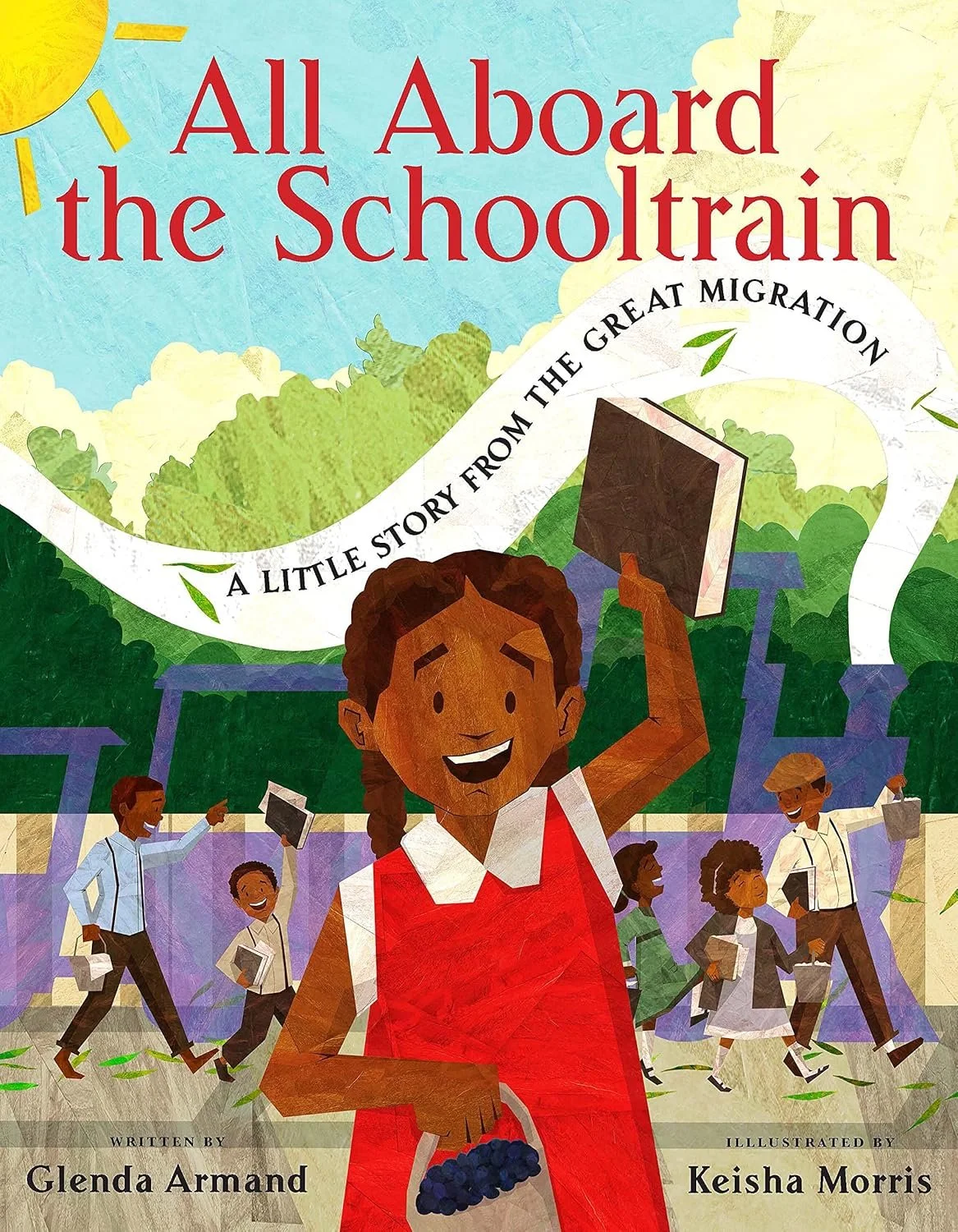
Set in 1930s Louisiana during the Great Migration, the story follows Thelma, a young Black girl who imagines her walk to school as a “schooltrain.” As families begin leaving due to Jim Crow laws, she starts to question the injustice shaping her world. Through imagination and resilience, the story highlights both the challenges and hope of this historical moment.
Recommended Questions:
Why did many African American families, like Thelma’s, choose to leave the South during the 1930s? What were they hoping to find in the North or West?
What choices did Thelma’s family face during the Great Migration? What factors influenced their decisions?
What were the possible risks and benefits of leaving home for a new place?
How do people’s choices change when their options are limited or unfair?
Thelma watches white children ride a yellow bus while she must walk. How did Jim Crow laws impact the daily lives and education of children during this era?
How might Thelma have felt as she began to understand the unfairness around her? What evidence from the story supports your thinking?
What moments in the story helped you better understand the feelings of children living under unjust Jim Crow laws?
Why do you think it was so important to Thelma’s father that she continue riding the “school train” and attend school? What does this reveal about his beliefs and hopes for her future?
NCSS Theme 2: Time, Continuity and Change
This book situates readers within the historical context of the Great Migration and Jim Crow era. It shows how past injustices shaped people’s decisions to move and seek better opportunities. Students are encouraged to examine how historical events influence change over time.
Social Justice Anchor Standard 16: Empathy and action
Through Thelma’s experiences, students see how Black families were treated unfairly under Jim Crow laws and how this affected their access to education and opportunity. The story helps students build empathy by showing the emotional impact of exclusion and inequality on children and families. It encourages students to recognize bias and consider how they might respond when they see unfair treatment in their own communities.
WA Economics 1: Wants vs Needs
In the story, families during the Great Migration had to make difficult choices about whether to stay in the South or leave in search of better opportunities. These decisions were shaped by unequal access to education, safety, and economic opportunity under Jim Crow laws. The book helps students understand how choices are often influenced by limited options and can lead to significant life changes.
