The Teachers March
Book Summary:
This biography tells the story of Mabel Fairbanks, a talented skater who was denied opportunities because of her race. Despite discrimination, she continued to ice skate and later became a coach who helped shape future champions and olympic athletes. Her legacy transformed figure skating by opening doors for more diverse athletes.
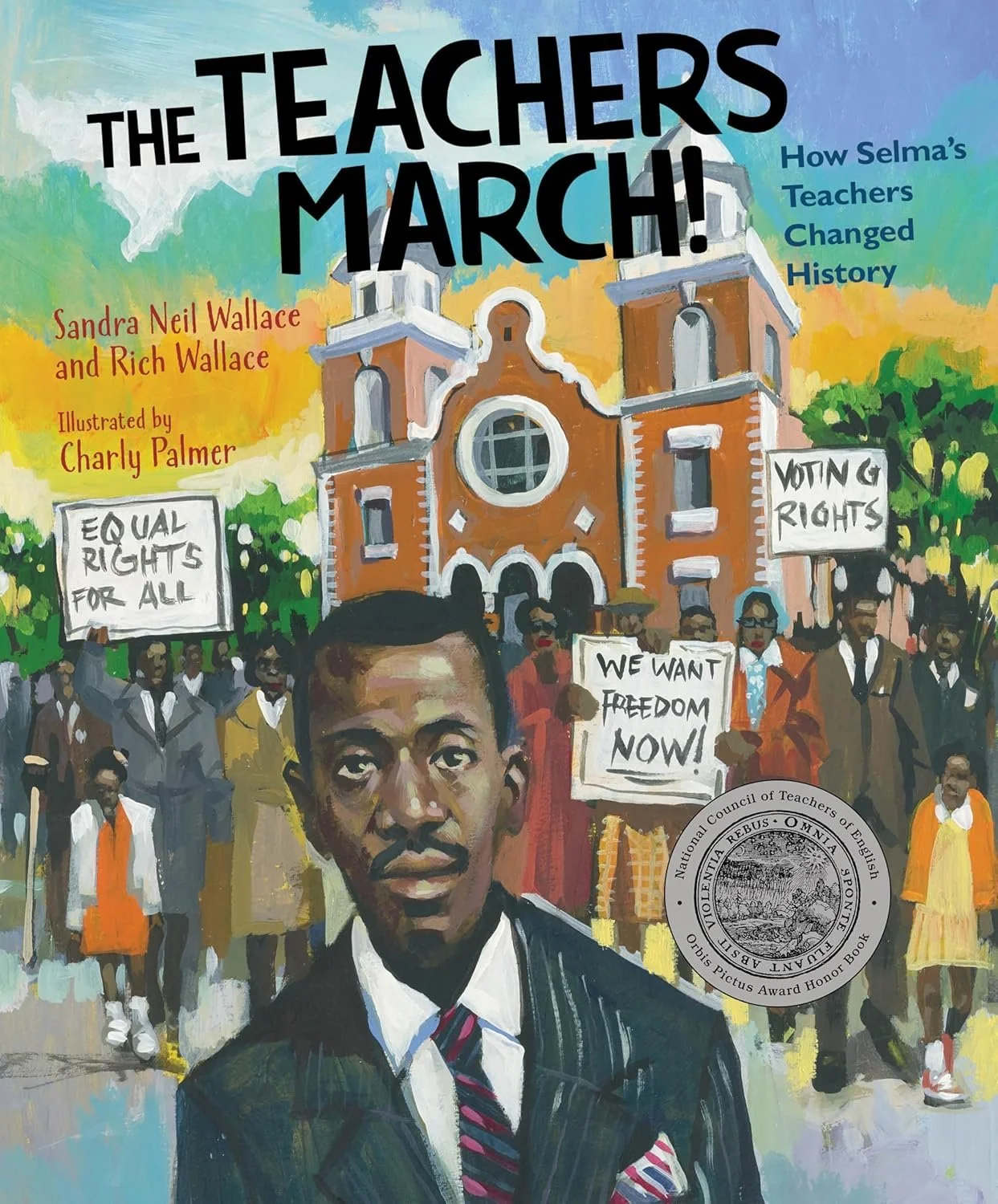
Recommended Questions:
How does the history of school segregation help us understand the events in The Teachers’ March? In what ways did unequal schools reflect broader patterns of discrimination?
How were literacy tests unfair and unrelated to the right to vote? Research examples of questions that were used—why do you think these tests were designed this way?
The first page tells us that Reverend F. D. Reese was a science teacher, but his favorite subject to teach was “freedom and equity.” What does it mean to teach freedom and equity? What evidence from the text supports this idea?
Why did Reverend F. D. Reese believe that having teachers march would make a greater impact than other forms of protest?
In what ways did teachers serve as both educators and community leaders during the 1965 voting rights movement in Selma?
What were the personal and professional risks for teachers like “Too Sweet” in joining the march? Why did they choose to sign the list despite these dangers?
What emotions do you think the teachers experienced before and during the march?
How might students have felt watching their teachers take such a risk?
NCSS Theme 10: Civic Ideals and Practices
This story highlights how citizens participate in democracy by advocating for their rights. The teachers’ march demonstrates the importance of civic engagement, protest, and collective action. It encourages students to understand how people can work together to influence laws and promote justice.
Social Justice Anchor Standard 17: Responsibility to respond to injustice
The teachers recognized injustice and took collective action despite serious risks. Their story demonstrates how speaking out and standing together can challenge unfair systems. It encourages students to consider how they can act with courage when they see injustice.
WA Civics 4: Understands civic involvement
The teachers’ actions exemplify civic participation through peaceful protest and advocacy. By marching, they risked their careers and safety to stand up for voting rights. This helps students understand how individuals and groups can take action to influence change in a democracy.
