My Lost Freedom
Book Summary:
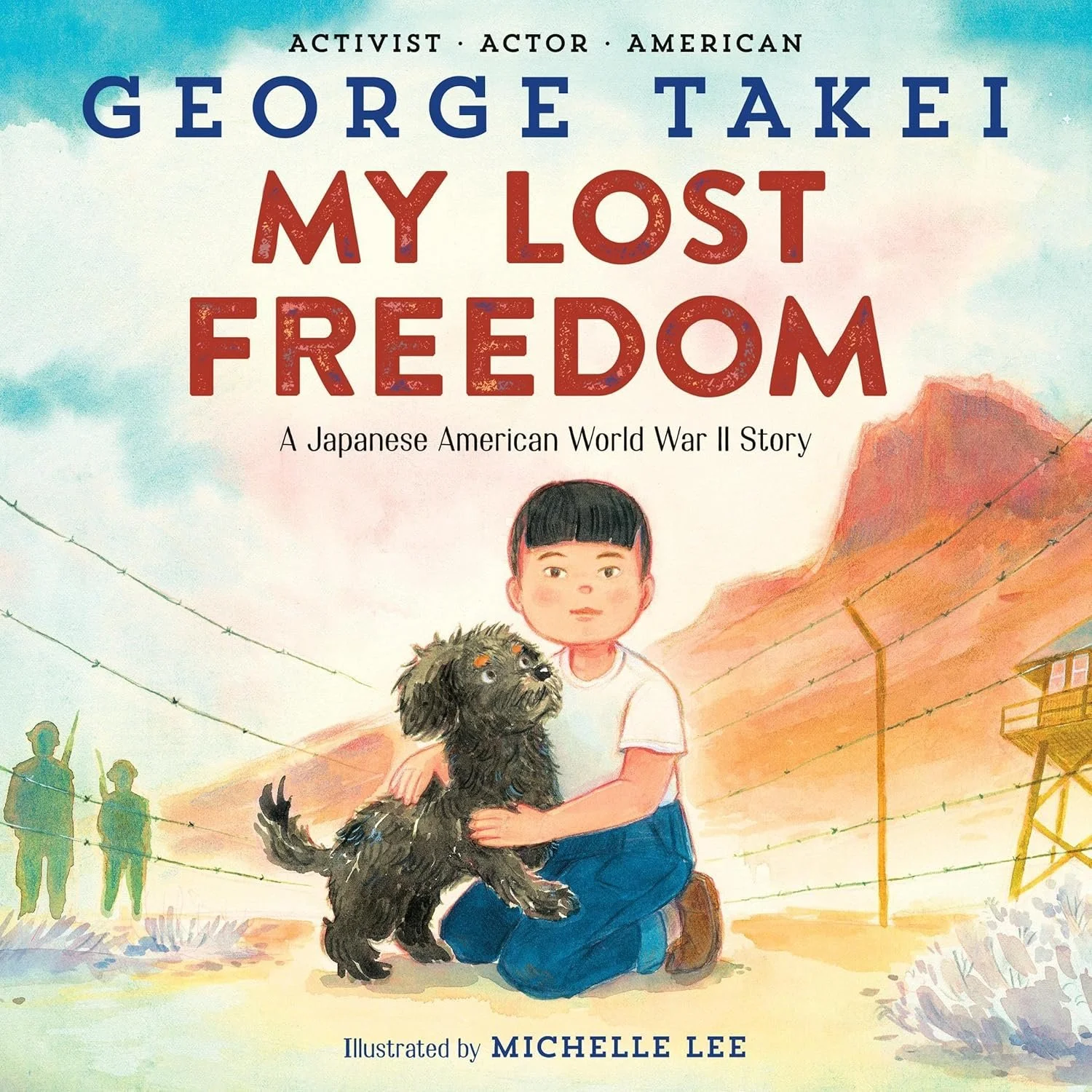
This memoir tells the childhood story of George Takei, whose family was forced into incarceration camps during World War II after the Executive Order 9066. Through a child’s perspective, the book reveals the confusion, fear, and loss experienced by Japanese American families. It also highlights resilience and the lasting impact of injustice.
Recommended Questions:
The second page describes the events of December 7, 1941. The illustrations include primary source images that provide additional insight. What can we learn from these primary sources? How do they deepen our understanding of the historical context?
George’s family is sent to three incarceration camps: Santa Anita, Rohwer, and Tule Lake. Choose one to research—what was it like there, and how did conditions impact the people who lived there?
What are three ways incarceration camps violated the civil rights of Japanese Americans? Provide specific examples from the book or your research.
How did George’s parents show love and care for their family and community during their time in the camps? Why is this important?
At one point, George recites the Pledge of Allegiance while seeing a soldier in a watchtower. The text notes that he was too young to understand the contradiction. What does this moment reveal about the difference between American ideals and reality?
On Christmas, George believes the Santa he sees is not “real” because he looks Japanese. Why is George’s assumption incorrect? What does this moment reveal about identity and representation?
Why was it unjust to incarcerate Japanese Americans while also allowing—or requiring—some to serve in the U.S. military? What does this reveal about contradictions in government policy?
In Tule Lake, some people participated in early morning jogs while chanting “Wasshoi.” How could this be considered an act of resistance? What does “Wasshoi” mean, and why might these jogs have been important?
George’s father says, “In a democracy, the people have the right to assemble and protest.” What does this mean? Why was this idea important in the story, and why does it still matter today?
What new hardships did George’s family face after the war? How does this show the lasting impact of injustice on individuals and communities?
NCSS Theme 6: Power, Authority and Governance
This book situates readers within a critical moment in U.S. history when government power was used to unjustly target Japanese Americans during World War II. The Executive Order 9066 reveals how fear, racism, and wartime hysteria led to the mass incarceration of people based solely on their ancestry, violating their civil rights. It encourages students to critically examine how historical injustices occur, whose rights are protected or denied, and how societies can work toward greater justice and accountability.
Social Justice Anchor Standard 15: Historical injustice
This book helps students recognize injustice by showing how Japanese Americans were treated unfairly and denied their rights during World War II. Through George Takei’s experiences, students can see how laws and government actions do not always ensure fairness or equality. The story encourages critical reflection on injustice and the importance of protecting the rights of all people.
WA History 4: Understands how historical events inform analysis of contemporary issues and events
Students can use this historical example to understand how past injustices shape present-day conversations about civil rights and government power. The story encourages connections between historical events and current issues involving discrimination and national security. It helps students consider how history can guide more just decisions today.
