Malala’s Magic Pencil
Book Summary:
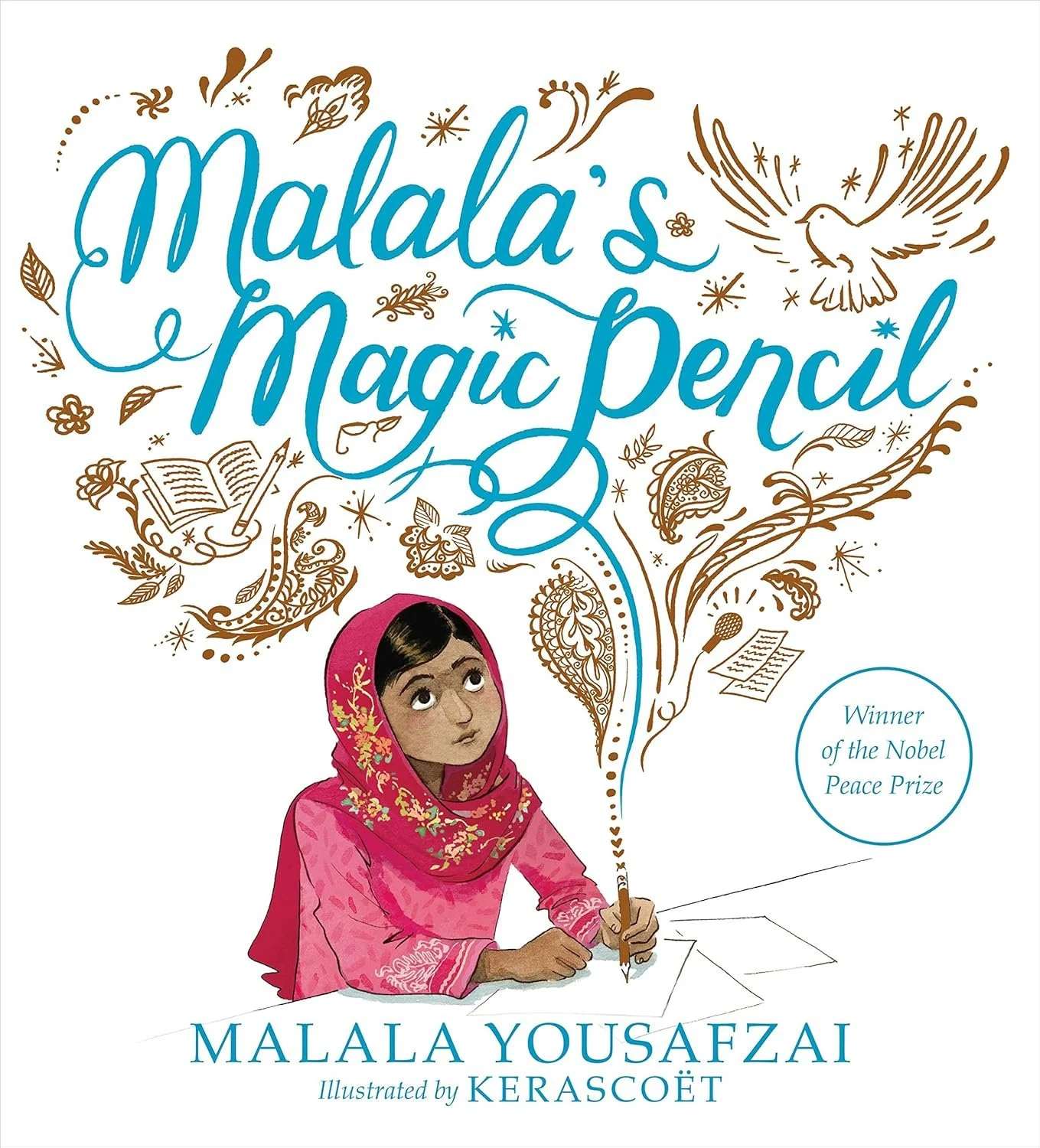
Inspired by a TV show about a magic pencil, Malala imagines using her own magic pen to fix problems in her community and beyond. As she grows older, she realizes that her real power lies not in magic, but in her voice and her actions. Her story shows how speaking out for education can create meaningful change, even in the face of danger.
Recommended Questions:
Where does Malala live in this story? What can we learn about this place from the illustrations and the text?
When Malala sees children searching for metal scraps at the dump, her father explains they are helping support their families. How does this moment shape her understanding of her own life and her privileges? In what ways do you recognize your own privileges or opportunities?
The book states that “powerful and dangerous men declared that girls were forbidden from attending school.” Why might they try to prevent girls from getting an education? If you could give them one reason why girls should be allowed to attend school, what would you say?
What risks did Malala take by speaking out? Research and listen to one of her speeches—what message does she want people to hear?
What words would you use to describe Malala? What evidence from the story supports your thinking?
If you had a “magic pencil” what problem would you want to solve? Why is that issue important to you?
What changes would you want to speak up for in your community? What steps could you take to begin making that change?
NCSS Theme 6: Power, Authority and Governance
This book explores how power can be used to limit or expand rights, particularly access to education. Malala’s experience shows how authority can restrict opportunities, but also how individuals can challenge those systems. It encourages students to examine how power operates and how it can be resisted or reshaped.
Social Justice Anchor Standard 17: Stand up to exclusion
Malala’s story shows what it means to speak up courageously in the face of injustice, even when there are serious risks. She used her voice to advocate for girls’ right to education and to challenge those who tried to silence her. Her example encourages students to stand up for themselves and others when they witness unfairness or bias.
WA Civics 4: Understands civic involvement
Malala demonstrates civic involvement by advocating for girls’ education despite significant risks. Her actions show that civic participation can include raising awareness, speaking out, and influencing global conversations. Students can see how individuals—even young people—can take part in shaping a more just society.
