Splash
Book Summary:
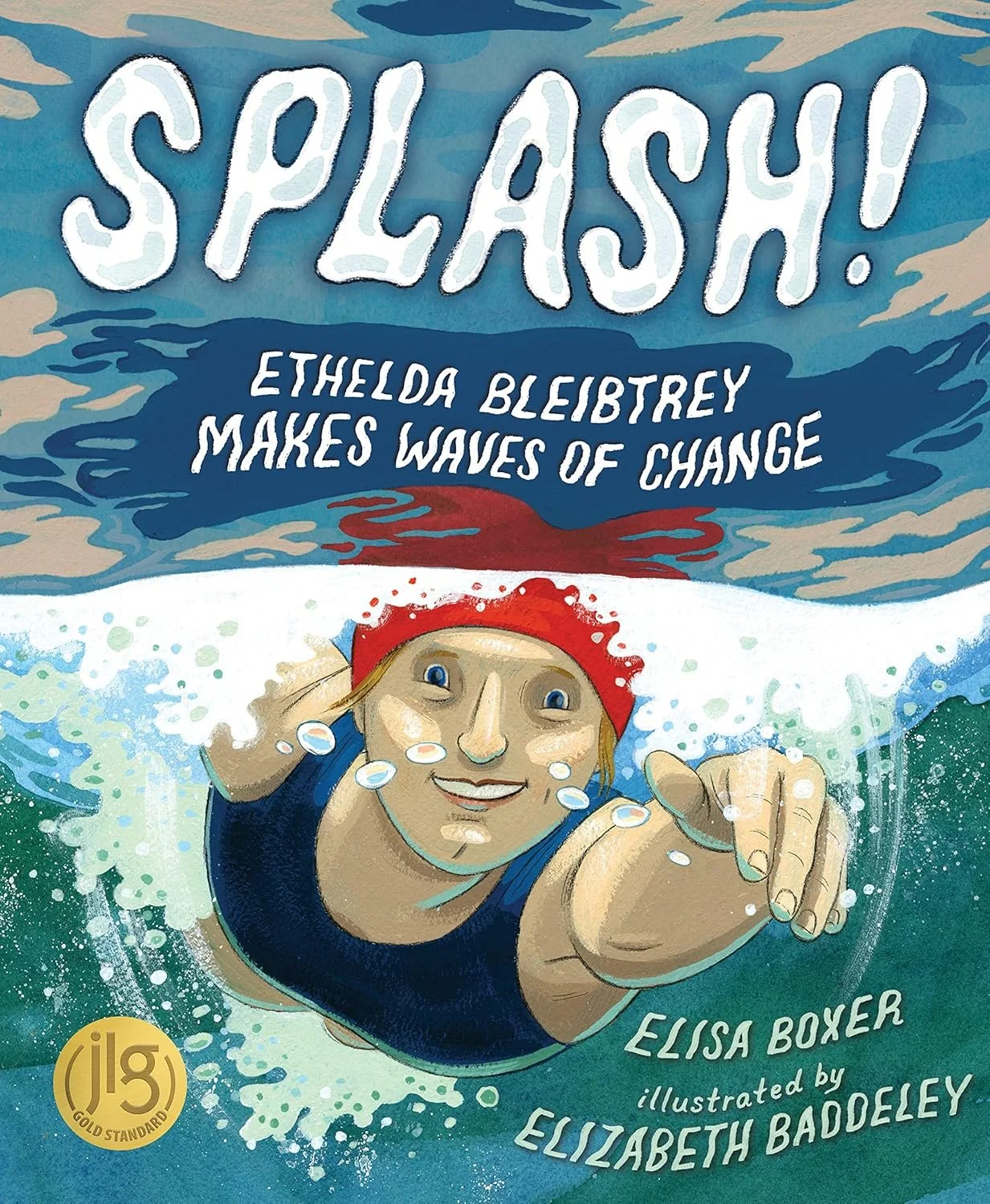
Ethelda Bleibtrey, a young girl recovering from polio in the early 1900s, regained her strength while swimming and concurrently gained confidence through swimming. As she grew, she challenged restrictive rules about women’s swimwear and behavior—actions that led to her arrest but also helped shift public opinion. Her courage not only made her an Olympic champion but also helped expand opportunities and freedoms for others.
Recommended Questions:
The book explains that in 1919, women were required to wear socks while swimming at public beaches. What other rights were women fighting for during this time period? Research when the 19th Amendment to the United States Constitution was ratified and consider how it expanded women’s rights. How does this historical context help you better understand the events in the story?
Do you think women were involved in the decision to have a rule about socks at the beach? Why or why not?
How can we determine whether the sock rule was fair or biased? What criteria can we use to evaluate whether any rule is fair or biased?
The book states, “Ethelda, with a curved spine and competitive spirit, stood still at the start of the race.” What might “curved spine” refer to? How could this detail connect to her childhood illness and her determination?
Imagine you are writing a newspaper article about the first American woman to win a gold medal in swimming. What questions would you ask her? What key details would you be sure to include to help readers understand her accomplishments and impact?
Why do you think it was so important to Ethelda to swim in the Central Park Reservoir? If you wanted to support her cause in a different way, what actions could you take?
How might other women have felt watching Ethelda challenge the rule? Inspired? Worried? Both?
How does Ethelda’s decision to become a nurse reflect her care for others? In what ways does this connect to the courage and advocacy she demonstrated through her earlier actions?
If Ethelda could speak to students today, what advice do you think she would give?
NCSS Theme 6: Power, Authority and Governance
This book highlights how authority is used to enforce social norms—particularly around gender. Ethelda’s arrest reveals how laws can reflect bias, while her actions demonstrate how individuals can push systems to evolve. It invites students to examine who creates rules, who benefits, and how power can be challenged.
Social Justice Anchor Standard 16: Speak up with empathy against bias
Ethelda Bleibtrey’s story helps students develop empathy by showing how she was excluded and mistreated because of gender-based expectations, while also recognizing how bias shaped her experiences. She chose to act against this unfair system, even when there were consequences, illustrating how social change often begins with individuals willing to challenge the status quo. Her courage encourages students to both respond to injustice with empathy and see themselves as agents of change in their own communities.
WA Civics 4: Understands civic involvement
Ethelda’s actions model civic engagement through resistance and advocacy. She did not hold formal power, yet her choices influenced public thinking and contributed to social change. This supports students in understanding that civic participation includes questioning injustice and taking informed action.
