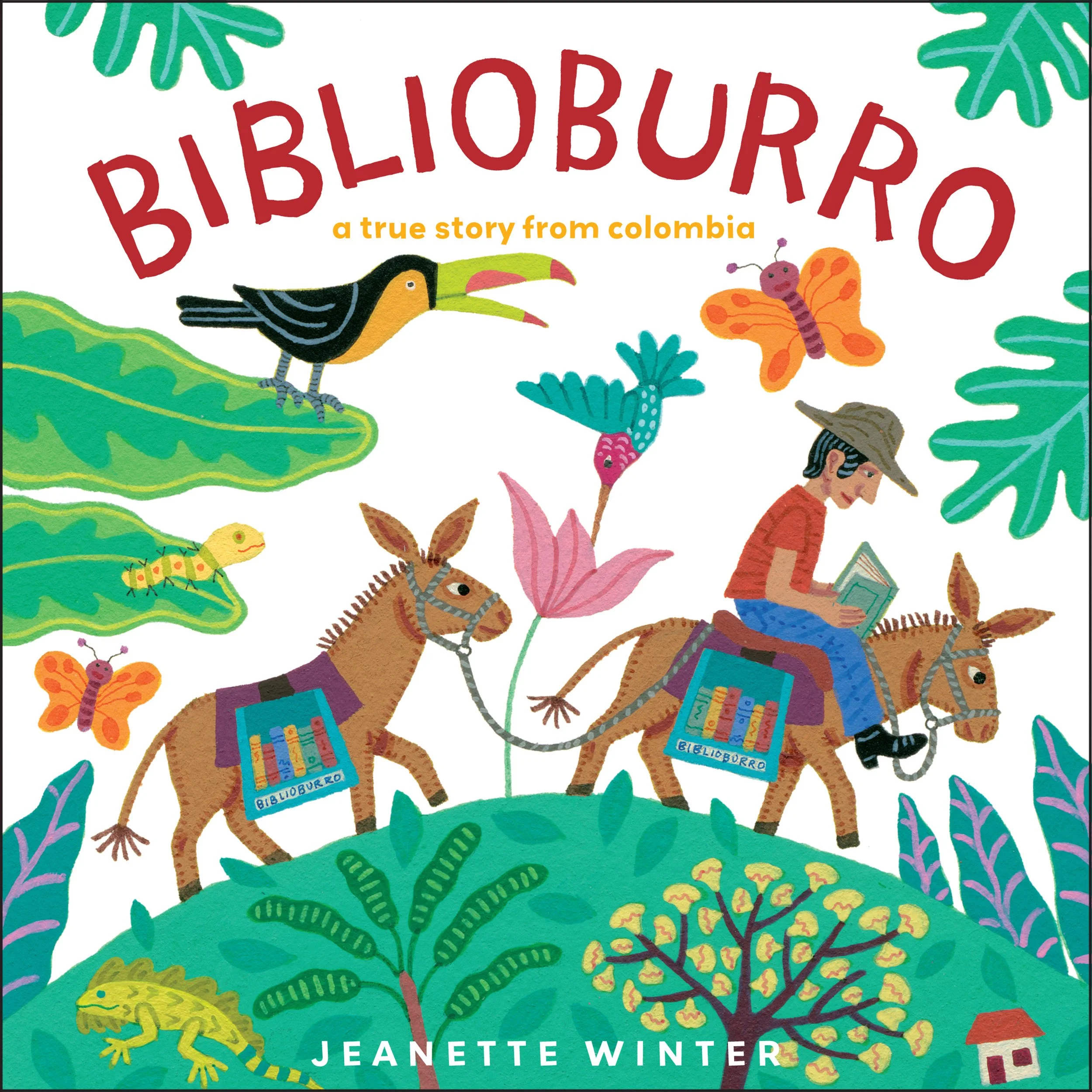
Biblioburro
Book Summary:
Biblioburro tells the true story of Luis Soriano, a teacher in rural Colombia who brings books to children on the backs of donkeys (“burros”) because his village has no library. Through his traveling library, Luis encourages literacy, learning, and a love of reading despite limited resources. The story highlights how one person can overcome systemic barriers to provide opportunities for others.
Recommended Questions:
Why did Luis Soriano create the Biblioburro library, and why was it important for his community?
How does geographic location affect their opportunities?
How did geography and location create challenges for education in Luis’s village?
What does this story show about how one person can address injustice in their community?
What does this book teach us about privilege or things we take for granted?
How does access to education shape individual identity and future possibilities?
Luis names his burros “Alfa” and “Beto.” What do these names mean, and why do you think he chose them for his donkeys?
Why do you think Luis reads a book with the children in Tormento before letting them pick books to borrow?
Why do you think the bandit takes a book? what do you think they plan to do with that book?
Where can we learn more about Luis Soriana?
Standards:
NCSS Theme 9: Global Connections
Biblioburro introduces students to the experiences of children in rural Colombia and how education is impacted by geographic and systemic factors. By learning about Luis Soriano’s traveling library, students can compare access to resources in different parts of the world and understand how communities adapt to local challenges. The book encourages students to think globally, fostering empathy and curiosity about how people in other countries live, learn, and overcome obstacles.
Social Justice Anchor Standard 8: Kindness and Empathy
This book provides students with opportunities to explore the history and lived experiences of children from rural communities. By learning about rural isolation and limited access to education in Colombia, students gain a broader perspective on the world beyond their own experiences. It encourages curiosity and critical thinking, prompting students to ask insightful questions about the opportunities available to these children compared with their own.
WA Geography 3: Understands the geographic context of global issues and events
Biblioburro connects to G3 because it shows how geography—rural terrain, distance, and limited infrastructure—affects access to education and other resources. Students can explore how location, environment, and infrastructure influence global issues and consider strategies to overcome geographic and systemic challenges.
