All The Way to Havana
Book Summary:
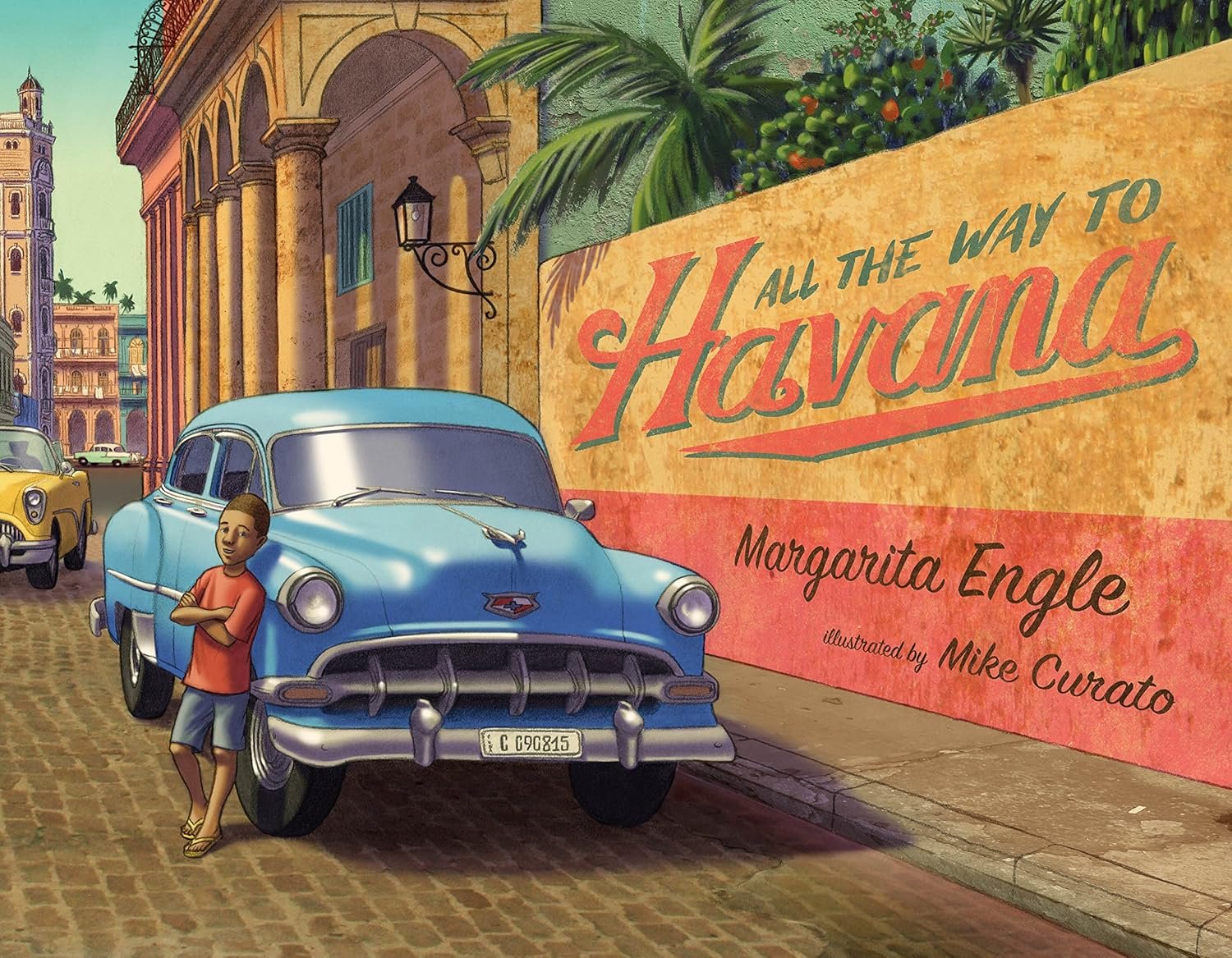
All the Way to Havana follows a young boy and his family as they travel from their countryside home to the city of Havana in their old blue car, “Cara Cara.” Along the way, the boy notices the vibrant sights, sounds, and people of Cuba, celebrating the country’s culture, resourcefulness, and family connections. The story highlights resilience and pride as the family lovingly keeps their aging car running despite challenges.
Recommended Questions:
Research pictures of the famous Cuban street El Malecón. How do these real images compare to the illustrations in All the Way to Havana? What details show that the illustrator studied the setting carefully?
The last page states, “Someday Abuelo’s car will be yours, Papa promises, making me feel as proud and powerful as the bold eagle that makes Cara Cara’s sky-blue hood look so brave.” Why do you think the boy is so proud?
Why does Cuba have so many vintage cars? What does this tell you about the country’s history and economy?
The author’s note mentions a “complex historical situation” between Cuba and America. What do you think this means, and how does it affect daily life in Cuba? What resources can we use to learn more?
How does the family’s care for their car show their values of resilience, pride, and connection?
As the family drives from the countryside to Havana, what different geographic features of Cuba do you notice? (For example—mountains, farms, small towns, and city streets.) How do these regions show the diversity of Cuban life beyond just the beaches?
Standards:
NCSS Theme 9: Global Connections
This book introduces readers to life in Cuba and helps them understand how global relationships, such as those between Cuba and the United States, shape people’s daily lives. The author’s note references a “complex historical situation” that influenced Cuba’s economy and limited access to new cars, highlighting how international politics affect culture and resourcefulness. By learning about Cuba’s global context, students see how interconnected our world is—socially, economically, and historically.
Social Justice Anchor Standard 10: Respectful Dialogue
The story helps students explore and respect cultural differences by showing authentic details of Cuban life. Readers see how Cuban families creatively adapt to challenges while maintaining joy, pride, and strong cultural traditions. This encourages students to recognize both the uniqueness of Cuban culture and the shared human experiences that connect families worldwide.
WA Geography 1: Understands physical characteristics, cultural characteristics and location of places and regions
The story connects to geography by showing Cuba’s varied landscapes—from small rural roads to bustling city streets. Students learn how people interact with their environment and how geography influences culture, travel, and community life. The story invites discussion about how place shapes identity and experience.
Links to Related Primary and Secondary Resources:
