Ruth and the Green Book
Book Summary:
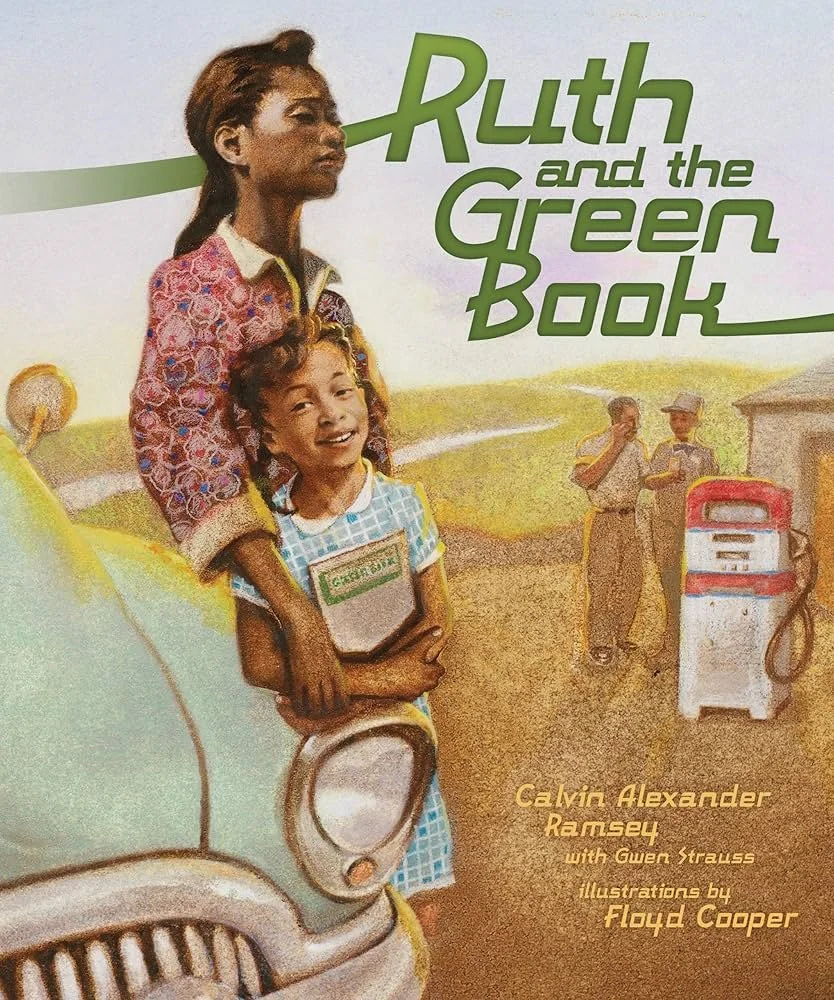
Ruth and the Green Book tells the story of a young girl, Ruth, traveling with her family during the era of segregation in the United States. Using the Green Book, a guide for safe places for Black travelers, Ruth’s family navigates the challenges of racism and discrimination while discovering the importance of community and safety. The story highlights resilience, resourcefulness, and the everyday realities of seeking freedom and fairness in an unequal society.
Recommended Questions:
Ruth is embarrassed that she had to go to the bathroom in the woods because the restroom was for “whites only.” Her mom says, “The people who should be ashamed of themselves are the service station owners.” What do you think she meant by that? Do you agree or disagree with her mom’s statement? Explain your thinking.
Why do you think Ruth and her family could not stay at the hotel? How do the illustrations at the hotel help you understand the story and the challenges they faced?
How do you think you and your family would feel if you were turned away because of the color of your skin?
While in Tennessee, Ruth’s dad and his friend Eddy play music together. Her dad says he “had hoped that the war had changed things, but now he could see he was wrong.” Which war do you think he is talking about? How could we investigate to see if our hypothesis is correct?
Ruth wonders, “Why don’t they want our business? Wasn’t our money just the same?” How would you answer her questions?
Why do you think Ruth did not know about Jim Crow laws before this trip?
Why do you think the people at the Esso station were kind to Ruth’s family?
Victor H. Green wrote the Negro Motorist Green Book to help Black travelers. What questions do you have about Victor H. Green or the Green Book? Where could you look for reliable information to answer these questions?
How did Ruth and her family show resiliency during their journey? How can we demonstrate resiliency in our own lives?
How have laws about race changed since the 1950s, the time period of this book? What further changes are needed to make society more fair and inclusive today?
Standards:
NCSS Theme 3: People, Places and Environments
Ruth and the Green Book shows how African American travelers navigated the physical and social landscapes of the United States during segregation. The book highlights how locations—hotels, restaurants, and towns—were segregated, and how the Green Book helped families like Ruth’s plan safe routes. It helps students understand the relationship between people, their environments, and how social structures can shape where and how people live and travel.
Social Justice Anchor Standard 13: Examining Inequity
The book demonstrates inequities in access to safe travel, accommodations, and resources for Black Americans during segregation. It helps students recognize how structural barriers limit opportunities and encourages reflection on fairness, equity, and the ongoing work to ensure equal access for all.
WA History 4: Understands how historical events inform analysis of contemporary issues and events
Ruth and the Green Book shows how historical racial segregation shaped the experiences of African American travelers, helping students connect the past to present issues of equity, civil rights, and social responsibility.
