That’s Not A Good Idea
Book Summary:
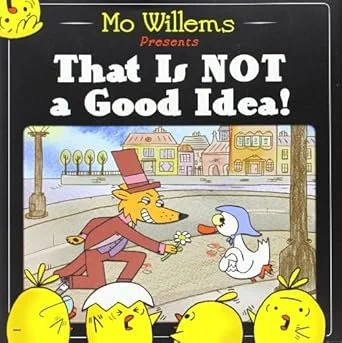
That’s Not a Good Idea! is a humorous picture book about a goose who ignores a fox’s repeated warnings and invites him along on a walk, leading to funny and surprising consequences. The story plays with expectation, tension, and perspective, keeping readers engaged while also showing how first impressions and assumptions can be misleading. It’s a playful way to explore ideas about trust, judgment, and understanding others.
Recommended Questions:
At the start of the story, how would you describe the fox?
Have other children’s books or stories influenced how you interpret the fox’s actions or intentions?
Before the last few pages, how would you describe the goose?
Does your description of the goose change by the end of the story? How?
How can this book help us understand what bias is?
How can we become more aware of our own biases?
How can we help others become more aware of their biases?
Standards:
NCSS Theme 2: Time Continuity and Change
This book helps students understand how actions and choices unfold over time and how initial assumptions can change based on new information. By examining the interactions between the fox and goose, students can explore how perspectives and outcomes evolve, encouraging critical thinking about cause and effect in social situations.
Social Justice Anchor Standard 16: Speaking Up
The story encourages readers to consider how the fox and goose perceive each other and to recognize how quick judgments or assumptions can lead to misunderstandings. By noticing the characters’ feelings and intentions, students practice empathy and learn to understand others’ experiences before making a judgment. This helps them see the importance of respecting others and thinking about how their assumptions affect people.
WA Social Studies Skills 1: Uses critical reasoning skills to analyze and evaluate claims
Students can use the book to practice observing behaviors, interpreting motives, and evaluating the fox and goose’s actions. By analyzing evidence from the story, they learn to distinguish between first impressions and facts, building critical reasoning skills that apply to understanding people, situations, and social interactions.
