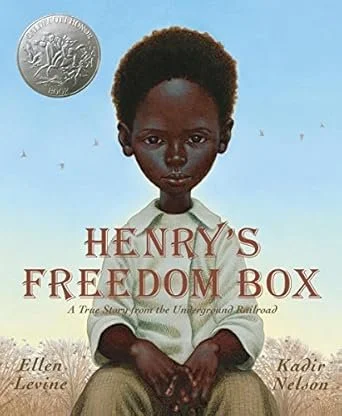
Henry’s Freedom Box
Book Summary:
Henry’s Freedom Box tells the true story of Henry “Box” Brown, a man born into slavery who mails himself in a wooden crate to freedom. After enduring the pain of being separated from his family, Henry bravely risks everything to escape to Philadelphia, where slavery is illegal. His story highlights the resilience, courage, and hope of enslaved people who sought freedom against all odds.
Recommended Questions:
Why do you think slaves weren’t allowed to know their birthdays?
A passage near the beginning of the book states, “Henry felt like singing. But slaves didn’t dare sing in the streets.” After his family is sold the author writes, “Henry no longer sang. He couldn’t even hum.” Before meeting with Dr. Smith, “Henry heard singing. A bird flew out of a tree into an open sky.” Why do you think the author repeatedly draws attention to singing? What might the singing represent?
Why do you think Henry decides to risk his life for freedom?
What do you think Henry did once he arrived in Philadelphia?
What are some inequities present in today’s society that can be linked back to slavery?
How does Henry Brown story teach us about slavery?
What rules and laws controlled Henry’s life, and how did they limit his freedom?
How were these laws ultimately changed?
Why do you think some people helped Henry even though the laws said they shouldn’t?
Standards:
NCSS Theme 6: Power, Authority and Governance
Henry Brown’s story shows how laws denied basic rights to enslaved people. The book also shows how Henry responded to unfair authority by taking brave action to gain his freedom. It invites students to think about why laws varied between states and how that affected people’s lives. By reading his story, students can consider who has power, how it is used, and how people can stand up and push for change in society.
Social Justice Anchor Standard 13: Examining Inequity
Henry’s Freedom Box connects to Social Justice Standard 13 because it demonstrates how systemic inequities prevented enslaved people like Henry from accessing basic rights and opportunities. The story shows Henry’s courage in seeking freedom despite these barriers, helping students understand historical inequities and encouraging reflection on fairness and justice today.
WA Social Studies History 2: Understands and analyze casual factors thatt have shaped major events in history
Henry Brown’s life story illustrates the causal factors that shaped both his personal journey and the broader history of slavery in the United States. Slavery, the sale of enslaved families, and the legal and social restrictions on African Americans created the conditions that led Henry to take the extraordinary action of mailing himself to freedom. By analyzing these factors, students can see how individual decisions, systemic oppression, and historical laws influenced major events, such as acts of resistance and the pursuit of freedom.
