Peaceful Fights for Equal Rights
Book Summary:
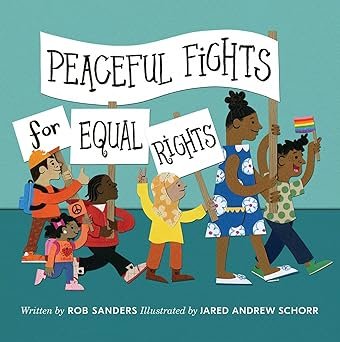
Peaceful Fights for Equal Rights is an alphabet book that introduces readers to the many ways people can stand up for justice and equality through peaceful action. From “A for Act” to “Z for Zoom,” the book celebrates civic engagement, highlighting how ordinary citizens can make a difference without violence. Through rhythmic, powerful language and bold illustrations, it shows that everyone—even children—can be part of the ongoing fight for fairness and equal rights.
Recommended Questions:
Why do you think some words are repeated?
Which peaceful protest word or phrase do you want to know more about? How can you learn more about that kind of peaceful protest?
Are there any forms of peaceful fights for equal rights presented in the book you would not want to participate in? Why or why not?
Are there any forms of peaceful fights for equal rights presented in the book you would want to participate in?
What message do you think the author wants readers to take away from this book?
How can/have people use peaceful actions to create change in their communities?
How does this book make you think differently about what “power” means?
What are some ways you can take peaceful action in your school or community?
Standards:
NCSS Theme 10: Civic Ideals and Practices
This book aligns with Theme 10 by helping students understand the rights and responsibilities of citizenship and the ways individuals can participate in civic life. It demonstrates how peaceful action and collective effort can influence social and political change, encouraging students to see themselves as active participants in democracy.
Social Justice Anchor Standard 17: Responsibility to stand up to injustice
Peaceful Fights for Equal Rights encourages students to see themselves as capable of creating positive social change. By illustrating a variety of peaceful methods for taking action, it helps readers understand that justice requires courage, collaboration, action and persistence—and that everyone has the power and responsibility to contribute to a more equitable society.
WA Social Studies Civics 4: Understands Civic Involvement
The book connects to this standard by showing the many ways individuals and groups can engage in civic life to promote fairness and justice. It teaches that responsible citizens don’t just follow rules—they participate actively, use their voices, and work peacefully with others to make their communities better.
