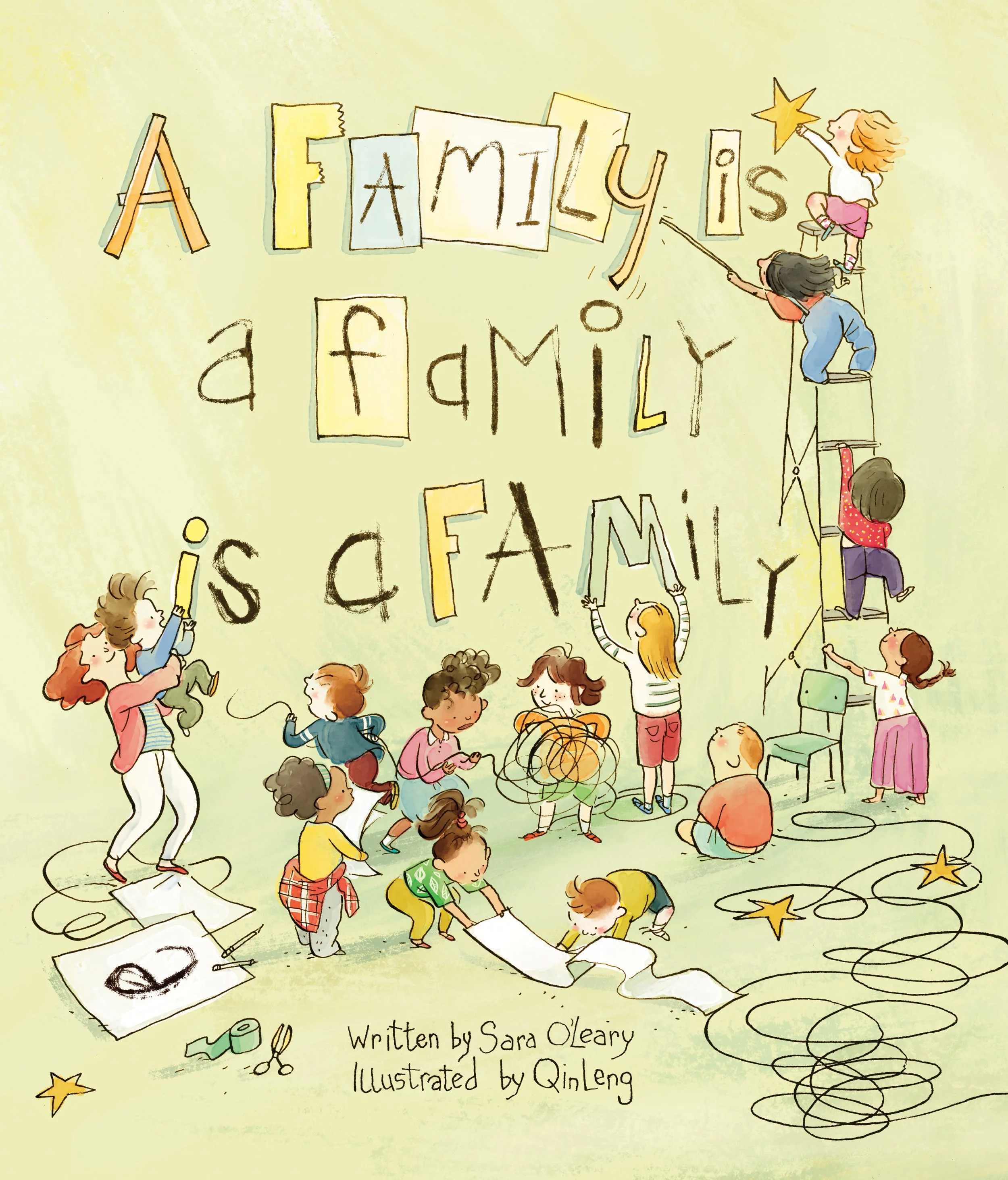
A Family is a Family is a Family
Book Summary:
A Family Is a Family Is a Family celebrates the diversity of families, showing that each family is unique and special in its own way. Through playful text and illustrations, the book highlights different family structures, emphasizing love, care, and connection rather than what a family “should” look like. It encourages readers to recognize and appreciate the variety of ways families live, love, and support one another.
Recommended Questions:
How would you describe what a family is?
What makes your family special?
What did you learn about families from this book?
How can we learn more about our own family and other people’s families?
This book describes many different types of families, but not every type is included. Can you describe a family you would add to this book?
What are some ways families work together to solve problems or support each other?
How do families change over time? Can you give examples from your life or the book?
What makes all families similar, even if they look different?
If your family was in this book how would you describe and illustrate it?
Why do you think it’s important to read about families that are different from your own?
How can learning about different families help us be better friends and neighbors?
Standards:
NCSS Theme 1: Culture
This family example helps students understand that cultural and familial structures vary widely. It encourages recognition of diverse family arrangements, emphasizing how culture shapes daily life and family dynamics.
Social Justice Anchor Standard 7: Perspective Taking
Including each family allows students to see that all family structures are valid. It encourages empathy, challenges assumptions, and helps students understand that all families deserve respect and inclusion.
WA Social Studies Skills 1: Uses critical reasoning skills to analyze and evaluate claims
Students can compare this example family to their own and evaluate assumptions about family “norms.” It promotes critical thinking, discussion, and reflection on multiple perspectives and lived experiences.
