Our House Is on Fire
Book Summary:
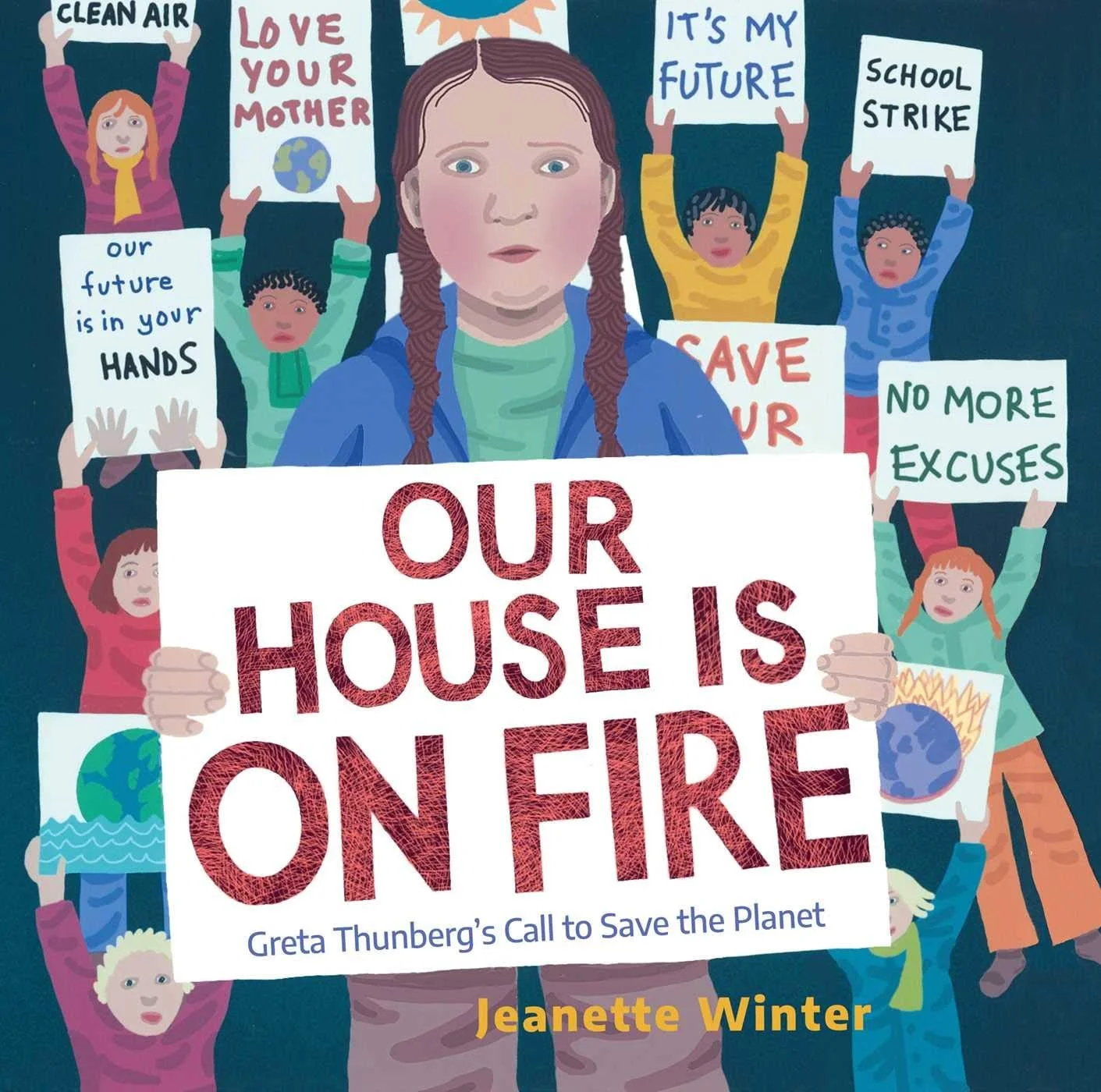
Our House Is on Fire tells the true story of Greta Thunberg, a young girl who learns about climate change and decides to take action when adults fail to respond. Beginning with a lone school strike in Sweden, Greta’s determination grows into a global youth movement demanding climate justice and environmental responsibility. The book emphasizes the power of young people to speak up and inspire change.
Recommended Questions:
How does Greta work to make the world a better place? What actions does she take, and why do they matter?
On pages 4–16, Greta describes several changes related to climate. Where could we investigate or learn about climate-related changes happening in our own community? Who might be good sources of information?
How do human choices impact the environment, both positively and negatively, as shown in the book? Can you think of examples from your own life?
Why is climate change a global issue, and why does addressing it require cooperation between countries? What might happen if countries act alone?
What actions can students take at school or in their community to help protect the environment? Which actions are most effective? Create posters that explain specific changes people in the school community can make and how those changes can make a difference.
The author includes six quotes from Greta’s speeches. Can you locate all six quotes? Choose two quotes and explain their meaning and why they are important to the message of the book.
Watch Greta Thunberg’s TED Talk, “School Strike for Climate – Save the World by Changing the Rules.” How does hearing Greta speak compare to reading a book written about her by someone else? Near the end, she discusses the difference between hope and action—how does she describe that difference, and do you agree that action is more important than hope? Why or why not?
NCSS Theme 9: Global Connection
This book shows how climate change is a worldwide issue that crosses national borders and affects people everywhere. Greta’s activism demonstrates how individuals and movements in one country can influence global awareness, cooperation, and action around shared environmental challenges.
Social Justice Anchor Standard 20: Collective Action
Our House Is on Fire shows how Greta Thunberg’s individual protest grows into a collective global movement for climate justice. The book illustrates how coordinated actions—such as school strikes and public demonstrations—can amplify voices and influence decision-makers. Students can evaluate which strategies were most effective and consider how collective action can address environmental injustice and create meaningful change.
WA Geography 2: Understands human interactions with the environment
Our House Is on Fire illustrates how human actions—such as pollution and reliance on fossil fuels—impact the environment and contribute to climate change. The book also highlights how people can respond positively by changing behaviors, advocating for environmental protection, and working toward more sustainable solutions.
