Encounter
Book Summary:
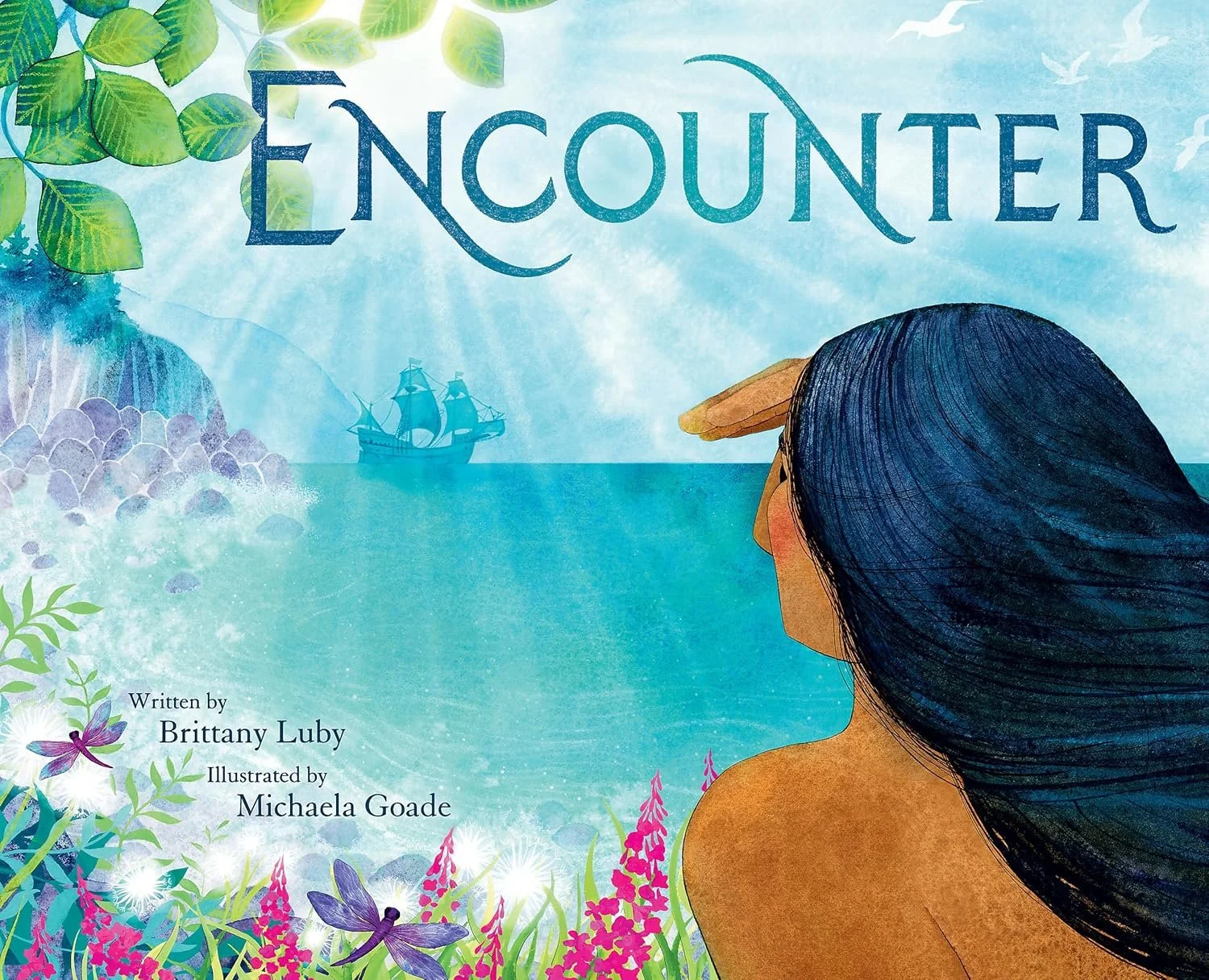
Based on the real 1534 journal of French explorer Jacques Cartier, Encounter imagines a first meeting between a French sailor and a Stadaconan fisher. Through their interaction—and the observations of animals around them—the story highlights moments of shared humanity alongside cultural difference.
**Note** Encounter is best used not as a stand-alone story of first contact, but as a critical companion text alongside Indigenous histories, primary sources, and explicit teaching about colonization. Doing so helps prevent the romanticization of early encounters and supports students in developing nuanced historical understanding.
Recommended Questions:
The historical note at the end of the book describes the storyline of this book as an encounter between a Stadaconan fisher and Jacques Cartier at what we now call Gaspé Bay.
a. Who were the Stadaconans? Describe their way of life, where they lived, and whether their people or influence continues today.
b. Who was Jacques Cartier, and what role did he play in the early development of settler colonialism in North America?
c. Why was Gaspé Bay geographically significant? Explain it’s natural resources, location and how the region has changed over time due to human activity.
2. How does knowing what happened after 1534 change how you read this story?
3. How does this story help you better understand the richness of culture present before colonization?
4. How does this story help you imagine how the early moment of European–Indigenous might have unfolded differently?
5. Why might an imagined story of “finding common ground” be appealing to some readers yet deeply frustrating and hurtful to others?
6. If you could give the fisher and sailor advice what advice would you give them and why?
7. What lessons can we learn from the animals in this story?
NCSS Theme 2: Time, Continuity and Change
Encounter revisits first contact in the 1530s, highlighting interactions between the Stadaconans and French explorers. When compared with historical texts that outline colonization, the story helps students see how even seemingly small first encounters led to harmful long-term outcomes for Indigenous communities. This alignment encourages learners to examine how past events shaped ongoing social, cultural, and political changes, and how understanding history can inform the present.
Social Justice Anchor Standard 6: Valuing Diversity
Encounter imagines how individuals from different cultures—the Stadaconans and French explorers—interact and find moments of understanding despite their differences. The story encourages students to recognize common humanity while also respecting cultural distinctiveness. By reflecting on these interactions, learners can practice empathy, respect, and thoughtful engagement with people who are both similar to and different from themselves.
WA History 2: Understands and analyzes causal factors that have shaped major events in history
Encounter provides a lens for examining the causal factors behind European colonization in North America. By imagining the first contact between the Stadaconans and French explorers, students can explore how initial interactions—shaped by cultural misunderstandings, European ambitions, and local environmental knowledge—set the stage for long-term consequences. Comparing the story with historical records helps learners understand how these early encounters contributed to harmful outcomes for Indigenous communities.
