Babajoon’s Treasure
Book Summary:
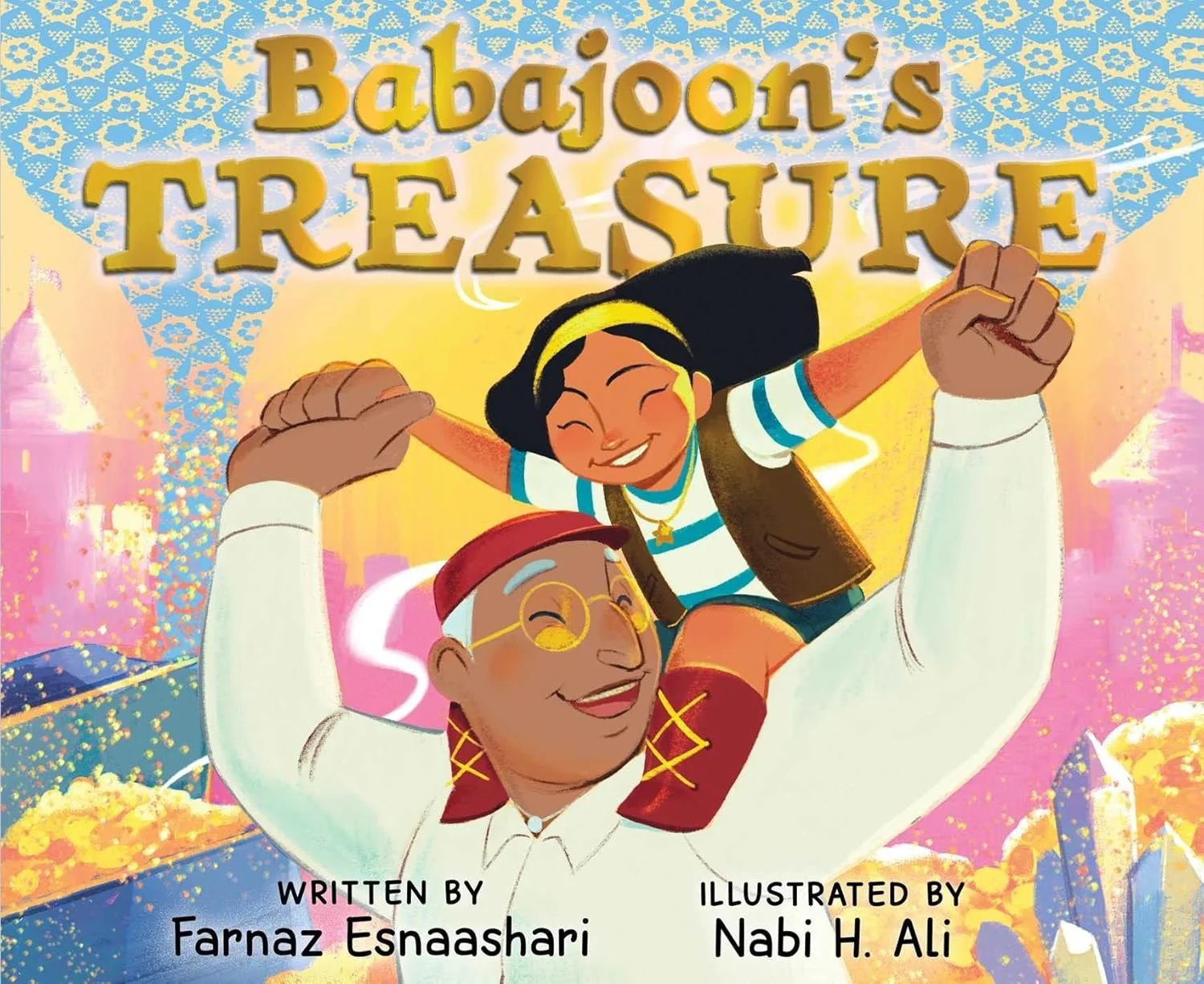
This imaginative picture book follows Miriam, who spends a week each summer with her grandparents, Babajoon and Mamanjoon. When she notices mysterious clues—an unusual coin, secret languages, and sparkling “treasures”—she begins to wonder who her grandfather is. By the end of the story, Babajoon reveals that these clues are actually pieces of his childhood in Iran, helping Miriam better understand her family’s cultural heritage.
Recommended Questions:
How does Miriam’s misunderstanding of Babajoon’s “treasures” help readers understand how cultural differences can sometimes lead to confusion? What can people do to better understand cultures that are different from their own?
How does each object Babajoon shares connect to his past and the place where he grew up?
How does Miriam’s experience with Babajoon’s “treasures” help her better understand her own identity?
At several points in the story, Babajoon speaks another language. What language is he speaking? What clues in the text or illustrations help you determine this?
Babajoon explains that he opened a tea shop to feel connected to home. How might a tea shop help him maintain a connection to his culture and traditions?
Miriam describes bravery as being courageous enough to ask questions. If Babajoon were here today, what respectful questions could you ask to learn more about Iran and his experiences?
What details in the illustrations reveal elements of Persian culture?
How can people maintain their cultural traditions when they move to a new country?
NCSS Theme 1: Culture
This book highlights how traditions, language, and family stories transmit cultural knowledge across generations. Babajoon’s memories of Iran—shared through objects, food, language, and storytelling—help Miriam connect to her heritage. The story illustrates how culture can be preserved and passed down even when families live far from their ancestral homeland.
Social Justice Anchor Standard 1: Positive social identities
Miriam begins the story unsure about the meaning of the objects and traditions she sees, but by the end she better understands her grandfather’s cultural background and how it connects to her own identity. The book encourages students to value their family histories and cultural heritage.
WA Geography 1: Understands the physical characteristics, cultural characteristics and location of places and regions
The story helps students explore how cultural traditions connect people to specific places. Through Babajoon’s memories and experiences in Iran, students learn how geography, language, and customs shape identity. The book also demonstrates how migration creates connections between regions as families carry cultural traditions with them to new places.
