Go Forth and Tell
Book Summary:
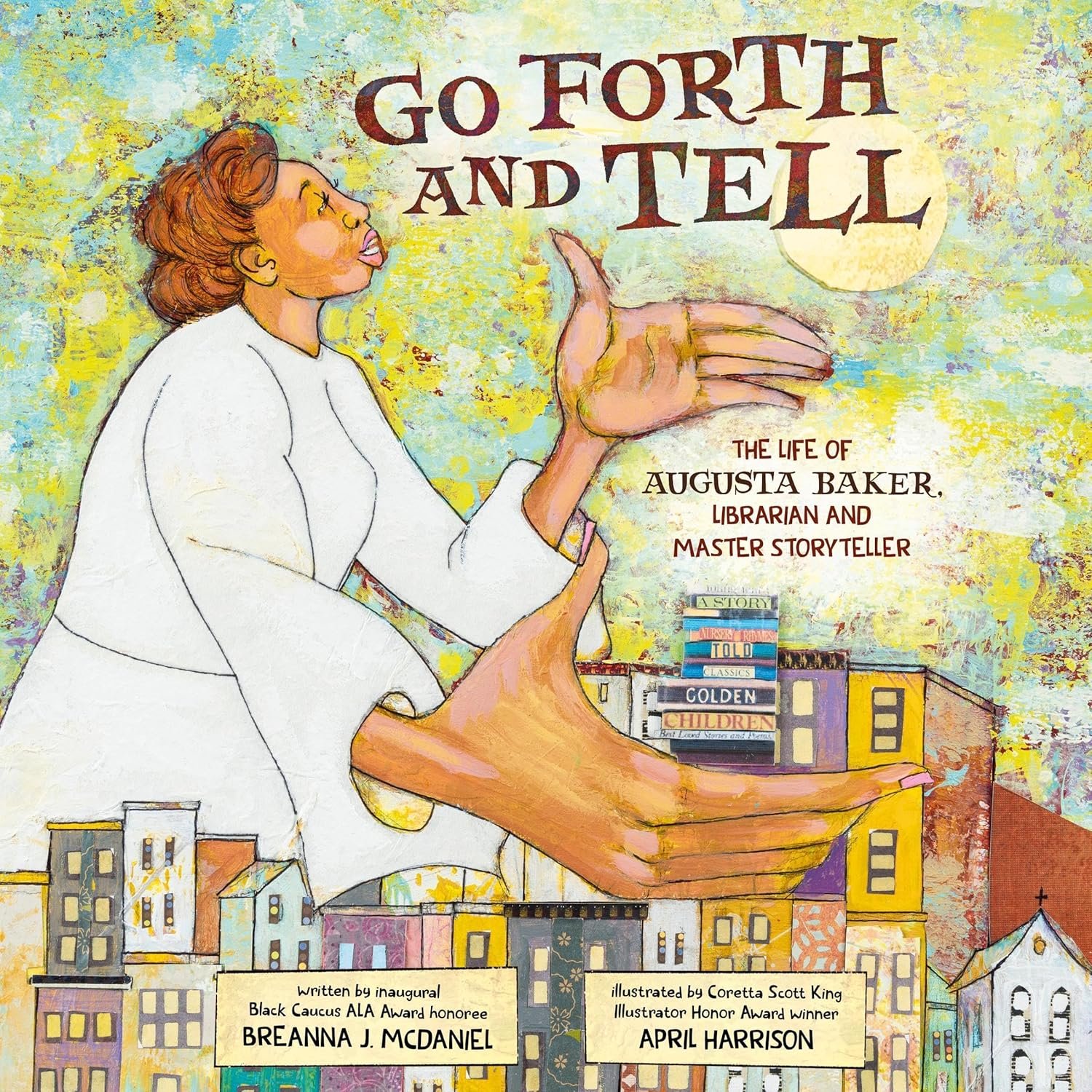
This picture book biography tells the story of Augusta Baker, a pioneering librarian who worked to ensure that Black children could see themselves represented in books. Through storytelling and book selection at the New York Public Library, she helped bring diverse literature to generations of young readers. Her work transformed children’s librarianship and expanded access to stories that reflected the experiences of historically marginalized communities.
Recommended Questions:
How did Augusta’s grandmother influence her love of stories and storytelling? What evidence from the text and illustrations supports your answer?
What challenges did Augusta Baker notice in the books available to children when she was growing up?
Why was it important to her that children see positive and authentic representations of Black people in books?
How can books and storytelling influence how people understand themselves and others who may be different from them?
Why might librarians play an important role in shaping what stories people encounter?
What other people or institutions in society might have a similar influence on what stories and perspectives are shared?
Augusta wanted children to learn about many remarkable Black people and their contributions. The book mentions individuals such as Carter G. Woodson, Charlemae Rollins, John Steptoe, Virginia Hamilton, Tom Feelings, and Walter Dean Myers.
Select one of these individuals and research their work. How does their work connect to Augusta Baker’s goal of expanding representation in children’s literature?Augusta Baker is quoted as saying, “Let the story tell itself. Select well, prepare well, and then go forth and just tell.”
What do you think this quote means? How does it reflect her mission as a librarian and storyteller?How can stories help bring communities together or create understanding between people?
NCSS Theme 1: Culture
The book highlights how stories, books, and oral traditions shape identity and community understanding. Augusta Baker believed that literature could affirm the experiences and cultural heritage of Black children while also helping all readers learn about diverse perspectives. Her work demonstrates how storytelling preserves cultural traditions and promotes understanding across communities.
Social Justice Anchor Standard 11: Recognize stereotypes and relate to people as individuals
Augusta Baker recognized that many books available to children portrayed Black characters through harmful stereotypes. Through her work as a librarian and storyteller, she sought out and promoted books that represented Black children with dignity and authenticity. Her efforts help students understand how literature can challenge stereotypes and promote fairness and inclusion.
WA History 3: Understands that there are multiple perspectives and interpretations of historical events
This book shows how Augusta Baker challenged the limited and often stereotypical portrayals of Black people in children’s literature. By intentionally selecting and promoting books that reflected authentic experiences, she helped broaden whose stories were told and valued in libraries. Students can analyze how expanding representation in historical narratives helps create a more complete understanding of the past.
