Sixteen Years in Sixteen Seconds
Book Summary:
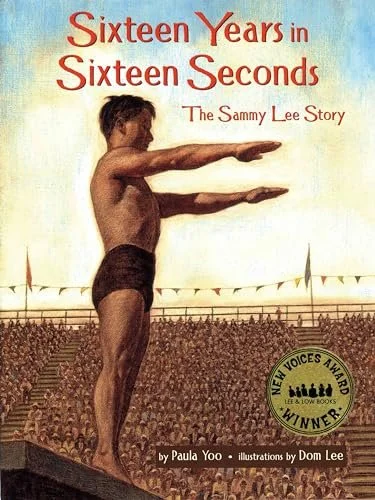
Sixteen Years and Sixteen Seconds tells the story of Dr. Sammy Lee, the son of Korean immigrants who became an Olympic champion in diving. As a child in California, Sammy experienced racial segregation and was only allowed to use his local public swimming pool on designated days for people of color. Despite these barriers, he developed a passion and talent for diving and eventually became the first Asian American to win an Olympic gold medal.
The book emphasizes that seeds are more than a source of food—they carry history, culture, and knowledge from generations of farmers and communities. The Svalbard vault is a global effort, with seeds originating from many different places around the world, demonstrating how communities and countries can work together to protect resources that are important to everyone.
Recommended Questions:
When Sammy was growing up in the 1930s, people of color could only use the public pool one day a week. Why was this unfair? What does this example of segregation tell us about life during Sammy’s childhood?
Why is restricting access to a public place based on race an example of institutional unfairness rather than simply one person treating another person unfairly?
Sammy was a Korean American. Why is this an important part of his story? What does his experience help us understand about the diverse people who have shaped American history?
Sammy faced a conflict between his own dream of becoming an Olympic diver and his father's dream for him to become a doctor. How did Sammy manage to pursue both goals?
Would Sammy have been successful if he had achieved only one of these goals—becoming a doctor or becoming an Olympic champion? Why or why not?
Sammy faced discrimination even after becoming a successful student and athlete. What does his experience teach us about the difference between achieving success and having equal opportunities?
Sammy represented the United States at the Olympics while experiencing discrimination at home. What does this reveal about the difference between American ideals of equality and the experiences of some Americans during this time?
Sammy was the first Asian American to win an Olympic gold medal. Why is it important to know who has been included—or excluded—from opportunities in American history?
What words would you use to describe Sammy Lee, such as determination, resilience, or courage? What evidence from the story supports your thinking?
How did Sammy’s experiences with discrimination influence what his Olympic victory meant to him? Why did he want his success to mean more than simply winning a gold medal?
NCSS Theme 4: Individual Development and Identity
This book explores how Sammy's identity was shaped by his family, cultural background, experiences with discrimination, education, friendships, and athletic goals. As the son of Korean immigrants, Sammy navigated his father's expectations, his own dream of becoming an Olympic diver, and the discrimination he experienced because of his race. His story provides opportunities for students to consider how people's identities and aspirations are influenced by both their personal experiences and the communities around them.
Social Justice Anchor Standard 12: Individual and Institutional Discrimination
This story helps students identify how unfair treatment can be part of larger systems and institutions. Sammy was not simply treated unfairly by individual people; he encountered rules and practices that restricted access to public swimming pools and other community spaces based on race. His experiences allow students to distinguish between individual acts of unfairness and institutional barriers that limit opportunities for entire groups of people.
WA History 4: Understands how historical events inform analysis of contemporary issues
Sixteen Years in Sixteen Seconds helps students examine how historical events and social conditions continue to inform contemporary questions about equality and opportunity. Sammy's experiences with segregated swimming pools, exclusion from his own high school prom, and discrimination at restaurants demonstrate how racial barriers affected everyday life in the United States. His achievements also provide an opportunity to consider how opportunities for participation in sports and other areas of society have changed over time.
Links to Related Primary and Secondary Resources
United States Olympic & Para Olympic Museum
University of Souther California Memoriam for Dr. Lee
