Just in Case
Book Summary:
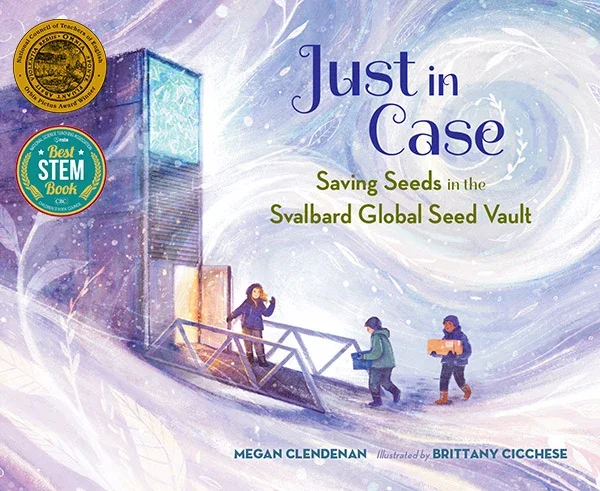
Just in Case is a picture book about the Svalbard Global Seed Vault, located deep inside a mountain on the Arctic island of Spitsbergen, Norway. The vault stores more than 580 million seeds from around the world as a backup for the future, protecting plant diversity from threats such as climate change, natural disasters, war, and extinction. Through accessible text and beautiful illustrations, readers learn why seeds are an important natural resource, how the vault was designed and built, and why people around the world work together to preserve them.
The book emphasizes that seeds are more than a source of food—they carry history, culture, and knowledge from generations of farmers and communities. The Svalbard vault is a global effort, with seeds originating from many different places around the world, demonstrating how communities and countries can work together to protect resources that are important to everyone.
Recommended Questions:
The Svalbard Seed Vault is located about 800 miles from the North Pole on an island belonging to Norway. Find Norway and the Arctic Ocean on a globe or world map. Why do you think scientists chose such a cold, remote place to build the vault?
The book explains that seed banks exist in many countries around the world. How have these seed banks helped communities preserve plant diversity and protect important crops for the future?
Seeds have been saved and passed down by farmers for generations. How does preserving seeds also help preserve knowledge and history?
The book shows that seeds can be connected to a community's food, culture, history, and traditions. Why might saving seeds also help preserve a community's culture?
Why might countries choose to share their seeds with an international seed vault instead of keeping them only within their own country?
In 2011, seeds preserved in the Svalbard Global Seed Vault were withdrawn to help restore seed collections in Syria. What does this event show about why it is important to preserve resources before they are needed?
The book calls seeds the “greatest treasure on Earth.” What makes a resource valuable? Why might seeds be more important to human survival than gold or jewels?
Who should help protect Earth's plant diversity—farmers, communities, countries, international organizations, or everyone? Explain your reasoning.
NCSS Theme 9: Global Connections
Just in Case shows how countries and communities work together to address challenges that cross national borders. Seeds from around the world are preserved in the Svalbard vault, making the project an example of international cooperation and shared responsibility. The book helps students understand that protecting biodiversity and food resources is a global concern and that people in different places can contribute knowledge, resources, and seeds to protect the future of communities around the world.
Social Justice Anchor Standard 20: Collective Action
The seed vault represents people working collectively to address a problem that affects communities around the world. The book shows how scientists, farmers, governments, and organizations contribute to preserving seeds for future generations. Students can consider how collective action can protect shared resources and how cooperation across communities and countries can address challenges that no single person or nation can solve alone.
WA Geography 2: Human Interactions with the Environment
Just in Case aligns examines how people interact with and respond to their physical environment. The book demonstrates how humans have developed systems to protect an important natural resource from environmental threats and how the extreme Arctic environment makes Svalbard an effective location for long-term seed storage. Students can consider how people use geographic knowledge and technology to address environmental challenges and protect resources for future generations.
Links to Related Primary and Secondary Resources
