A Day for Rememberin’
Book Summary:
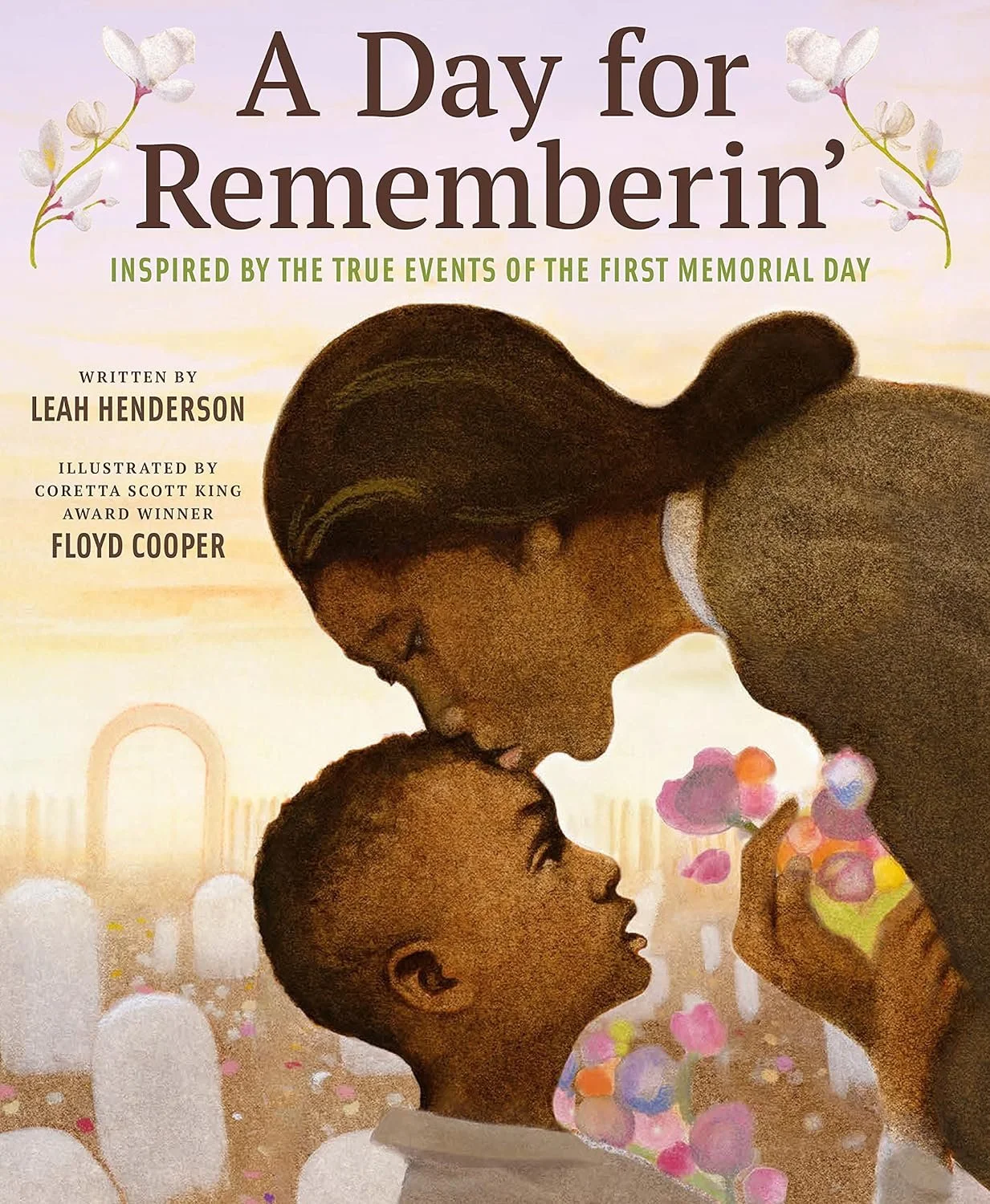
A Day for Rememberin' tells the story of the events that inspired what many historians consider the first Memorial Day observance in Charleston in 1865. After the Civil War, formerly enslaved African Americans honored Union soldiers who had died in a Confederate prison camp by properly burying them and holding a memorial procession. Through vivid storytelling and illustrations, the book highlights themes of remembrance, freedom, gratitude, and the importance of recognizing contributions that have often been overlooked in history.
Recommended Questions:
Most people think of Memorial Day as a time for barbecues or parades, but this book shows that it began as a "Decoration Day." Why did the people of Charleston feel it was so important to march to a former prison and decorate the graves of Union soldiers with flowers?
The parade took place at a former racecourse that had been used as a Confederate prison camp. What does it say about the community's values and resilience that they transformed a place of suffering into a place of beauty, remembrance, and honor?
Eli is proud to be able to read and write. Based on the story, why was literacy such a powerful act of freedom and social justice for formerly enslaved people?
Why do communities create memorials, ceremonies, and holidays to remember people and events from the past?
Eli's father says, "This is a day for rememberin'." Why do you think the story of these 10,000 freed people and their role in helping create Memorial Day has been absent from many history books?
How does learning about the origins of Decoration Day change your understanding of Memorial Day?
How can public memorials, museums, monuments, and commemorations influence what future generations learn about history?
Why is it important to remember not only famous leaders and soldiers, but also the ordinary people whose actions helped shape history?
How did the actions of the freed people of Charleston demonstrate the power of collective action and community leadership?
What stories, people, or events from your own community do you think deserve to be remembered and honored in the future?
NCSS Theme 2: Time, Continuity and Change
In A Day for Rememberin', the story centers on the community’s collective effort to transform a site of suffering—a former racecourse turned prison—into a place of honor through a massive, organized parade. This transition from the "old days" of slavery to the "new days" of freedom illustrates how societies navigate massive cultural shifts while choosing which parts of their history to preserve through tradition. By following Eli as he participates in the very first Decoration Day, readers see firsthand how a single moment of community action created a historical legacy that continues in every Memorial Day celebration today.
Social Justice Anchor Standard 20: Collective Action
This book highlights how a community of formerly enslaved people took collective action to honor Union soldiers and ensure their sacrifices would not be forgotten. Rather than waiting for others to recognize this history, they organized, rebuilt a neglected burial site, held a public memorial, and created a powerful act of remembrance. Their actions demonstrate how communities can work together to address injustice, preserve overlooked stories, and shape public memory. The book encourages students to consider how collective action can bring attention to important issues and help create a more inclusive understanding of history.
WA History 4: Historical events inform analysis of contemporary issues and events
A Day for Rememberin' demonstrates how the Civil War and emancipation shaped the lives of individuals and communities. The story reveals how formerly enslaved people used their freedom to honor those who fought for liberation and how their actions helped influence the nation's traditions of remembrance.
