Nour’s Secret Library
Book Summary:
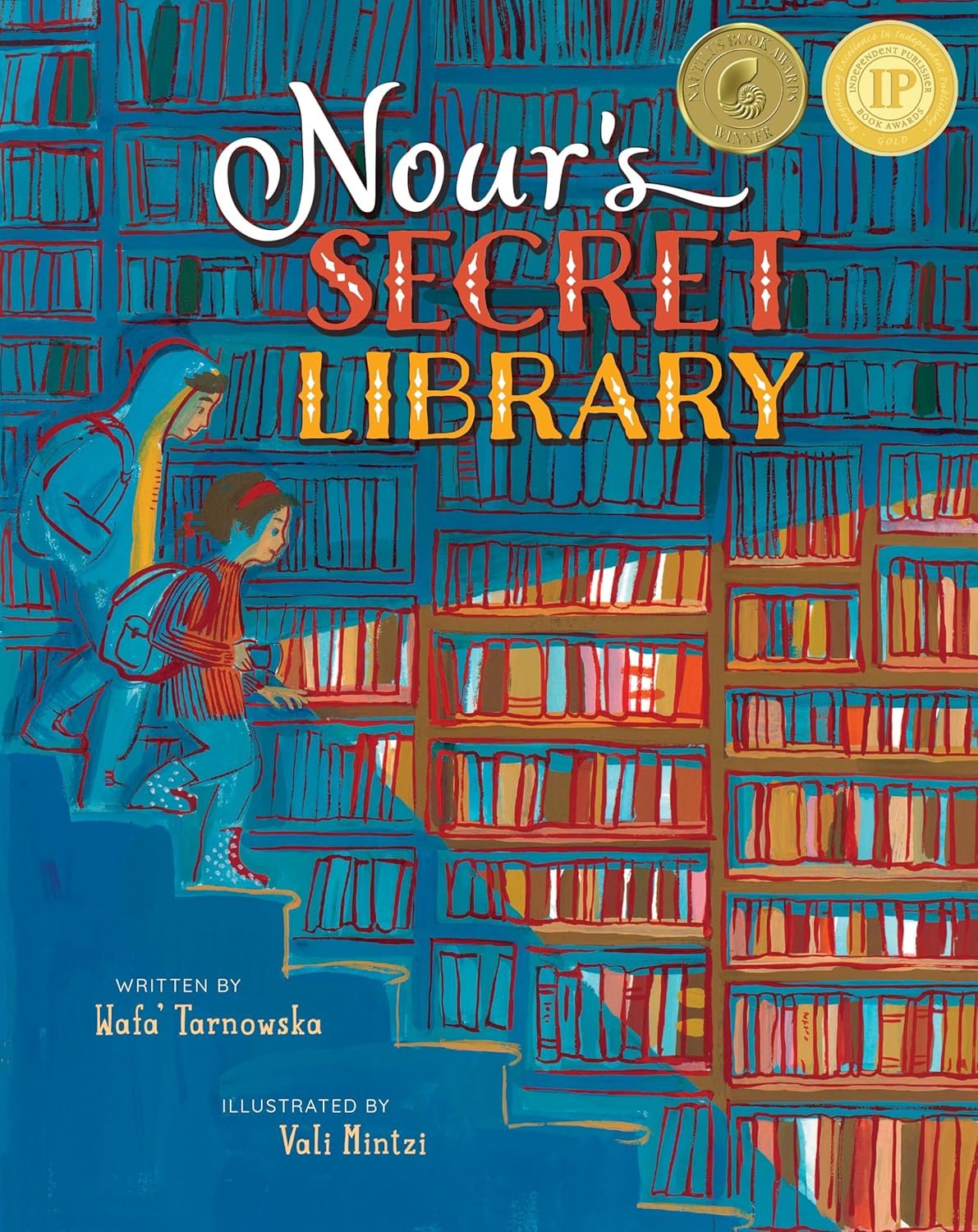
Nour’s Secret Library follows young cousins Nour and Amir as they navigate life in the war-torn city of Damascus by salvaging books from the rubble of bombed buildings. Seeking refuge from the conflict, they transform an abandoned basement into a secret underground library, providing their community with a vital sanctuary for learning and escape. While the story is set in Damascus , it was inspired by the real-life secret library of Darayya, Syria. The story highlights the power of literacy, education, and community resilience, showing how books can preserve knowledge, inspire courage, and provide a sense of normalcy during times of conflict.
Recommended Questions:
In what ways did the war change the environment and daily lives of the people in Daraya?
Amir finds books among collapsed buildings. How does the destruction of a city's infrastructure—homes, schools, libraries, and landmarks—affect people's ability to maintain their culture, identity, and sense of community?
How did the library help preserve hope and a sense of normalcy for the community?
The author calls the library a "secret weapon." How can books and stories provide a sense of dignity, strength, or safety for people who are experiencing hardship or exclusion?
The author's note describes books as a way to "wipe out ignorance." How can preserving books help protect a community's culture, identity, and history?
Why is protecting culture—including books, stories, traditions, and knowledge—sometimes just as important as protecting buildings and property?
The story is based on real individuals who built a library in Daraya to "keep their spirits high." How can a small group's decision to save books be considered a significant act of resistance?
How does Nour's Secret Library help readers understand the human impact of war beyond the battles, politics, and headlines often found in the news?
How might Nour's experience of the Syrian civil war differ from the perspective of a government leader, soldier, journalist, or historian?
If you could create a "secret library" filled with books to help people through a difficult time, what kinds of books would you include and why?
NCSS Theme 3: People, Places and Environments
This book explores how people adapted to and changed their environments. In the story, Nour and her community transform a bombed-out basement into a safe haven (the secret library) to survive the physical and psychological toll of the Syrian war.
Social Justice Anchor Standard 16: Empathy and Collective Action
The story encourages students to develop empathy for people experiencing war, displacement, and hardship. It also highlights how communities can support one another through collective action, demonstrating that even small acts—such as sharing books and knowledge—can have a meaningful impact.
WA History 3: Multiple perspectives and interpretations of historical events
This book examines the Syrian civil war through the experiences and perspectives of ordinary people living through it. Rather than focusing on military or political leaders, the story highlights how children, families, and community members experienced the conflict and worked to preserve learning, culture, and hope. By exploring Nour's perspective and the true story behind the secret library in Daraya, students can recognize that historical events can be understood and interpreted in different ways depending on who is telling the story and whose voices are included.
