The Lost Package
Book Summary:
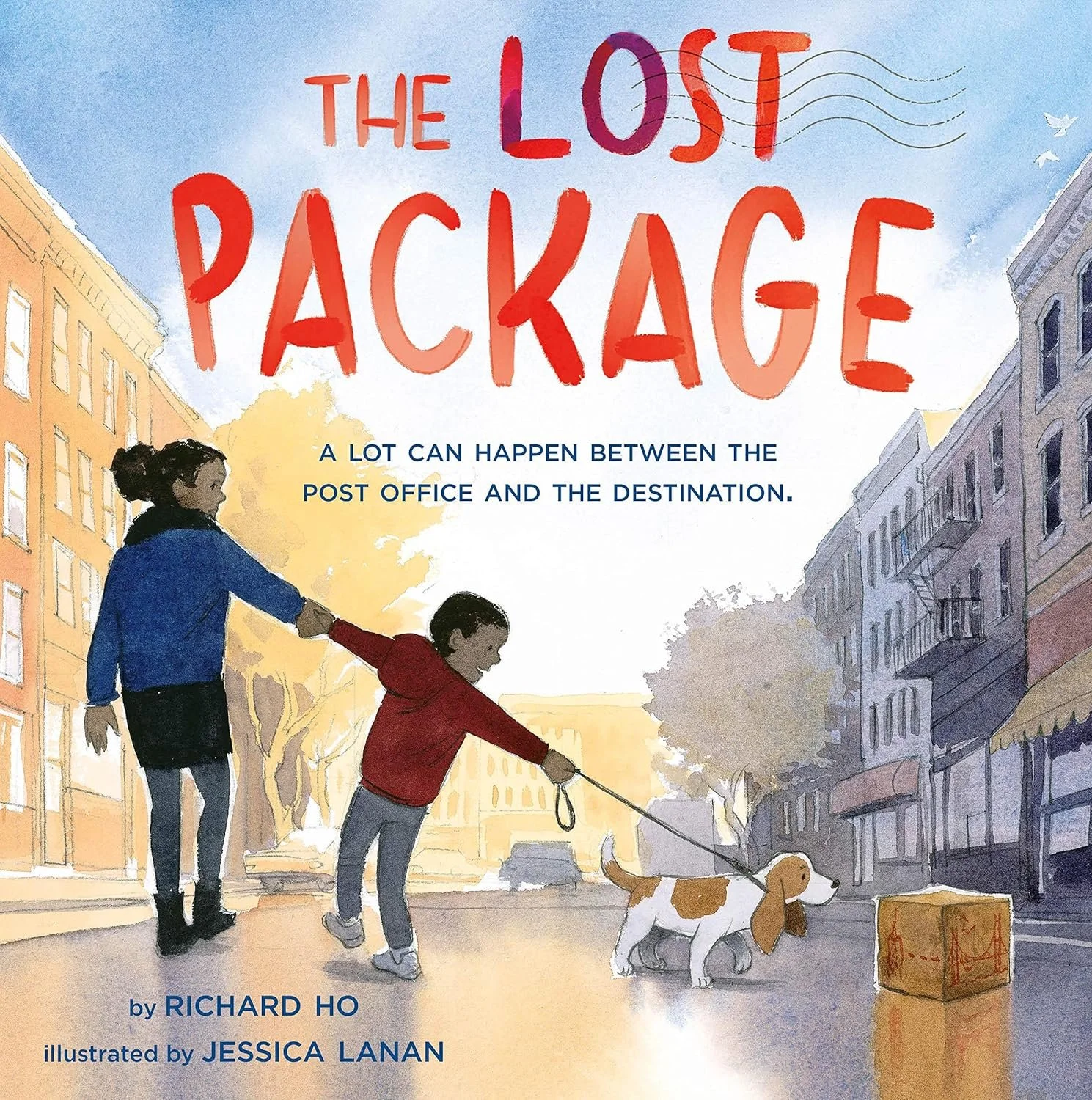
The Lost Package tells the story of a package mailed from a girl in New York to her friend in San Francisco that is accidentally lost during its journey through the postal system. After falling from a mail truck, the package travels through a series of unexpected adventures before being discovered by a mother and child who are moving to San Francisco and ultimately help it reach its destination, creating an unexpected friendship along the way. The beautiful and detailed illustrations offers readers a behind-the-scenes look at how the U.S. Postal Service works while celebrating the connections, kindness, and sense of community that can bring people together across great distances.
Recommended Questions:
Why was the package so important to the girl who sent it and the friend who was waiting to receive it?
Why did the mother and child choose to help deliver the package instead of ignoring it? How did this small act of kindness lead to new friendships and connections?
How does the postal system help connect people who live far apart?
What role does the U.S. Postal Service play in our communities? How does it help people exchange goods, information, and ideas across long distances?
The author writes that the USPS is facing challenges because people send fewer letters and businesses increasingly use private delivery companies. How has technology changed the way people communicate and exchange information?
Why do you think the author included a personal note at the end of the book? How does learning about his family immigration and connection to the Postal Service deepen your understanding of the story?
The famous postal motto emphasizes dedication despite "snow nor rain nor heat." What other jobs in our communities require this same commitment to serving others?
In the "Note from the Illustrator," Jessica Lanan describes using museum exhibits and postal sorting systems as references. Why is it important for authors and illustrators to conduct research and use reliable sources when portraying real-world people, places, and systems?
The author notes that the USPS is currently facing financial challenges. What are some ways citizens can support public services they believe are important to their communities?
NCSS Theme 7: Production, Distribution and Consumption
The book provides an accessible look at the distribution systems that move goods and information across the country. Students can trace the package's journey through the postal system and examine what happens when a distribution network encounters unexpected challenges. The story demonstrates both the efficiency of large-scale systems and the important role individuals play when problems arise.
Social Justice Anchor Standard 16: Empathy and community action
The mother and child who find the package choose to help a stranger even though they are not obligated to do so. Their actions demonstrate empathy, responsibility, and the idea that small acts of kindness can have a meaningful impact on others.
WA Economics 3: Understands the governments role in the economy
The Lost Package helps students understand how goods and services move through a distribution network. As the package travels from New York to San Francisco, readers see how transportation systems, postal workers, sorting facilities, and delivery services work together to connect people across long distances. The book demonstrates the important role that distribution systems play in everyday life and how communities depend on these services.
